
Brown University Study Links Pupil Dilation to Brain 'Refresh' Mechanism During Surprise
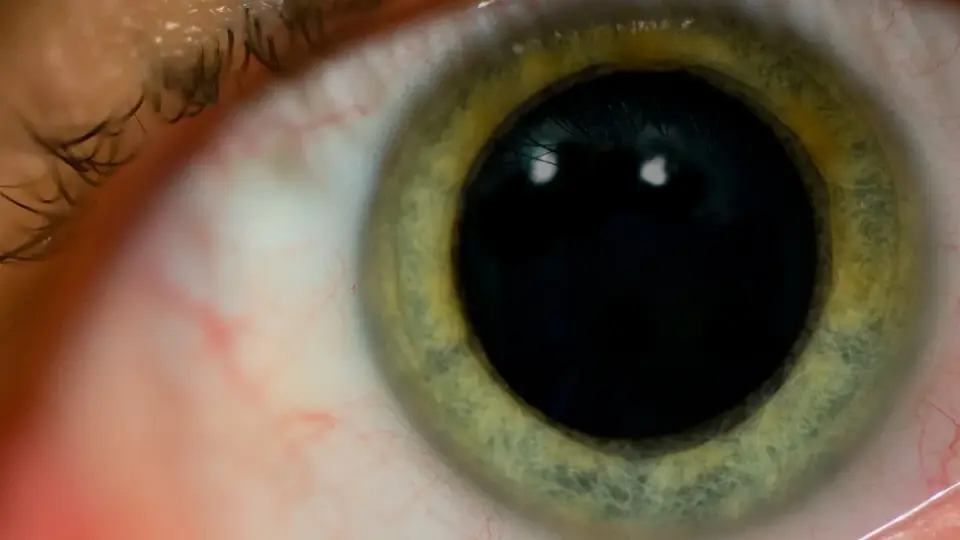
A new study published in Nature Human Behaviour reveals that pupil dilation during surprise is not merely a reflex but a functional signal for a neural 'refresh' mode. Researchers at Brown University found that this physiological response, driven by the locus coeruleus and norepinephrine, helps the brain discard outdated expectations and adapt to new contexts, thereby improving learning and reducing perceptual bias.
Key points
- Researchers at Brown University, led by Matt Nassar, found that pupil dilation during surprise acts as a visible marker for a brain 'refresh' mode that aids in adapting to unexpected events.
- The study involved 63 healthy adults predicting colored stimuli; when outcomes defied predictions, participants exhibited dilated pupils and increased activity in the locus coeruleus, the brain's main source of norepinephrine.
- Participants who showed this arousal response demonstrated improved learning adjustments and reduced perceptual bias, suggesting the mechanism helps shed outdated mental contexts to create a 'clean slate' for new information.
- The findings clarify that pupil size reflects internal cognitive states beyond light exposure, linking transient arousal fluctuations to the ability to handle changing environmental contexts.
Background
This research builds on prior understanding that pupil size can reflect cognitive effort, emotional arousal, or memory processing, but it specifically isolates the role of surprise in triggering a functional neural reset. Unlike earlier general studies on pupil dynamics, this work provides concrete evidence that the locus coeruleus/norepinephrine system actively facilitates learning by limiting the influence of previous expectations.
Why it matters
Understanding the functional role of pupil dilation in surprise responses offers insights into how the brain manages uncertainty and adapts to changing environments. This could inform future research on cognitive flexibility, learning disorders, or the development of neurofeedback tools that monitor arousal to optimize performance in dynamic situations.
What to watch
Researchers will likely explore how this 'refresh' mechanism applies to other types of unexpected events beyond visual stimuli, and whether the efficiency of this neural reset varies across individuals or can be enhanced through training or medication targeting the locus coeruleus.
Want the full story? Read the original reporting
Read on ScienceAlert