
Annual Climate Report Declares Earth in 'Serious' Condition as Warming Accelerates
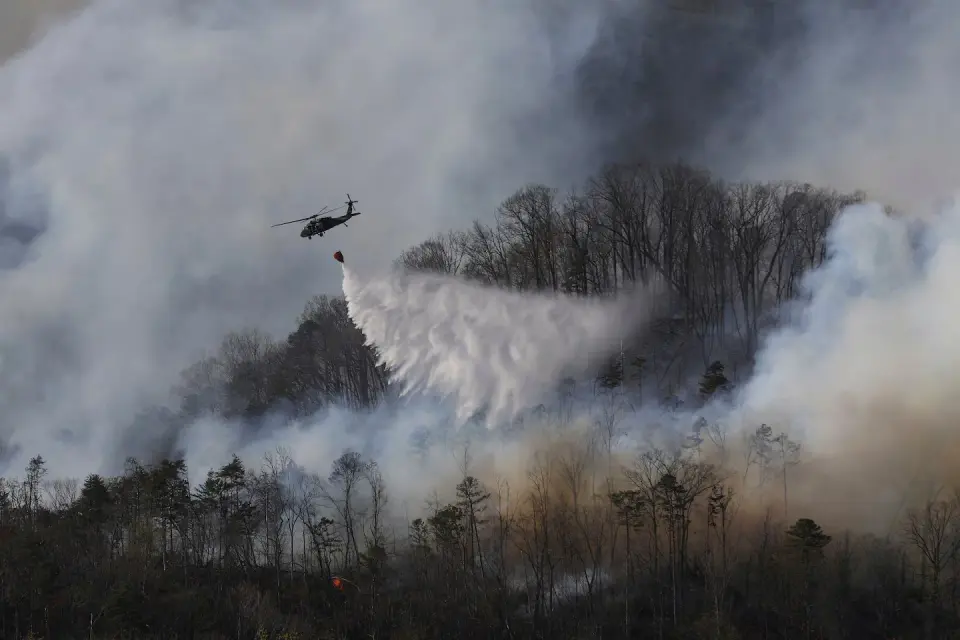
A new annual report published in BioScience on October 14, 2026, diagnoses the Earth's climate as 'serious and getting worse.' The study finds that seven of 16 planetary vital signs are at record extremes, including greenhouse gas concentrations and ocean heat. While warming has accelerated to 0.36°C per decade since 2010, the report notes that renewable energy now provides 43% of global electricity, offering a glimmer of hope despite the urgent need for faster action.
Key points
- The 'State of the Climate' report, led by Bill Ripple and Chris Wolf, identifies seven of 16 planetary indicators at record highs, including CO2 levels at 428 ppm and record-low ice sheets.
- Global warming has accelerated from 0.05°C per decade (1880-1970) to 0.36°C per decade (2010-2024), with the 2°C threshold potentially reached before 2050.
- An unprecedented El Niño is intensifying 2026's extreme weather, including record heat in the U.S. and powerful Pacific hurricanes, while threatening ecosystems like the Amazon and coral reefs.
- Despite record fossil fuel consumption and emissions, low-carbon sources generated 43% of global electricity in 2025, with solar and wind growing by 18%.
- Scientists warn that tipping points, such as the collapse of the Atlantic Meridional Overturning Circulation, are becoming more likely, though the authors emphasize that rapid emissions reductions can still avert the worst outcomes.
Background
This report follows a series of 2026 warnings, including a U.N. alert in September that the world is certain to overshoot critical climate thresholds. Earlier in the year, a U.N. report declared a new era of 'water bankruptcy,' and scientists noted that worst-case climate scenarios were becoming 'implausible' due to the speed of current changes. The current report serves as the annual 'checkup' for the planet, building on these prior alerts.
How outlets are covering it
The Washington Post, Wired, Scientific American, and Time all report on the same BioScience study but emphasize different aspects. Wired and the Washington Post focus on the 'vital signs' metaphor, with Wired quoting lead author Bill Ripple describing Earth's condition as 'serious and getting worse.' Scientific American highlights the 'diagnosis of the present' framing, stressing that the climate emergency is already here, not just a future warning. Time Magazine places greater emphasis on the acceleration of warming and the specific risks of tipping points, such as the AMOC collapse. While all outlets agree on the severity of the data, Wired and Time note the 'Age of Electricity' and renewable growth as a counterpoint to the bad news, whereas Scientific American focuses more heavily on the irreversible nature of potential tipping points like the Amazon's shift to savanna.
Why it matters
The report provides a concrete, data-driven baseline for the current state of the climate, moving beyond abstract projections to measurable 'vital signs.' It highlights the tension between accelerating emissions and the rapid growth of renewable energy, underscoring that while progress is being made, it is insufficient to halt the current trajectory of destabilization. The findings serve as a critical reference for policymakers and the public, illustrating that the window for effective action is narrowing but has not yet closed.
What to watch
Scientists will monitor the impact of the current El Niño on global temperatures through the end of 2026, which could push global averages to new highs. Policymakers and energy sectors will likely face increased pressure to accelerate the transition to low-carbon sources, given that renewables currently supply 43% of global electricity. The report's warnings about tipping points may influence international climate negotiations and adaptation strategies, particularly regarding the protection of the Amazon and coral reefs.
- The Earth’s vital signs are concerning, a new report says The Washington Post
- Earth’s Condition Is ‘Serious and Getting Worse’ as Climate Change Intensifies WIRED
- Climate scientists issue a sobering diagnosis about Earth's 'vital signs' Scientific American
- Climate Change Is Accelerating Faster Than We Can Respond, Scientists Warn Time Magazine
- Earth's climate system increasingly unstable, but signs of positive change emerge Phys.org
Want the full story? Read the original reporting
Read on The Washington Post