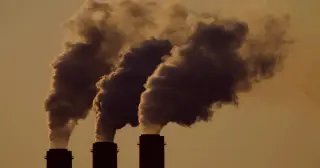
China’s greenhouse gas emissions have remained flat or declined for 2.5 years, driven by massive renewable energy deployment and electric vehicle adoption. Conversely, U.S. emissions rose in 2025 due to increased coal and oil use, marking the only major economy with significant growth. Experts attribute this divergence to China’s consistent long-term industrial planning versus the U.S. policy instability between the Biden and Trump administrations.
Researchers from the University of Colorado Boulder have demonstrated that microorganisms dormant in permafrost for up to 40,000 years can become active within six months of thawing. The study, published in JGR Biogeosciences, indicates that prolonged warm summers could trigger significant greenhouse gas emissions from frozen soils, potentially adding 100 parts per million of CO2 to the atmosphere by 2100.
The World Meteorological Organization (WMO) confirmed that global concentrations of carbon dioxide, methane, and nitrous oxide reached record highs in 2025. These levels lock in long-term warming, with CO2 now at 153% of pre-industrial levels. The report warns that a new El Niño event in 2026 will likely further reduce land carbon sinks, accelerating concentration growth.
A seventh annual 'state of the climate' report published in BioScience on October 14, 2026, confirms that Earth’s vital signs are deteriorating. The study analyzed 16 major indicators, finding that carbon dioxide, methane, and nitrous oxide all reached record highs in 2026. While renewable energy surpassed coal for the first time in over a century, fossil fuel consumption grew by 0.9 percent in 2025, and energy-related carbon emissions exceeded 41 gigatons for the first time. The report highlights accelerating feedback loops, including record-low glacier thickness and rising sea levels, driven by an unprecedented El Niño. Lead author William J. Ripple warns that current trajectories could trigger irreversible tipping points in the Greenland and Antarctic ice sheets and the Amazon rainforest within the lifetime of today’s 30-year-olds. Despite these warnings, the report notes progress in low-carbon electricity, which now accounts for 43 percent of global power, and suggests that scaling adaptation tools like mangrove restoration and distributed solar could mitigate some impacts.
A new annual report published in BioScience on October 14, 2026, diagnoses the Earth's climate as 'serious and getting worse.' The study finds that seven of 16 planetary vital signs are at record extremes, including greenhouse gas concentrations and ocean heat. While warming has accelerated to 0.36°C per decade since 2010, the report notes that renewable energy now provides 43% of global electricity, offering a glimmer of hope despite the urgent need for faster action.
Thawing Arctic permafrost is releasing significant amounts of methane and carbon dioxide, fundamentally altering global climate models. This process creates a self-reinforcing feedback loop where warming accelerates thaw, which releases more greenhouse gases, potentially sustaining higher temperatures for decades or centuries. Scientists emphasize that immediate emission reductions are critical to slowing this irreversible cycle.
Global sea surface temperatures are on the verge of breaking all-time records in 2026, driven by a strengthening El Niño and persistent human-caused warming. This extreme heat threatens to weaken ocean carbon sinks, devastate coral reefs, and disrupt fisheries. Concurrently, 2025 data shows record-high greenhouse gas levels and reduced cloud cover, accelerating global warming and intensifying extreme weather events worldwide.
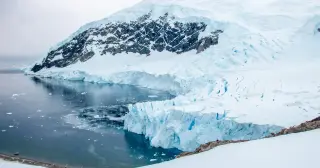
The 2025 State of the Climate report reveals record-high ocean temperatures, reduced global cloudiness, and severe ice loss. Experts link these trends to fossil fuel use, warning of intensifying extremes and growing legal liability for governments.
An international team at Little Dome C, East Antarctica, drilled 2.8 km to bedrock and retrieved an ice core with a continuous climate record dating back at least 1.2 million years, extending the EPICA archive. The trapped air bubbles provide direct samples of ancient atmosphere, crucial for understanding why Earth’s glacial cycles shifted during the Mid-Pleistocene Transition. Gas measurements, isotope data, and dating (including krypton-81) are being processed across labs, with some bottom ice possibly older but not perfectly in chronological order. The result is a direct atmosphere-to-temperature record that will help identify the drivers of the planet’s changing ice-age rhythm, beyond the influence of industrial emissions.
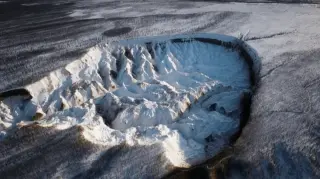
The Batagay megaslump in Siberia is widening as permafrost thaws, releasing greenhouse gases and unearthing ice-age fossils such as a 50,000-year-old mammoth and an ancient horse, highlighting climate feedback risks and ongoing paleontological discoveries.
Scientists thawed 40,000-year-old microbes from an Alaska permafrost tunnel and found them awakening after six months, forming biofilms and indicating life can resume after long dormancy; this slow reactivation could release carbon dioxide and methane as permafrost thaws, complicating climate models.
The World Meteorological Organization’s State of the Global Climate report warns Earth is in a climate emergency, with the planet’s energy imbalance at a record high as greenhouse gas concentrations trap more heat; heat is accumulating primarily in the oceans, driving record temperatures and increasing droughts, heatwaves, floods and other impacts, underscoring the need for a rapid shift to renewable energy to protect climate and security.
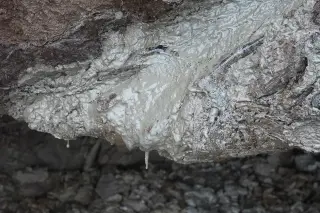
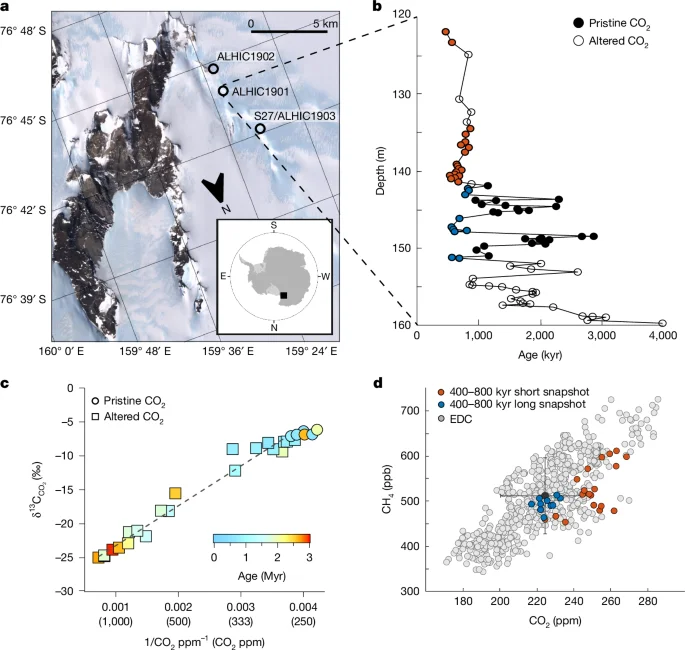
New shallow Allan Hills blue-ice cores extend greenhouse-gas records to about 3.1–0.5 million years ago. They show mean CH4 changing little over the period, with CO2 falling by ~20 ppm from 2.9 to 1.2 Ma and then staying stable within ±10 ppm through the mid‑Pleistocene Transition; respiration-corrected samples from 2.8–3.1 Ma yield CO2 of 250 ± 10 ppm, indistinguishable from the early Pleistocene. These results suggest long‑term stability of atmospheric CO2 and CH4 and demonstrate that ice-core gas measurements can be extended into the late Pliocene, providing snapshots of climate during a era of global cooling.
Public health and environmental groups filed a lawsuit against the EPA challenging the repeal of a greenhouse-gas rule that supported climate protections, arguing the rollback undermines emissions controls and public health safeguards.
The next ice age is unlikely to begin for at least 50,000 years, with natural climate cycles and human-induced greenhouse gas emissions delaying its onset significantly, potentially up to 500,000 years in the future.