
Record-Breaking El Niño Set to Fast-Forward Global Warming by 13 Years
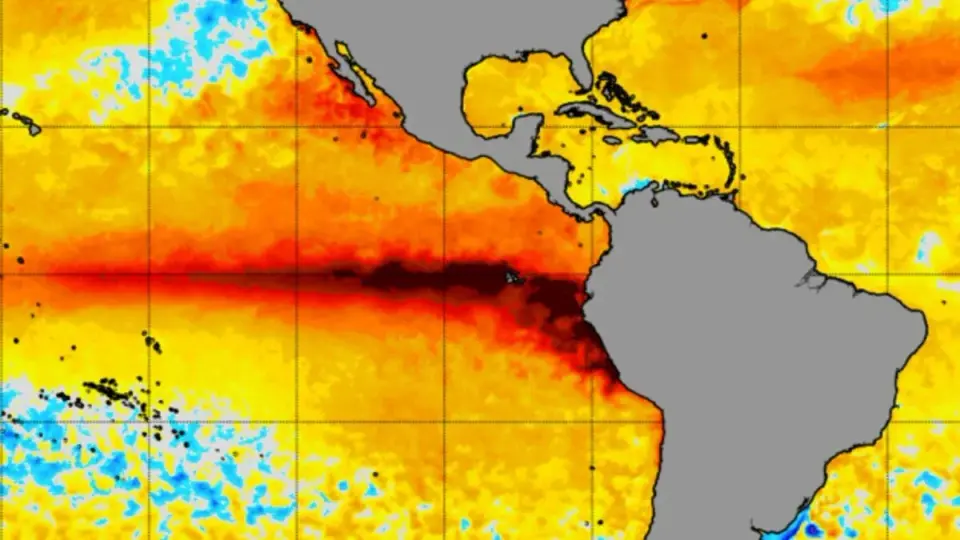
NOAA has confirmed a 90% probability of a 'very strong' El Niño, with models predicting it will be the strongest on record. This event is expected to temporarily push global temperatures to levels not otherwise seen until 2040, while simultaneously triggering severe droughts in the Amazon and extreme weather across Europe and Asia.
Key points
- NOAA forecasts a 90% chance of a 'very strong' El Niño, with a 69% likelihood it will exceed all previous records since 1950.
- Berkeley Earth scientist Zeke Hausfather estimates a 95% chance that 2027 will be the hottest year on record, potentially reaching 1.85°C above pre-industrial levels.
- The event could fast-forward the current warming trend by 13 years, though the effect is temporary as El Niño will subside in 2028.
- The Amazon faces extreme vulnerability as the El Niño peak coincides with the dry season, risking 'megafires' and drought in a forest already weakened by deforestation.
- Global impacts include record heatwaves in Europe, severe flooding in Asia, and a significant rise in global food prices and acute hunger.
Background
This development follows earlier warnings in July 2026 that the El Niño could become the strongest on record, with peak Pacific temperatures projected 1.4°F hotter than the 2015–2016 event. Previous coverage also noted the potential for record Category 5 hurricanes and warmer winters in New England. Additionally, recent analyses indicate a long-term acceleration in global warming since 2015, which compounds the temporary spikes caused by El Niño.
How outlets are covering it
Gizmodo and The Washington Post emphasize the statistical certainty of 2027 becoming the hottest year on record, highlighting the 'fast-forward' effect on climate trends. ABC News focuses on the probabilistic nature of regional impacts, noting that while a 'very strong' event is likely, specific weather outcomes are not guaranteed. The Guardian shifts the focus to the humanitarian and ecological crisis, particularly the Amazon’s vulnerability to drought and fire, arguing that the event is a symptom of broader human-driven climate disruption. While all sources agree on the event's strength, they differ in emphasis: Gizmodo and ABC News focus on temperature and weather mechanics, whereas The Guardian highlights the cascading social and environmental consequences.
Why it matters
This El Niño event serves as a critical preview of future climate conditions, potentially exposing the limits of current adaptation strategies. The temporary spike in temperatures and the associated extreme weather events could cause irreversible damage to ecosystems like the Amazon and exacerbate global food insecurity, making it a pivotal moment for assessing the resilience of human systems against climate change.
What to watch
Forecasters expect the El Niño to peak in December 2026, with its strongest impact on global temperatures occurring in 2027. Following this, a cooling phase is expected in 2028, but long-term warming trends will persist. Immediate concerns include the Amazon fire season, potential droughts in the southern US, and continued monitoring of global temperature records.
- 'Super’ El Niño Could Push Earth's Temperature 13 Years Ahead of the Current Warming Trend Gizmodo
- Potentially historic El Nino takes shape, with far-reaching US and global impacts expected ABC News - Breaking News, Latest News and Videos
- Here's what the 'extraordinary' new El Niño forecast means for California SFGATE
- This Year’s El Niño Is Huge and Already Changing the World The New York Times
- El Niño may peak at the worst time for the Amazon – and it should worry us all The Guardian
Want the full story? Read the original reporting
Read on Gizmodo