Tag

Noaa

All articles tagged with #noaa

U.S. Posts Record-Breaking March Heat as Strong El Niño Looms
environment2 days ago

U.S. Posts Record-Breaking March Heat as Strong El Niño Looms

March was the hottest month on record for the continental U.S. in NOAA data, with an average of 50.85°F (10.47°C) and ~9.35°F (5.19°C) above the 20th‑century normal, driving a surge of all‑time daily and monthly heat records. Forecasters anticipate a super‑strong El Niño this summer/fall that could push global temperatures higher for years and reshape weather patterns, potentially influencing drought, rainfall, and hurricane activity.

Alaska ends record-cold winter as El Niño looms with warmer, snow-light forecasts
weather2 days ago

Alaska ends record-cold winter as El Niño looms with warmer, snow-light forecasts

Alaska endured its coldest December–March in roughly 50 years, with Fairbanks posting its coldest period and Juneau experiencing a snowier December and March, while Anchorage logged its coldest March since 1960–61. Now forecasters anticipate a strong El Niño by mid-year, likely making summers 1–3 degrees warmer and winters 2–4 degrees warmer across most of the state, and substantially reducing snowfall, though some regions may see different effects.

March shatters heat records as a supercharged El Niño looms
science2 days ago

March shatters heat records as a supercharged El Niño looms

March was the hottest month on record for the continental U.S. in 132 years, with February also extremely warm and more than 19,800 daily heat records logged; the 12-month period from April 2025 to March 2026 was the warmest on record. Scientists link the anomalies to human-caused climate change and expect a super-strong El Niño to form later this year, likely pushing global temperatures to new highs into 2026–2027 and reshaping weather patterns—potentially reducing Atlantic hurricanes but boosting Pacific activity and easing drought in the Southwest.

March shatters U.S. heat record as El Niño looms
science2 days ago

March shatters U.S. heat record as El Niño looms

NOAA data show March 2026 was the hottest March on record for the continental U.S., with an average temperature of 50.85°F—9.35°F above the 20th‑century March norm—surpassing the previous all‑month record. The month featured thousands of daily heat records and highlighted the driest January–March period in years. Climate scientists say the extreme warmth is linked to human-caused warming, and forecasts point to a super‑strong El Niño forming later this year, likely pushing global temperatures higher into 2026–27 and influencing droughts and hurricane patterns.

Record heat swamps the U.S. in March as El Niño looms
science2 days ago

Record heat swamps the U.S. in March as El Niño looms

March 2026 was the hottest March on record for the continental United States, averaging 50.85 F (10.47 C) — 9.35 F (5.19 C) above the 20th‑century March norm — and shattering heat records across the Lower 48, with NOAA noting more than 19,800 daily heat records and over 2,000 monthly records; January–March was the driest on record. Forecasters say a superstrong El Niño could push global temperatures higher into 2026–2027 and reshape weather patterns, potentially boosting Pacific hurricane activity and stressing water supplies in the West.

Nine U.S. States Could See the Northern Lights Tonight
stargazing29 days ago

Nine U.S. States Could See the Northern Lights Tonight

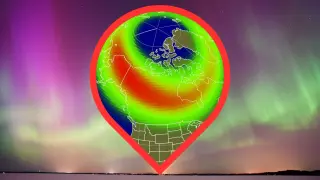
Space.com reports that a fast solar wind is expected to sweep past Earth tonight (March 13), potentially triggering a minor geomagnetic storm and making the northern lights visible across nine U.S. states (Alaska, North Dakota, Minnesota, Montana, South Dakota, Wisconsin, Idaho, Washington, and Maine) if skies are clear. Best viewing is tonight into Saturday, with auroras possibly reaching farther south if conditions strengthen, per NOAA's Space Weather Prediction Center.

Northern Lights Hit Ten States Tonight Amid Solar Storm Watch
science1 month ago

Northern Lights Hit Ten States Tonight Amid Solar Storm Watch

A NOAA geomagnetic storm watch due to a high-speed solar wind stream could bring the aurora borealis to ten U.S. states tonight through the weekend, visible between 10 p.m. and 2 a.m. local time if skies are clear. Best viewing is away from city lights; monitor live forecasts, and use Night Mode/Pro Mode on iPhones (preferably main lens, RAW if possible) for photos.

Valentine Night Lights: Aurora Visible Across 12 U.S. States
science1 month ago

Valentine Night Lights: Aurora Visible Across 12 U.S. States

NOAA forecasts a bright aurora borealis display tonight across 12 U.S. states due to intensified solar activity, offering a rare Valentine’s Day sky show. The best viewing window is 10 p.m.–midnight local time, with the possibility of the lights lingering until dawn in northern areas; colors like green, red, and purple are expected, and New York and Michigan could see it despite being typically too far south. To maximize visibility, seek dark skies away from city lights, and check local weather for clear skies. The event is linked to the sun’s approaching solar cycle maximum.

Punxsutawney Phil Sees Shadow, Extending Winter into 2026
world2 months ago

Punxsutawney Phil Sees Shadow, Extending Winter into 2026

On Groundhog Day 2026, Punxsutawney Phil saw his shadow at Gobbler’s Knob, signaling six more weeks of winter. The tradition, rooted in European folklore and popularized by a 1993 film, continues with the inner circle announcing forecasts. Across decades, Phil’s accuracy has been modest: NOAA estimates around 30-35% over the last 10–20 years, generally outperforming a coin flip but well short of reliable forecasting.

science2 months ago

IMAP Real-Time Space Weather Data Stream Debuts for Forecasts

NASA's Interstellar Mapping and Acceleration Probe (IMAP) at Sun–Earth L1 now streams near real-time space weather data through the I-ALiRT pipeline, adding new measurements (high-energy electron counts, helium ion counts, solar wind charge-state ratios and abundances, counterstreaming electrons) to improve timely warnings and forecasts; data and quick-look plots are available for forecasters and researchers.

science2 months ago

Growing Sunspot 4366 Sparks Flares, CME Watch Continues

NOAA reports that sunspot group RGN 4366 has grown into a complex region capable of producing flares from M1 to X1, but no coronal mass ejections (CMEs) have been observed yet. The region remains the primary feature to watch during the week of 1–7 February 2026. Current NOAA space weather scales show minor radio blackout risks (R1) with HF radio degradation on the sunlit side.

New East Coast Winter Storm on the Horizon With Uncertain Path This Weekend
weather2 months ago

New East Coast Winter Storm on the Horizon With Uncertain Path This Weekend

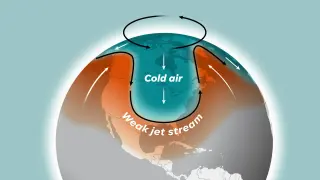
Forecasters warn of another significant weekend winter storm for parts of the East Coast, expected to form off the Southeast coast Saturday and move into the Mid-Atlantic and New England by Sunday. While confidence grows that a storm will develop, its exact track, strength, and snow/ice totals remain uncertain and subject to change. A broad, lingering cold air mass will keep temperatures frigid across much of the U.S. into next week, with some southern spots, including Florida, possibly seeing record-cold conditions. NOAA forecasts and maps are illustrating the potential impacts as details continue to evolve.

Trump accelerates deep-sea mining push, drawing global backlash
news2 months ago

Trump accelerates deep-sea mining push, drawing global backlash

The Trump administration unveiled a consolidated permitting process to search for and commercially extract minerals on the deep seabed, including areas beyond national jurisdiction, and shortened environmental reviews by allowing exploration and recovery licenses to be filed together. The move, framed as countering China’s influence, has sparked international and scientific condemnation for potentially bypassing UNCLOS/ISA rules and risking unknown impacts on oceans and coastal communities, even as some companies pledge not to source from the deep sea.

Rare southern auroras possible as strong geomagnetic storm hits
science2 months ago

Rare southern auroras possible as strong geomagnetic storm hits

A major geomagnetic disturbance could light up the sky with auroras across Canada and much of the northern US on Monday night, possibly stretching farther south; NOAA's space weather center warns the storm is among the strongest in more than two decades and could disrupt satellites and GPS, with activity expected to persist into Tuesday, following November events that brought auroras as far south as Kansas, Colorado, and Texas.