
U.S. AI Strategy Faces Reality Check: Dependence on Chinese Hardware and Models
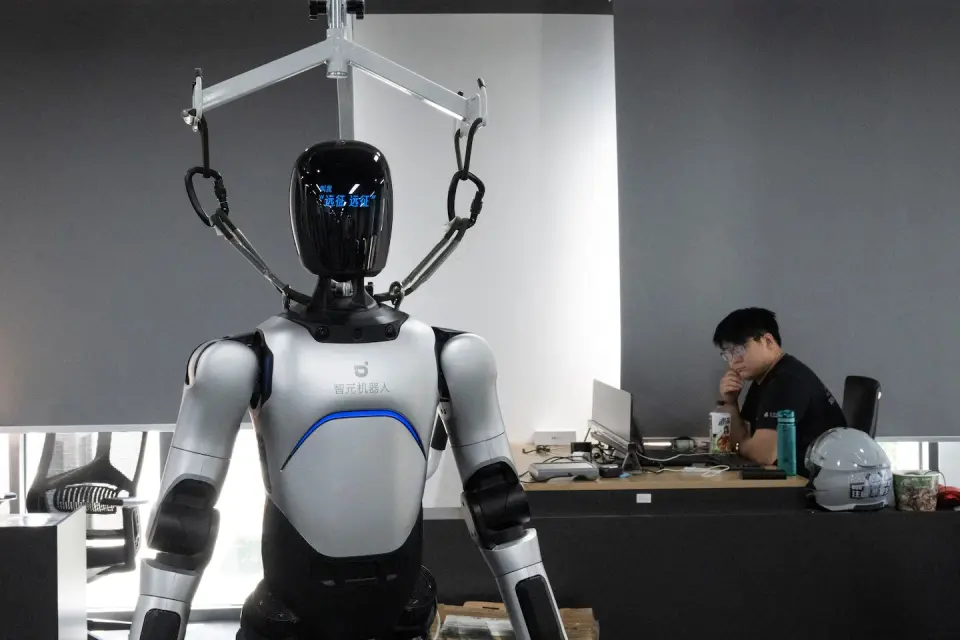
Despite Washington’s rhetoric framing AI as a zero-sum geopolitical contest, the U.S. economy remains deeply intertwined with Chinese technology. American data centers rely on Chinese-made equipment, and numerous U.S. firms utilize Chinese AI models like Moonshot’s Kimi K3. While Beijing prioritizes rapid deployment and application-layer safety, U.S. officials accuse Chinese firms of intellectual property theft, creating a complex dynamic where competition and interdependence coexist.
Key points
- U.S. data centers depend on Chinese-manufactured hardware despite export controls.
- American companies increasingly adopt Chinese AI models, such as Moonshot’s Kimi K3, for cost efficiency.
- Beijing’s AI safety regime focuses on application-layer controls rather than frontier model restrictions.
- U.S. officials accuse Chinese firms like Moonshot AI of stealing technology, while Beijing rejects such claims as Cold War tactics.
- A new U.S.-China 'Super Intelligence Dialogue' aims to manage AI incidents but lacks binding safety commitments.
Background
This tension follows the September 2026 Trump-Xi summit, which formalized a communication channel for AI incidents but failed to agree on slowing development. Earlier coverage noted that while the U.S. leads in proprietary frontier models, China is closing the gap through open-weight models and massive deployment in robotics and manufacturing, highlighting divergent regulatory approaches.
How outlets are covering it
The Washington Post emphasizes the practical reality of U.S. reliance on Chinese AI infrastructure and models, contrasting this with official accusations of 'malicious' pilfering. SemiAnalysis argues that China’s safety regime is 'speed-first,' regulating outputs and applications but not frontier capabilities, allowing rapid development. The Argument suggests that Silicon Valley’s narrative of a binary AI race overlooks the nuanced, interdependent nature of the U.S.-China tech relationship, particularly regarding safety and deployment strategies.
Why it matters
The interdependence between U.S. and Chinese AI ecosystems complicates efforts to decouple or impose strict export controls. If the U.S. relies on Chinese hardware and models while accusing Beijing of theft, it undermines the credibility of its 'AI dominance' strategy. Furthermore, China’s focus on application-layer safety rather than frontier restrictions may allow it to maintain rapid innovation, potentially eroding U.S. technological advantages in key sectors like robotics and manufacturing.
What to watch
Watch for the implementation of the 'US-China Super Intelligence Dialogue' and whether it leads to concrete incident-response mechanisms. Monitor U.S. legislative actions regarding AI safety and export controls, as well as Chinese compliance with application-layer regulations. The outcome of these interactions will determine whether the U.S.-China AI relationship remains one of competitive interdependence or shifts toward stricter decoupling.
- In the race for AI dominance, the U.S. relies on a surprising ally: China The Washington Post
- AI should empower Americans. Their data shouldn’t empower China. The Hill
- AI Is Redrawing the Map of the US-China Rivalry Bloomberg.com
- Beijing Will Not Pace the Frontier: China’s Speed-First AI Safety Regime SemiAnalysis
- Do Trump and Xi need to agree on AI? (with Leia Wang) The Argument
Want the full story? Read the original reporting
Read on The Washington Post