
Yellow-Legged Hornets Devastate Lowcountry Bee Colonies as Response Efforts Intensify
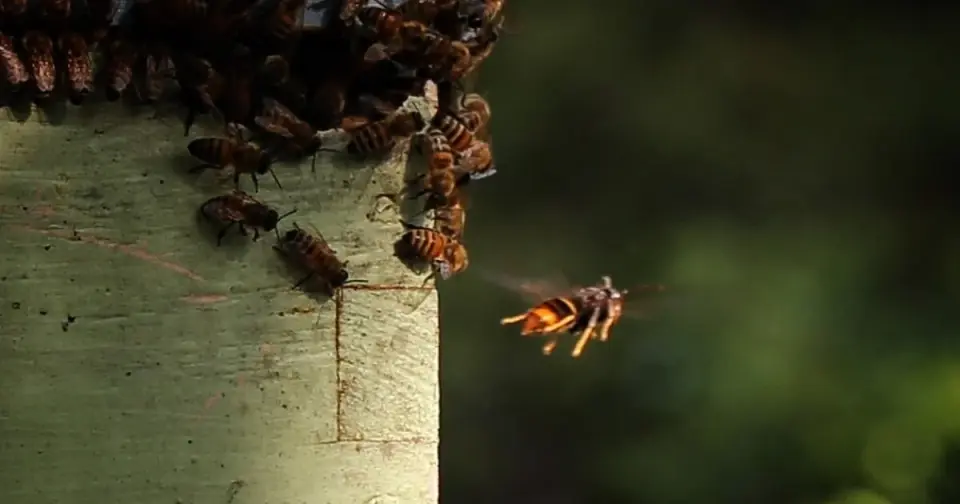
Invasive yellow-legged hornets from Asia are decimating honeybee populations in the South Carolina and Georgia Lowcountry. Clemson University’s response team has destroyed approximately 500 nests this year, up from 16 in 2024, while Georgia officials report over 1,000 individual hornets and 60 nests in August alone. The predators, which arrived in the U.S. in 2023, ambush bees near hives, causing colonies to stop foraging and risk starvation. Experts warn that without control, the threat to regional agriculture and food supply could be severe.
Key points
- Yellow-legged hornets first appeared in Georgia in 2023 and reached South Carolina’s Lowcountry in 2024, likely via cargo ships.
- Clemson University’s response team removed 16 nests in 2024 and approximately 500 nests in 2026, killing over 4,000 queens using bait.
- Georgia Department of Agriculture reported finding 1,090 hornets and 60 nests in August 2026, deploying 48 new traps.
- Hornets exhibit 'hawking' behavior, waiting outside hives to ambush returning bees, which causes colonies to hunker down and stop foraging.
- Nest removal costs up to $3,000 per site, with some nests requiring arborists to reach heights of 100 feet.
- Public reporting is critical; residents are urged to use Clemson’s online tool to report sightings, especially in gated communities where access is limited.
Background
This escalation follows earlier concerns about other invasive hornets, such as the East Asian 'murder hornet' (Vespa mandarinia) detected in the Pacific Northwest in 2026. While that species is larger and has a credit-card wingspan, the yellow-legged hornet is a specialized predator of honeybees, posing a distinct threat to pollination infrastructure in the Southeast.
How outlets are covering it
Clemson University’s Brad Cavin emphasizes the agricultural risk, noting that the Lowcountry’s abundant food sources and cover allow the hornets to thrive, with nests growing as large as exercise balls. WSB-TV highlights the scale of the infestation in Georgia, citing specific counts of 1,090 hornets and 60 nests in August, and urges public vigilance. The Daniel Island News focuses on the local impact on beekeepers and homeowners, detailing nest sizes and stages, and stressing that the threat to human health is equivalent to other stinging insects, not heightened by its invasive status. All sources agree on the need for public reporting but differ in emphasis: Clemson focuses on eradication tactics, Georgia on surveillance, and local outlets on community awareness.
Why it matters
The spread of yellow-legged hornets threatens the viability of honeybee colonies, which are essential for pollinating crops like blueberries, peaches, and watermelons in the Southeast. As colonies collapse due to predation and stress, regional agriculture faces potential losses, and the cost of nest removal places a financial burden on homeowners and local governments. Early detection and removal are critical to preventing the species from becoming permanently established across the region.
What to watch
Clemson and Georgia officials will continue deploying traps and removing nests through the fall. Public reporting remains the primary method for locating hidden nests, particularly in gated communities and areas with limited year-round access. Researchers will continue studying hornet behavior and nest structures to improve eradication strategies.
- Invasive yellow-legged hornets from Asia butcher bees in the Lowcountry South Carolina Public Radio
- More than 1,000 Yellow-Legged Hornets found in Georgia this month WSB-TV
- Over 1,000 invasive hornets found across Georgia in August as officials continue fighting threat CBS News
- Buzzkill: Predatory yellow-legged hornets arrive on Daniel Island The Daniel Island News
Want the full story? Read the original reporting
Read on South Carolina Public Radio