
Lake Mead Hits Historic Low, Triggering Federal Water Cuts and Safety Warnings
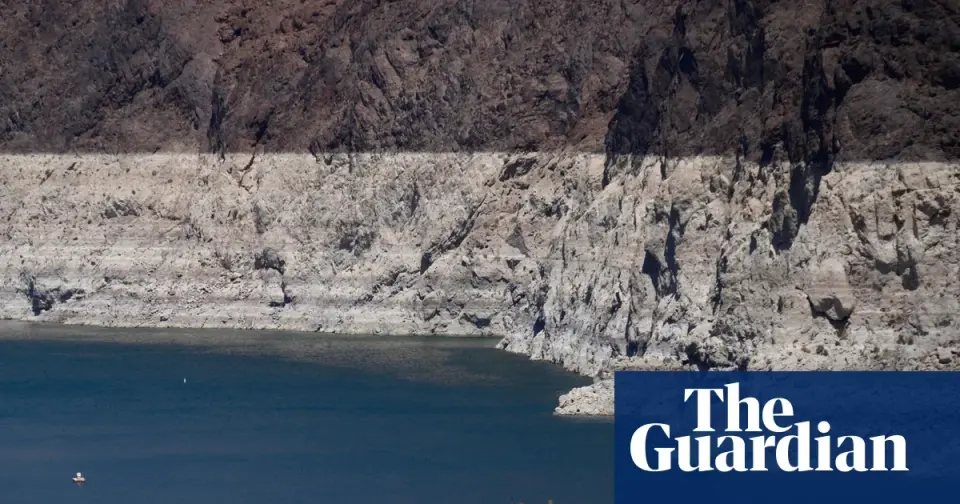
Lake Mead has reached its lowest water level in nearly 90 years, hitting 1,040.4 feet above sea level. This historic low, driven by severe drought and overuse, has prompted the US government to impose water cuts on lower-basin states and halt releases from Lake Powell to protect hydropower. The National Park Service is now marking emerging underwater hazards to protect boaters.
Key points
- Lake Mead, the largest US reservoir, dropped to 1,040.4 feet, just below the 2022 record low, affecting 40 million people across seven states and Mexico.
- The US Bureau of Reclamation announced a short-term plan requiring Arizona, California, and Nevada to reduce water usage, as long-term state negotiations failed.
- Federal officials stopped releasing cool water from Lake Powell to protect the humpback chub fish, prioritizing hydropower generation instead.
- The National Park Service is placing buoys to mark submerged rocks and hazards emerging from the receding water, warning boaters to use spotters and marine radios.
- The 2026 winter saw the worst snowpack on record for the Colorado River basin, exacerbating the crisis for farmers, industry, and wildlife.
Background
This development follows a series of record-low measurements in July 2026, where both Lake Mead and Lake Powell reached historic lows. Previous coverage highlighted that the basin is 95% in drought, with projections suggesting continued record-low storage into spring 2027. Cities in the Southwest have already implemented conservation measures, but the current federal intervention marks a shift from voluntary local actions to mandated regional cuts.
How outlets are covering it
The Guardian and Las Vegas Review-Journal emphasize the systemic failure of the Colorado River, highlighting the federal government's intervention and the failure of seven states to reach a long-term agreement. JB Hamby, a board member of the Imperial Irrigation District, stresses the need for states to reduce water use to protect 30 million people. In contrast, FOX5 Vegas focuses on the immediate safety implications for local residents, detailing how the National Park Service is adjusting buoys and warning boaters about submerged rock spires and mesa tops that are now exposed due to the dropping water levels.
Why it matters
The historic low of Lake Mead signals a critical tipping point for the American West's water infrastructure. The federal decision to prioritize hydropower over fish conservation and impose water cuts on major states like California and Arizona indicates that the crisis is now impacting energy grids and agricultural economies. If the current trajectory continues, the region faces a potential 'dead pool' scenario, threatening water security for millions and requiring massive, costly shifts in agricultural and urban water management.
What to watch
The US government is expected to release a 'record of decision' in the coming weeks, providing more details on the water cut plan. Experts warn that these short-term measures may not be sufficient to solve the long-term problems. Meanwhile, the National Park Service will continue to patrol and mark hazards as water levels fluctuate, and boaters are advised to report new obstacles via GPS coordinates.
- Lake Mead plummets to historic low water level as Colorado River struggles The Guardian
- Lake Mead, the Nation’s Largest Reservoir, Is Smaller Than Ever The New York Times
- Lake Mead reveals mountaintops hidden for decades as lake recedes sfgate.com
- Lake Mead inches from all-time low as park service warns boaters of emerging hazards FOX5 Vegas
- Lake Mead sets a new record low. It’s only the beginning Las Vegas Review-Journal
Want the full story? Read the original reporting
Read on The Guardian