
Lake Mead Hits Record Low, Exposing Hazards and Deepening Water Crisis
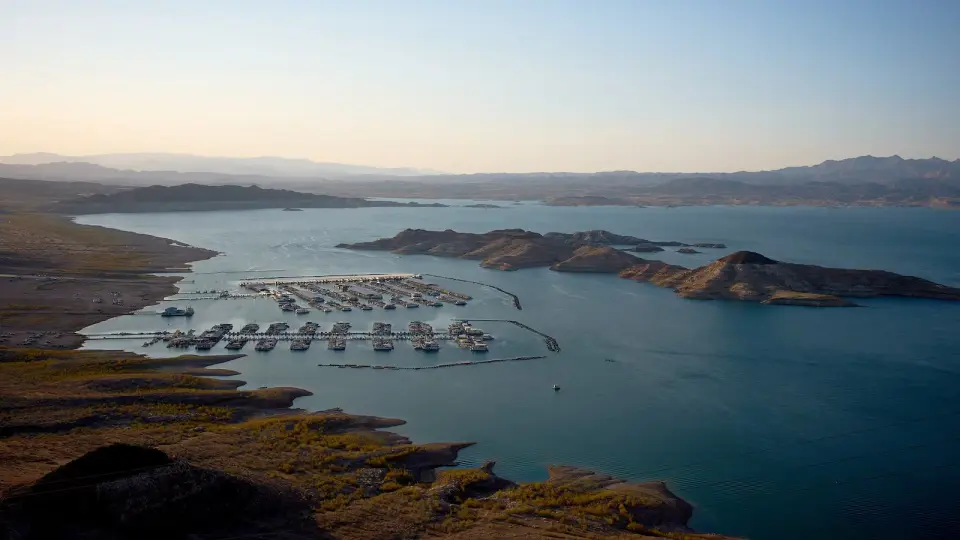
Lake Mead, the U.S. largest reservoir, reached a record-low elevation of 1,040.50 feet on August 7, 2026, breaking the previous 2022 record. This milestone signals a severe water crisis in the Colorado River basin, which supplies water to 40 million people. As levels drop, submerged hazards and human remains are emerging, while neighboring Lake Powell approaches its own record low, threatening hydropower and regional stability.
Key points
- Lake Mead's pool elevation hit 1,040.50 feet on August 7, 2026, surpassing the previous record of 1,040.58 feet set in July 2022, according to the U.S. Bureau of Reclamation.
- The National Park Service is deploying buoys to mark newly exposed rock spires and submerged hazards, urging boaters to use GPS coordinates to report dangers and carry nautical maps.
- Lake Powell, the second-largest reservoir, stood at 3,521.43 feet as of August 7, nearing its 2023 record low and the critical threshold for hydropower generation.
- The Colorado River basin provides water for up to 40 million people and hydropower to seven states, with combined reservoir levels at their lowest since before Lake Powell filled in 1963.
- Federal authorities have released a 10-year management plan proposing significant water-use cuts for Arizona, California, and Nevada, while other states face voluntary reductions.
Background
This development follows months of warnings about historic low levels in the Colorado River basin. In late July 2026, both Lake Mead and Lake Powell were already near record lows, with the basin 95% in drought. Experts noted that while El Niño might offer temporary relief, long-term trends remain dire due to climate change altering snowpack and increasing evaporation. The current crisis exacerbates existing tensions over water rights among the seven basin states and Mexico, with previous negotiations focusing on efficiency investments and crop shifts to prevent system failure.
How outlets are covering it
ABC News and USA Today emphasize the record-low milestone and the broader implications for water security, with USA Today highlighting the grim outlook and federal response. Fox5Vegas focuses on immediate safety concerns, detailing how the National Park Service is managing emerging physical hazards for boaters. WorldAtlas provides a technical analysis of potential 'dead pool' scenarios, outlining the cascading effects on hydropower, agriculture, and international treaties if levels drop further. While all sources agree on the severity, ABC and USA Today frame it as a crisis requiring urgent policy action, Fox5Vegas highlights local operational responses, and WorldAtlas details the long-term structural risks to the entire basin's infrastructure.
Why it matters
The record-low level of Lake Mead marks a critical threshold in the Colorado River basin's water crisis, directly impacting 40 million people and 5 million acres of agricultural land. It signals the potential loss of hydropower and the need for drastic water-use cuts, forcing states to negotiate new allocation rules. The exposure of submerged hazards also poses immediate safety risks to recreation and navigation, while the broader trend threatens food security, economic stability, and international relations with Mexico.
What to watch
Federal officials plan to release additional details of the 10-year water management plan in the coming days. Arizona and other lower-basin states are expected to continue negotiating the proposed cuts. Hydrologists project that Lake Powell may reach its own record low by early spring 2027, potentially triggering hydropower losses. Long-term, the basin will require significant investments in water efficiency, groundwater management, and infrastructure to adapt to a drier climate.
- Lake Mead, nation's largest reservoir, reaches its lowest water level on record ABC News - Breaking News, Latest News and Videos
- Lake Mead reveals mountaintops hidden for decades as lake recedes SFGATE
- Lake Mead inches from all-time low as park service warns boaters of emerging hazards fox5vegas.com
- What Happens If Lake Powell And Lake Mead Both Fail WorldAtlas
- Lake Mead, nation's largest reservoir, hits record low USA Today
Want the full story? Read the original reporting
Read on ABC News - Breaking News, Latest News and Videos