
Lake Powell Hits Record Low, Threatening Western Hydropower and Water Supply
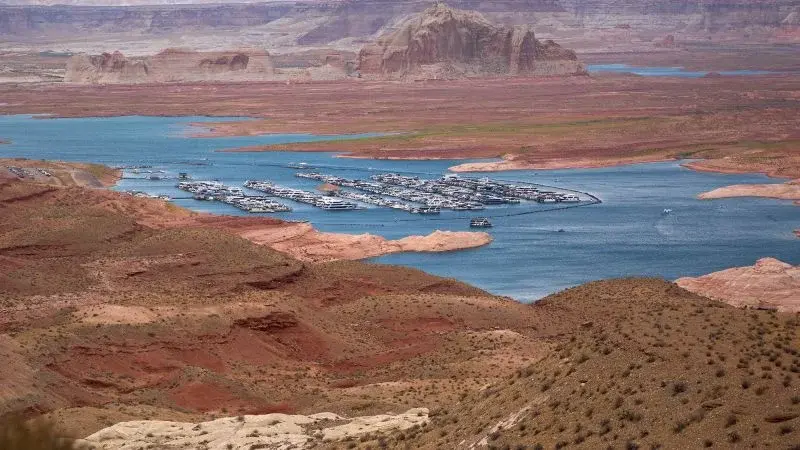
Lake Powell, the second-largest reservoir in the United States, has dropped to a record low of 3,519.91 feet, signaling a deepening crisis in the Colorado River basin. This decline threatens hydropower generation for nearly 500,000 households and water supplies for 40 million people across seven states. While Lake Mead also recently hit a record low, experts warn that even a wet winter will not reverse long-term drought trends driven by climate change and overuse.
Key points
- Lake Powell reached 3,519.91 feet on August 15, breaking the previous record low of 3,519.92 feet set in April 2023, according to the US Bureau of Reclamation.
- The reservoir is now less than 30 feet above 'minimum power pool' (3,490 feet), the level at which the Glen Canyon Dam can no longer generate electricity.
- The Colorado River basin has shrunk by roughly 20% since 2000 due to climate change, increased temperatures, and heavy water use.
- Federal authorities are expected to publish a plan soon detailing water cuts for states through 2028, following failed negotiations among the seven basin states.
- Experts warn that reaching 'dead pool' levels below 3,370 feet would stop all downstream water flow, a scenario they deem unlikely but possible without drastic measures.
Background
This development follows Lake Mead’s record low in early August 2026, as noted in our archive. The Colorado River system has been in a prolonged decline for over two decades, with both major reservoirs shrinking significantly. Previous coverage highlighted the tension between hydropower needs and ecological concerns, such as the humpback chub, which has influenced dam release policies.
How outlets are covering it
CNN and USA Today agree on the record-low status and the threat to hydropower, but they emphasize different aspects of the crisis. CNN focuses on the immediate risk to electricity generation and the potential for 'draconian' water use reductions, citing experts like Jack Schmidt and Brad Udall. USA Today highlights the broader climate context, noting that the West is warming faster than the rest of the country, and mentions extreme proposed solutions like piping water from the Mississippi River or removing the Glen Canyon Dam. Both outlets acknowledge that while El Niño may bring some rain, it will not reverse the long-term trend of declining water levels.
Why it matters
The record low in Lake Powell underscores the severity of the Colorado River crisis, which affects 40 million people and 5 million acres of farmland. If the reservoir reaches minimum power pool, it could lead to significant electricity shortages in the Southwest. The potential for 'dead pool' levels could result in severe water cuts for cities, farms, and Native American tribes, exacerbating social and economic tensions in the region.
What to watch
Federal authorities are expected to release a plan in the coming days specifying water cuts for states through 2028. Water managers are monitoring the reservoir closely, with some cities like Phoenix and Tucson already preparing backup supplies. The outcome of the upcoming winter snowpack will be critical, but experts warn that even a record snowpack will not be enough to reverse the long-term decline in the Colorado River system.
- ‘Uncharted territory’: Second-largest reservoir in US plunges to a record low CNN
- Lake Powell, the vital reservoir for the Southwest, hits record low USA Today
- Lake Powell and Lake Mead water levels hit record lows NPR
- Lake Powell, nation's second-largest reservoir, hits record-low level ABC News - Breaking News, Latest News and Videos
- Lake Mead, the Nation’s Largest Reservoir, Is Smaller Than Ever nytimes.com
Want the full story? Read the original reporting
Read on CNN