
Lake Powell Hits Record Low, Threatening Power and Water for 40 Million
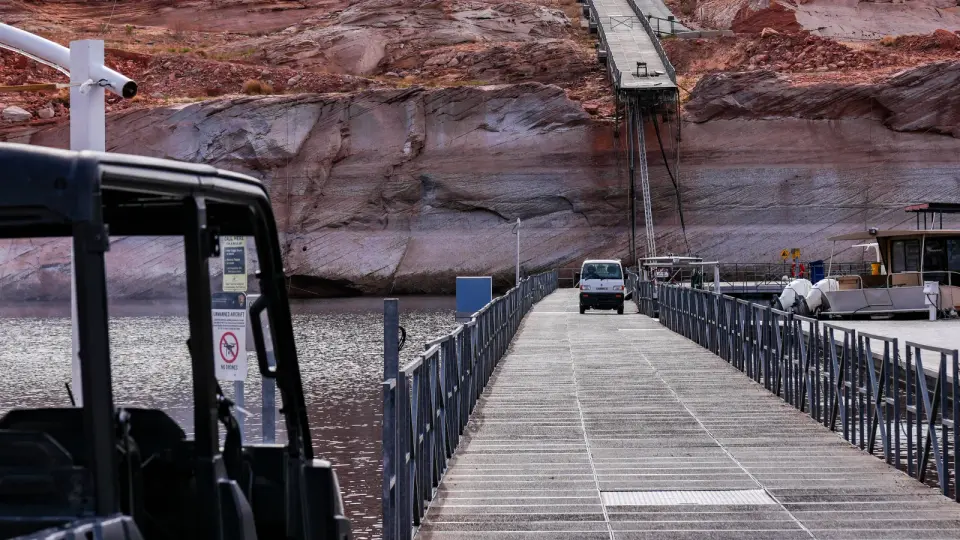
Lake Powell has dropped to its lowest level ever, signaling a critical failure in the Colorado River system that threatens hydropower and water supplies for millions across the American Southwest.
Key points
- Lake Powell reached 3,519.91 feet on August 15, 2026, breaking the previous record low of 3,519.92 feet set in April 2023, according to the Bureau of Reclamation.
- The reservoir is now within 30 feet of 'minimum power pool' at 3,490 feet, a level that would halt electricity generation for nearly 500,000 households.
- Federal officials are pulling water from upstream reservoirs to delay reaching critical thresholds, but projections suggest the lake may hit minimum power pool by early spring 2027.
- The Colorado River basin has shrunk by roughly 20% since 2000 due to climate change, reduced snowpack, and increased demand from a growing population.
- A new federal plan released in September mandates significant reductions in water releases from Lake Mead, impacting agriculture in California and Arizona.
Background
This development follows a series of record-low measurements for both Lake Powell and Lake Mead throughout 2026. Previous coverage in July noted that both reservoirs were at historic lows, with experts warning that the basin was 95% in drought. Cities like Phoenix and Tucson had already implemented strict conservation measures, including desalination and irrigation limits, to prepare for potential cuts. The current drop confirms the trajectory predicted in earlier months, where officials warned that without major changes, the system would face a 'dead pool' scenario where water could no longer flow downstream.
How outlets are covering it
USA Today emphasizes the immediate threat to hydropower and the potential for 'draconian' water cuts affecting California's Imperial Valley, highlighting the urgency of the situation. CNN focuses on the broader systemic failure, noting that the Colorado River serves 40 million people and 5 million acres of farmland, and describes the current state as 'uncharted territory.' While both outlets agree on the severity, USA Today details specific proposals like importing water from the Mississippi or using nuclear desalination, whereas CNN highlights the political impasse among the seven basin states and the federal government's intervention to impose cuts through 2028. Experts cited by CNN, such as Sarah Porter, note that while cities can afford alternative supplies, tribes and smaller communities face greater risks.
Why it matters
The record low in Lake Powell is not just a local issue but a signal of a collapsing water infrastructure system that supports the entire American Southwest. If the lake reaches 'dead pool' levels, it could trigger severe restrictions on drinking water and irrigation, impacting economies from the Pacific coast to the Rocky Mountains. The crisis underscores the long-term impacts of climate change on water availability and the inadequacy of current management strategies to handle a warming, drier West.
What to watch
Federal authorities are expected to publish a detailed plan specifying exact water reductions for states through 2028. The next critical milestone is the spring 2027 snowmelt season; if it is not exceptionally wet, Lake Powell may reach minimum power pool, halting electricity generation. Long-term, experts predict continued decline in Colorado River flows, requiring major investments in water efficiency, crop shifts, and potentially controversial infrastructure projects to prevent a total system failure.
- Lake Powell, the vital reservoir for the Southwest, hits record low USA Today
- ‘Uncharted territory’: Second-largest reservoir in US plunges to a record low CNN
- Lake Powell and Lake Mead water levels hit record lows NPR
- Lake Powell, nation's second-largest reservoir, hits record-low level ABC News - Breaking News, Latest News and Videos
- Lake Mead, the Nation’s Largest Reservoir, Is Smaller Than Ever The New York Times
Want the full story? Read the original reporting
Read on USA Today