
US Iran Conflict Enters Strategic Deadlock as Allies Form New Defense Pact
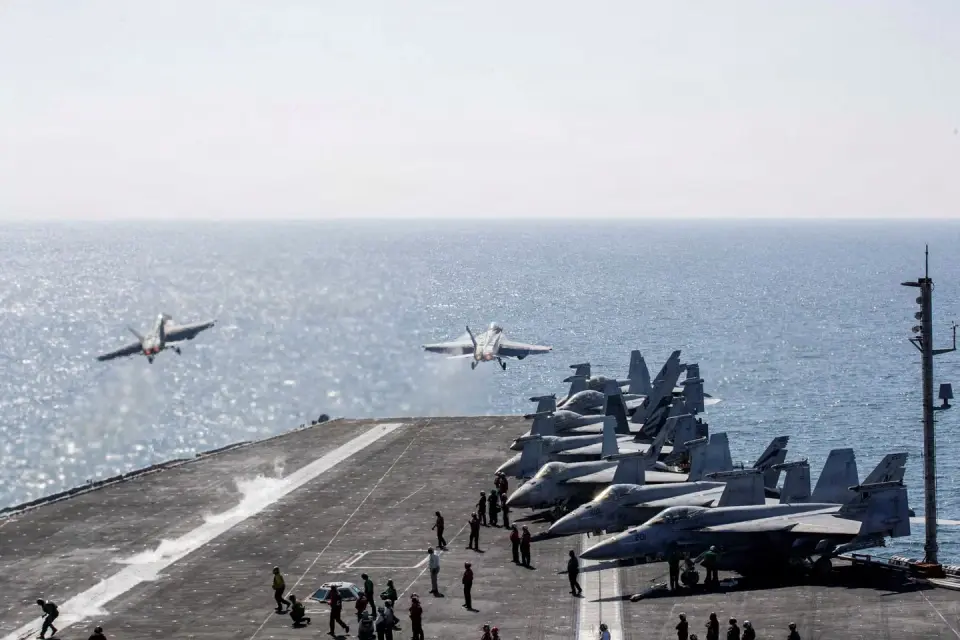
The US conflict with Iran has evolved into a strategic quagmire characterized by shifting objectives, severe information opacity, and deteriorating military conditions. While the Pentagon maintains strict secrecy, reports reveal poor living conditions for sailors on the USS Abraham Lincoln. Simultaneously, US credibility is eroding, prompting Saudi Arabia, Turkey, and Pakistan to sign a joint defense pact, signaling a shift away from reliance on Washington.
Key points
- The USS Abraham Lincoln has been deployed for over eight months, with sailors reporting broken facilities and lack of hot water, though the Pentagon denies supply issues.
- US objectives have shifted from dismantling Iran's nuclear program to securing the Strait of Hormuz, creating a strategic impasse with no clear path to victory.
- Three competing US policy camps exist: hawks favoring increased pressure, restrainers advocating for immediate de-escalation, and a middle group supporting a naval blockade.
- Saudi Arabia, Turkey, and Pakistan signed the Mecca Joint Defense Agreement, pledging mutual defense in a move that signals declining trust in US security guarantees.
- The conflict has global economic implications, with Iran's control of the Strait of Hormuz threatening global fuel and food supplies.
Background
The conflict began with US strikes under Operation Epic Fury, initially aimed at ending Iran's nuclear program and destroying military capabilities. Previous coverage noted shifting US-Iran dynamics and Trump's reluctance to fully coordinate with Israel. Recent diplomatic efforts, including Iran's reframing of Gulf security to include maritime access, have complicated the strategic landscape.
How outlets are covering it
Le Monde highlights the Pentagon's strict information control and the deteriorating conditions for US sailors, contrasting this with the transparency of the Russian-Ukrainian conflict. Politico emphasizes the strategic deadlock and the lack of a coherent US strategy, noting that the conflict's global impact exceeds that of the Iraq war. The Washington Post focuses on the erosion of US credibility, citing the new Mecca Joint Defense Agreement as evidence that allies are building alternatives to US security guarantees.
Why it matters
The US-Iran conflict threatens global economic stability through the Strait of Hormuz and is reshaping Middle Eastern alliances. The lack of a clear US strategy and the erosion of trust among traditional allies could lead to a more fragmented and unstable international order, with significant implications for global security and economic policy.
What to watch
The US faces a choice between escalating military pressure, de-escalating, or maintaining a naval blockade. The outcome will depend on Iran's resilience, the effectiveness of sanctions, and the ability of the US to rebuild trust with its allies. The next US president may inherit a complex and unresolved conflict.
- Trump's silent Iran war: Withheld information, shifting objectives and skilled deception Le Monde.fr
- The Iran War Is a Whole New Level of Quagmire for the US Politico
- Opinion | The Iran war is a master class in squandering a superpower’s credibility The Washington Post
- Trump’s New Strategy of Nothing The Atlantic
- Iran just raised the price of Trump’s waiting game The Hill
Want the full story? Read the original reporting
Read on Le Monde.fr