
Iran’s Seven-Day Hormuz Proposal Tests U.S. Resolve Amid Midterm Election Pressure
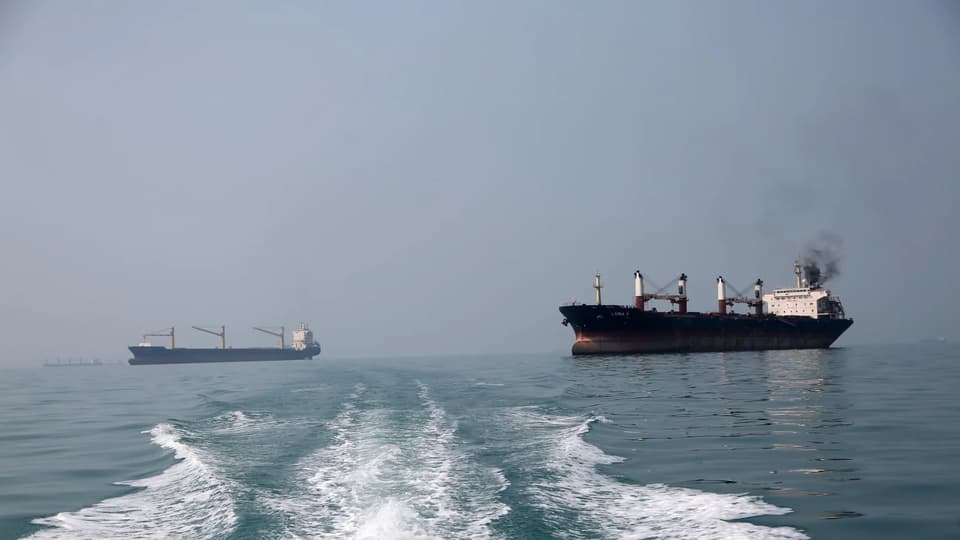
Iran has proposed reopening the Strait of Hormuz and resuming nuclear talks within seven days if the U.S. accepts conditions tied to a collapsed June ceasefire. The offer, delivered via mediators during the UN General Assembly, coincides with escalating regional violence and Chinese diplomatic pressure. While Tehran seeks a deal before U.S. midterm elections, Washington maintains a hardline stance, and oil prices dipped slightly on the news.
Key points
- Iranian Foreign Minister Abbas Araghchi stated that the Strait of Hormuz could reopen within seven days if the U.S. meets conditions outlined in the June Islamabad Memorandum of Understanding, which collapsed in July.
- President Masoud Pezeshkian expressed a desire to reach a deal before the November U.S. midterm elections, contrasting with President Trump’s assertion that a settlement is more likely after the elections.
- Vessel transits through the Strait of Hormuz have plummeted to just nine, far below peacetime levels, while the Houthis launched missiles and drones at Saudi Arabia, triggering emergency alerts in Mecca and Jeddah.
- China’s President Xi Jinping is in Washington for a state visit, with the U.S. seeking Beijing’s help to pressure Tehran, while U.S. officials warned China against providing direct or indirect support to Iran.
- Oil prices fell slightly, with Brent crude dropping 1% to $105.56 per barrel and WTI falling 1.8% to $92.94 per barrel, reflecting market reactions to the potential for de-escalation.
Background
This diplomatic push follows a nearly seven-month conflict between the U.S./Israel and Iran, which began in late February 2026. A June ceasefire agreement, known as the Islamabad MOU, collapsed in early July, leading to a U.S. naval blockade and zero Iranian crude exports in September. Earlier in September, U.S. Energy Secretary Chris Wright suggested that a comprehensive nuclear deal might be delayed until a new Iranian administration, highlighting the deepening impasse.
How outlets are covering it
Outlets highlight a stark contrast between public rhetoric and backchannel diplomacy. CNBC and NBC News emphasize the concrete seven-day proposal and the timing relative to U.S. elections, noting that Pezeshkian wants a deal before midterms while Trump expects one after. Fox News frames the situation as a power imbalance, with experts suggesting Trump 'holds the cards' and views Iran’s defiant UN speeches as predictable posturing. Al Jazeera focuses on the broader regional fallout, including Saudi emergency alerts and the role of mediators like Qatar and Pakistan. While all sources agree on the proposal’s existence, they differ on the likelihood of success, with some viewing it as a genuine off-ramp and others as a stalling tactic.
Why it matters
The Strait of Hormuz carries roughly 20% of global oil supply. Its closure has severely disrupted global energy markets and supply chains. A resolution could stabilize oil prices and reduce regional instability, but the failure to reach a deal risks further escalation, including potential U.S. military action and broader conflict involving Saudi Arabia and other Gulf states.
What to watch
The next 72 hours are critical as the U.S. evaluates Iran’s conditions. If the U.S. rejects the proposal, tensions may escalate further, potentially leading to renewed strikes. If accepted, it could pave the way for a return to the Islamabad MOU terms. Additionally, the outcome of the U.S.-China summit in Washington will influence whether Beijing continues to pressure Tehran or maintains its current stance.
- Iran says it's up to U.S. to end war as China presses for de-escalation CNBC
- Iran's president says his country has 'no trust' in U.S. in meeting with journalists NPR
- Iran’s president says Tehran wants a deal with U.S. before midterm elections NBC News
- Trump likely ‘smirked’ as 'crass' Iranian president lashed out at US in UN speech: expert Fox News
- Iran war updates: Tehran says hopes US returns to MoU before elections Al Jazeera
Want the full story? Read the original reporting
Read on CNBC