
Israel's Regime Change Goal Faces Strategic and Political Limits
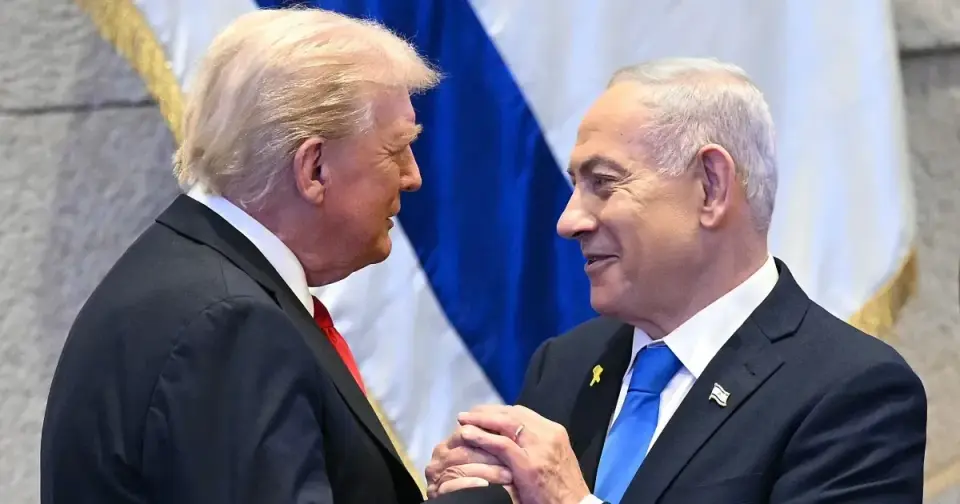
Israeli Prime Minister Benjamin Netanyahu has declared the overthrow of the Iranian government his primary objective, a stance he reiterated during a visit by US Defense Secretary Pete Hegseth. While Israel possesses the firepower to strike Iranian targets, analysts argue that air power alone cannot achieve regime change without a costly ground invasion. Washington has not approved a new offensive, with President Donald Trump blocking strikes before the US midterm elections. Israel recently conducted a 'power projection' flight near the Iranian border, but experts warn that without US support for deep-strike capabilities, Israel cannot force political collapse in Tehran.
Key points
- Netanyahu stated that toppling Iran's regime is Israel's main goal, despite facing declining poll support ahead of the October 27 elections.
- US and Israeli officials are planning potential strikes for early November, after the US midterm elections, targeting energy, nuclear, and missile infrastructure.
- Analysts note that Israel lacks the capability to destroy deeply buried facilities without US weapons, such as the GBU-57 bunker-buster used in 2025.
- Iran retains significant missile stockpiles and has threatened to target US-linked data centers and subsea cables in the Gulf if attacked.
- A recent Israeli air sortie near the Iranian border was described as a deterrent exercise, though some US officials suspected it sought to provoke an Iranian response.
Background
This development follows a war that began on February 28, 2026, and a previous round of strikes in June 2025. Netanyahu has long advocated for regime change, previously acknowledging in March that air power alone is insufficient. The current standoff occurs amid a US blockade of Iranian ports and ongoing tensions in the Strait of Hormuz, which has disrupted global energy trade. Earlier in October, Netanyahu predicted the Iranian regime would collapse, while Iran warned of a regional war.
How outlets are covering it
Al Jazeera emphasizes the strategic gap between military damage and political change, noting that analysts doubt air strikes can overthrow the government without a ground presence. Time Magazine highlights the political timing, suggesting strikes may be delayed until after the US midterms to avoid disrupting Republican prospects. NPR reports that US and Israeli planners are amassing forces for an early November attack, while Axios focuses on the recent 'power projection' flight, noting US officials were unsure if Israel intended to provoke a conflict. All sources agree that US approval is the central constraint, with Trump having previously rejected multiple proposals for major operations.
Why it matters
The potential for renewed conflict threatens to disrupt global energy supplies and escalate a regional war. If Israel acts without US support, it may face a prolonged and costly conflict, as Iran retains the ability to retaliate against US assets in the Gulf. The outcome will influence the trajectory of the US-Iran relationship and the stability of the Middle East in the coming year.
What to watch
Watch for US decisions on military support after the November 3 midterms. Monitor Iranian responses to Israeli military movements and any changes in the Strait of Hormuz. Follow the Israeli elections on October 27, as Netanyahu may use the threat of strikes to form a unity government.
- Netanyahu promises Iran regime change: Can Israel topple Tehran government? Al Jazeera
- U.S. Reportedly Considering Major Strikes on Iran After Midterms Time Magazine
- U.S. and Israel are planning for a possible post-midterms attack on Iran NPR
- Israeli military conducts massive "power projection" operation near Iran's border Axios
- Netanyahu says U.S. and Israel must topple Iranian regime The Washington Post
Want the full story? Read the original reporting
Read on Al Jazeera