
US Navy SEALs Conducted Secret Four-Month Demining Operation in Strait of Hormuz
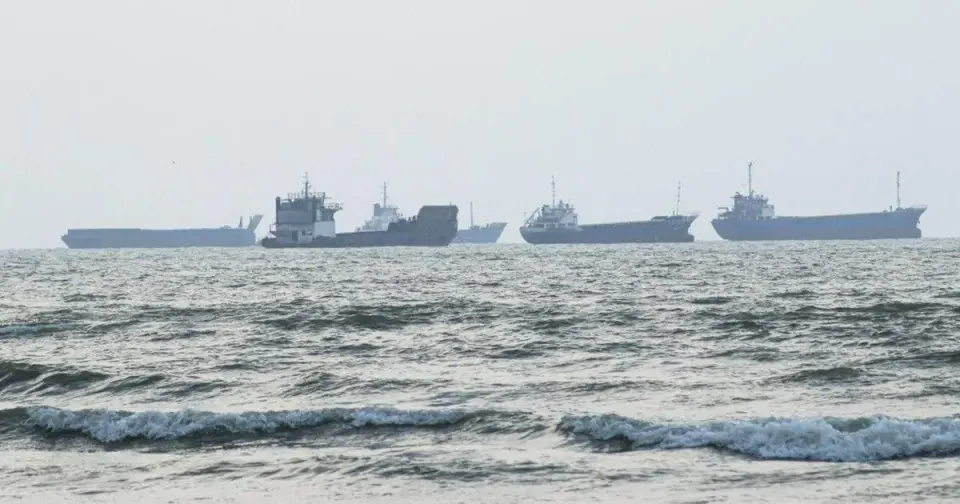
The United States conducted a covert four-month operation to clear mines from the Strait of Hormuz, deploying Navy SEAL divers, robotic boats, and specialized underwater craft mostly at night, according to the Financial Times. The mission aimed to reopen the critical oil route after Iran claimed to have laid mines following US-Israeli strikes in February. While President Trump declared all mines removed, shipping experts remain cautious about the waterway's safety due to the risk of re-mining and ongoing missile threats.
Key points
- The covert operation involved small teams of Navy SEAL divers using inflatable boats, supported by unmanned surface vessels and submersibles with high-resolution sonar to locate and destroy mines on the seabed.
- No US casualties were reported during the four-month mission, which began after Iran stated it had placed mines in international and Omani waters following the start of the conflict in February.
- The International Maritime Organization estimated in June that roughly 80 mines had been deployed along key shipping routes, though analysts note satellite imagery has not provided clear evidence of widespread mine-laying.
- Shipping executives and security advisers are confident the southern part of the strait near Oman, where US forces direct vessels, has been cleared, but remain doubtful that the entire waterway is free of mines.
- Iran’s Revolutionary Guards claimed a supertanker struck two mines on August 31, but maritime authorities have reported no confirmed mine strikes, and the only confirmed sighting was by a Pakistani survey vessel in May.
Background
This development follows earlier reports of a covert US-led corridor through the southern Strait of Hormuz, which has been moving approximately 10 million barrels of oil daily since late June. Previous discussions between Oman and Iran in August explored interim shipping corridors and coordinated mine-clearing plans, though tensions have persisted due to US sanctions and security concerns. The current demining effort is part of a broader strategy to restore commercial traffic to the strait, which handles about 20% of global oil transports, amid ongoing economic pressure on Iran.
How outlets are covering it
The Financial Times and The Jerusalem Post emphasize the technical complexity and danger of the operation, highlighting the use of advanced robotics and the lack of US casualties. The New York Post focuses on the strategic implications, noting that while Trump declared the strait clear, traffic remains at historic lows due to uncertainty. The Times of India provides a broader analysis, pointing out that mines have become an 'information weapon' for Iran, as the mere perception of danger deters shipping and raises insurance costs. All sources agree that while the southern route near Oman is likely safe, the central and northern routes remain contested, and the risk of re-mining by Iran continues to pose a significant threat to full restoration of normal traffic.
Why it matters
The safety of the Strait of Hormuz is critical for global energy markets, as it is a primary chokepoint for oil exports. The success or failure of this demining operation directly impacts oil prices, shipping insurance costs, and the stability of global supply chains. If the strait remains partially closed or perceived as dangerous, it could lead to prolonged economic strain for both Iran and global consumers, while also influencing diplomatic efforts to de-escalate the conflict between the US and Iran.
What to watch
The US has warned it will attack any vessels attempting to deploy new mines and struck Iranian rocket launchers on August 30 that were preparing to fire mines into the strait. Maritime authorities and analysts will continue to monitor traffic levels and any confirmed mine incidents. The long-term reopening of the strait may require international cooperation, including potential contributions from NATO allies for mine-countermeasure capabilities, and a sustained cessation of hostilities to ensure that cleared areas remain safe for commercial transit.
- US carried out covert four-month Hormuz mine-clearing mission - FT Iran International
- The risky mission to de-mine the Strait of Hormuz Financial Times
- US Navy SEALS spent four months demining the Strait of Hormuz in dangerous, nighttime mission New York Post
- US Navy SEALs conducted covert four-month mission to clear Strait of Hormuz mines - report The Jerusalem Post
- Can the US really make Hormuz safe? The dangerous battle against Iran’s sea mines The Times of India
Want the full story? Read the original reporting
Read on Iran International