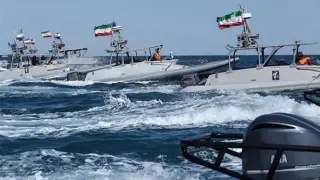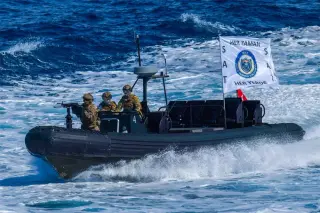
The U.S. is pressuring Iran to publicly pledge that the Strait of Hormuz is open and to stop firing on ships, setting a Saturday deadline as negotiations over a fragile MOU and a broader nuclear deal continue, with Oman mediating and Washington warning of consequences if Iran refuses.
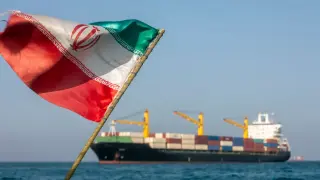
Core to the renewed US-Iran conflict is control over the Strait of Hormuz and how the MoU to keep it open should be implemented. Iran argues navigation should be coordinated with Tehran and could entail tolls, while the US seeks uninterrupted passage through international routes. Despite the truce, ship attacks and retaliatory strikes persist, underscoring the MoU's ambiguous language and competing interpretations. Both sides face domestic pressures that could prevent a full-scale war, but the risk of a longer confrontation remains.
Ukraine says its unmanned forces struck 21 Russian-flagged vessels in the Sea of Azov within 72 hours, including nine tankers overnight on July 8, as part of a campaign to choke fuel supplies to Russian-occupied Crimea; security firm Ambrey warns the strikes mark a major escalation in maritime warfare and notes potential Russian retaliation in coming days, with increased risk to seafarers.
Tensions over the Strait of Hormuz have intensified as Iran and the US accuse each other of violating Article 5 of their MoU, which aims to reopen the strait with safe, toll-free passage for ships for 60 days and calls for demining within 30 days. Iran has asserted control over the strait for the initial period, while the US and Gulf partners seek to maintain open shipping routes, leading to a cycle of attacks on vessels and retaliatory strikes. Analysts say the disagreement centers on how to interpret the MoU, offering a potential path to de-escalation if both sides align on terms.
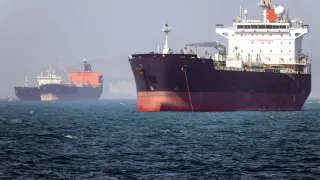
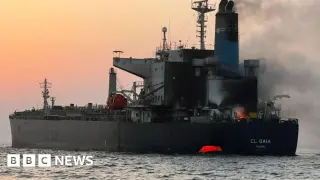
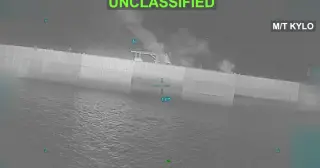
An unidentified attacker hit a tanker in the Strait of Hormuz near Oman; the crew is safe and there is no environmental damage reported. While no group claimed responsibility, Iran is suspected given its threats over transit rules and potential fees for passage through the strait. Authorities warn of mines and a naval presence as traffic through the strategic route expands and more ships move in and out of the Gulf.
After Iran’s drone strike damaged the Ever Lovely, the US retaliated by striking Iranian missile and drone storage locations and coastal radar sites; Iran responded with attacks on US bases, raising questions about the durability of the June ceasefire memorandum of understanding and the ongoing effort to keep commercial shipping through the Strait of Hormuz.
ISW and CTP report Iran is escalating attempts to control the Strait of Hormuz through attacks and warnings to ships, including an IRGC Navy strike near Oman, pressuring vessels to use Iran’s traffic scheme and aiming to undermine international safe-passage efforts. The United States and GCC issued a joint statement rejecting tolls or any control of the strait, while Gulf states resist Iranian incentives such as proposed fees that could generate tens of billions annually. The IMO-Oman safe-route initiative challenges Iran’s leverage, and most ships have continued to use alternative routes. Diplomatic channels with Oman and broader US–Iran talks continue, with no clear concessions from Gulf states yet.,”
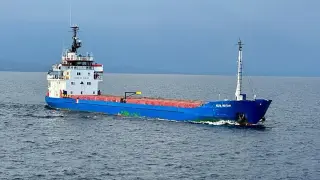
A Russian drone strike hit the Turkish-owned bulk carrier Victress in the Black Sea, setting it on fire and killing a 58-year-old cook; eight crew were evacuated as Ukrainian authorities reported other Russian attacks causing casualties in Odesa and Zaporizhzhia.
The Strait of Hormuz is set to reopen after roughly four months of disruption, but industry officials warn the traffic restart will be gradual. A backlog of about 118 tankers could take 10–15 days to clear, with full normalization potentially taking weeks to months as authorities coordinate traffic management, permits, escort arrangements, insurance, and mine clearance. Oil and LNG shipments are likely to regain priority, while pricing remains sensitive to the pace of the restart; near-term oil prices dipped on news of a U.S.–Iran deal, but a durable recovery will depend on a stable operating environment and ongoing security assurances.
China’s security ministry claims foreign powers are waging an ‘undersea espionage’ campaign using sensor-equipped marine life—turtles, fish and other devices—plus buoys and wave gliders to gather oceanographic data and map its coastline, with real-time data beamed to satellites; officials warn such intelligence activities could threaten national security and are offering rewards (up to 500,000 yuan) for catching the spies, though there is no independent verification of the claims.
Xi Jinping’s June 8–9 trip to Pyongyang signals tacit Chinese acceptance of North Korea’s nuclear status and a push for closer PRC–NK coordination, a move that could embolden Kim Jong Un in seeking concessions from the US and South Korea while signaling a shift away from denuclearization rhetoric. Separately, Taiwan’s KMT leader Cheng Li-wun completed a U.S. visit (June 12) to advocate cross-strait engagement, underscoring Beijing’s layered diplomacy. In the maritime domain, China conducted a June 6–10 law-enforcement operation east of Taiwan to assert EEZ rights and practice A2AD-style control, coordinating with coast guard and civilian vessels around Pratas and Itu Aba and signaling potential moves toward a more permanent presence in the South China Sea (including a manned structure near Scarborough Shoal). Dutch frigate De Ruyter’s Taiwan Strait transit, tracked by China and reportedly jammed, highlighted ongoing freedom-of-navigation tensions. Within the CCP, Cai Qi was named head of the Central Party School, reflecting Xi’s confidence in trusted lieutenants amid internal purges. In Oceania, New Zealand sanctioned four MPs for visiting Taiwan, risking friction in Five Eyes ties. Taiwan’s drone program remains a fiscal battleground as the DPP pushes for five-year funding while opposition parties seek to fold it into the general budget, a dynamic that maps onto broader deterrence needs highlighted by Ukraine’s drone warfare lessons.
China's state security ministry claims foreign intelligence services are using novel methods to monitor its waters, including sensors attached to large marine animals dubbed 'spy turtles' and 'spy fish', as well as wave gliders and sensor buoys that transmit real-time data on water conditions and submarine activity; Beijing says this threatens national security and notes rewards for fishermen who report spying devices (50,000 to 500,000 yuan).
China dispatched six maritime enforcement vessels—two China Coast Guard cutters, three Maritime Safety Administration patrol ships, and a Rescue Service vessel—east of the Luzon Strait near Taiwan in a second 'special maritime law enforcement operation' amid a diplomatic dispute with the Philippines and Japan; Taiwan says the flotilla was about 140 nautical miles east of the island and focuses on deep-sea enforcement and traffic control, a move it calls expansionism; the operation follows talks between Manila and Tokyo to delimit EEZ boundaries and signals Beijing’s ongoing push to expand its presence in key eastern waters.
The Philippines is verifying unconfirmed reports that China may have installed a small structure inside Scarborough Shoal. Officials caution it could be a buoy or drifting object, not a confirmed installation. Scarborough Shoal has long been a flashpoint in the South China Sea dispute. Recent joint activity near the shoal included Philippine and U.S. naval forces training, while China claims it has conducted patrols. Philippine leaders discussed regional tensions with U.S. Secretary of State Rubio, and monitoring continues to determine whether any fixed structure exists or if further actions are needed.
France, aided by a Royal Navy helicopter from HMS Somerset, intercepted the sanctioned Russian oil tanker Tagor about 400 nautical miles west of Brittany in international waters after it is alleged to have flown a false flag. The operation targets ships tied to Russia’s shadow fleet used to evade sanctions on oil exports; Macron said the intervention upholds the law of the sea and halts funds for Russia’s war. Moscow denounced the move as piracy. This marks the fourth such boarding by France since 2025 as part of a broader allied effort to disrupt sanctioned shipments.