
Shenzhen Summit Fails to Deliver Substance as Europe Rejects 'Yalta 2.0' Narrative
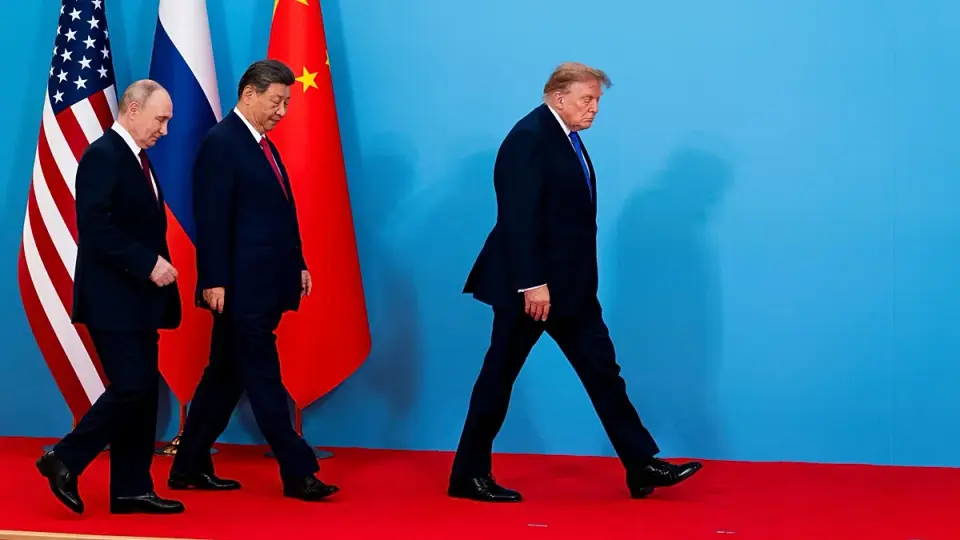
The trilateral summit in Shenzhen between Donald Trump, Vladimir Putin, and Xi Jinping produced a vague joint declaration but no concrete outcomes, drawing sharp criticism from European leaders who rejected the 'Yalta 2.0' framing. While the meeting offered symbolic prestige for the leaders, it failed to address the war in Ukraine or secure meaningful peace terms, prompting Europe to assert its own diplomatic agenda in Berlin.
Key points
- The 80-minute meeting in Shenzhen resulted in a 'Declaration toward Peace' that lacked specifics on UN reform, fuel shipments, or nuclear risk dialogue, and notably omitted any mention of the war in Ukraine.
- Putin defended the 'Yalta 2.0' comparison, arguing that the 1945 conference merely codified existing realities, while Xi Jinping urged leaders to 'abandon Cold War thinking,' creating a paradoxical ideological alignment among the three leaders.
- European leaders, including German Chancellor Friedrich Merz and French President Emmanuel Macron, rejected the Shenzhen format at a Berlin summit, stating that Europe would not be 'parcelled up' and insisting on a central role in any future peace negotiations.
- The summit occurred amid a volatile backdrop: Trump faced domestic political setbacks after Democrats won both chambers of Congress, while Putin vowed to halt negotiations with Ukraine following an attack on the Crimean Bridge.
- Analysts noted that while the leaders shared a revisionist worldview regarding sovereignty and spheres of influence, the meeting produced symbolism rather than substance, with the US-China trade truce set to expire in January.
Background
This summit followed a period of intense diplomatic maneuvering where European, Ukrainian, and US officials met in multiple cities to develop security guarantees for Ukraine. Previous coverage highlighted Europe's growing resilience against being excluded from peace talks, a shift from 2025 when Washington deliberately kept Europe out of the loop. The current meeting in Berlin, part of the 'Coalition of the Willing,' marked a concerted effort by European capitals to project unity and assert that they, rather than great powers, would shape the post-war order.
How outlets are covering it
Euronews characterized the summit as a 'wannabe knock-off' of Yalta, noting that Trump appeared to doze off and gained little beyond photo opportunities, while Xi controlled the stage to promote an alternative to the Western-led order. The Atlantic emphasized the historical irony, pointing out that the original Yalta conference led to Soviet repression in Eastern Europe, and described the current meeting as a farce involving diminished leaders. Foreign Policy argued that while the summit lacked substance, the ideological alignment of the three leaders on sovereignty and anti-Western principles was historic and potentially more significant than the Yalta comparison suggests. Yahoo focused on Putin's defense of the Yalta analogy, highlighting his vow to retaliate against Ukraine after the Crimean Bridge attack and his insistence that 'realities on the ground' must be accepted, which Ukrainian officials dismissed as a delusion.
Why it matters
The summit underscores the fragility of the current global order and the risk of great-power deals being made without European or Ukrainian input. Europe's rejection of the 'Yalta 2.0' narrative signals a shift toward asserting strategic autonomy, but the lack of concrete outcomes from Shenzhen leaves the path to peace in Ukraine uncertain. The ideological convergence among Trump, Putin, and Xi on issues of sovereignty and multilateralism could reshape international norms, potentially undermining the post-war liberal order and setting the stage for a new era of great-power competition.
What to watch
European leaders are expected to continue building a close-knit working group to develop security guarantees and recovery plans for Ukraine, potentially in the UAE. The US-China trade truce expires in January, which may trigger new tensions. Putin has declared negotiations with Ukraine over following the Crimean Bridge attack, suggesting a continuation of the conflict. The focus will now shift to whether Europe can maintain its unified stance and secure a seat at the table for any future peace talks, or if great-power dynamics will override multilateral efforts.
- Off the Record: Europe shrugs as Trump's Yalta knockoff flops Euronews.com
- Trump’s Embarrassing, Inconsequential Summit The Atlantic
- What the Yalta Comparison Really Reveals About Shenzhen Foreign Policy
- Putin Accidentally Reveals Sinister Plan With WW2 Reference Yahoo
- Putin didn’t get his Yalta, but he’s happy nonetheless Atlantic Council
Want the full story? Read the original reporting
Read on Euronews.com