
Trump-Xi Summit Yields AI Hotline and Trade Extension, but Leaves Core Disputes Unresolved
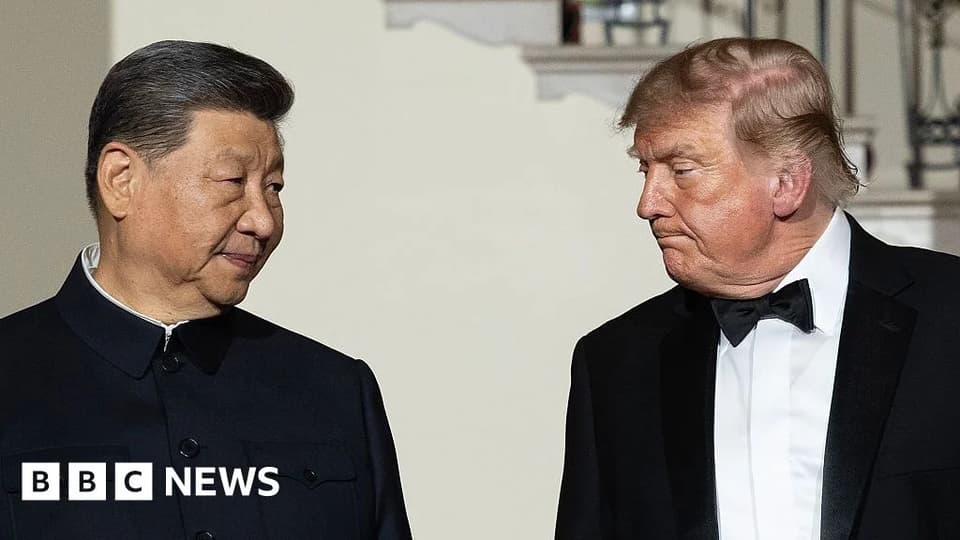
The recent summit between US President Donald Trump and Chinese President Xi Jinping in Washington produced limited concrete outcomes, including a two-month extension of the trade truce until January 10 and the establishment of an AI incident notification channel. While both sides agreed to lower tariffs on specific goods and China pledged to purchase 10 million metric tons of US coal annually in 2027-2028, major issues such as rare earth exports, semiconductor restrictions, and Taiwan security remained unresolved. The meeting featured high-profile tech executives but lacked joint statements, reflecting continued mutual wariness despite diplomatic gestures.
Key points
- Trade truce extended until January 10, 2026, allowing leaders to meet again at APEC in Shenzhen and G20 in Miami.
- US and China agreed to launch an AI dialogue and establish a communication channel for AI-related incidents to prevent misunderstandings.
- China agreed to lower tariffs on $30 billion of US goods and commit to buying 10 million metric tons of US coal in 2027 and 2028.
- No agreements were reached on rare earth mineral exports or easing restrictions on advanced US semiconductors.
- Taiwan was omitted from the White House factsheet, though Xi reportedly urged Trump to oppose Taiwan independence.
- China indicated it would allow more foreign financial firms to apply for business licenses, but approvals remain subject to strict regulations.
Background
This summit follows earlier preparatory talks in New York between US Treasury Secretary Scott Bessent and Chinese Vice Premier He Lifeng, which focused on AI, tariffs, and rare earths. Prior to the meeting, US automakers lobbied against Chinese car market access, and concerns were raised about a delayed $14 billion arms package for Taiwan. The diplomatic tone marked a shift from previous joint press conferences, with both sides issuing separate accounts of the meeting.
How outlets are covering it
BBC emphasizes the lack of joint statements and major breakthroughs, highlighting the continued wariness between Washington and Beijing despite diplomatic courtesies. Business Insider focuses on the presence of major tech executives at the state dinner, noting the absence of Anthropic CEO Dario Amodei and the seating arrangements that included figures like Elon Musk and Jensen Huang. Semafor criticizes the summit as 'shallow bonhomie,' arguing that the lavish diplomatic gestures, such as the red-carpet welcome and panda gift, yielded meager results compared to the US' historical diplomatic successes. Semafor also notes that China continues to supply dual-use technology to Russia and Iran, undermining the rhetoric of peace. All sources agree that the trade truce extension was modest and that core issues like rare earths and semiconductors remain unresolved.
Why it matters
The summit's limited outcomes underscore the fragility of US-China relations, with both sides prioritizing communication channels over substantive concessions. The AI incident notification channel may help prevent accidental escalations, but the lack of progress on rare earths and semiconductors highlights ongoing economic and technological competition. The absence of joint statements and the omission of Taiwan from official summaries suggest that deep-seated mistrust persists, despite diplomatic efforts to stabilize relations. The presence of major tech leaders at the state dinner signals the importance of the tech sector in US-China dynamics, but the lack of concrete agreements on AI safety standards leaves significant uncertainties.
What to watch
The trade truce expires on January 10, 2026, after which tariffs may resume unless further extensions are negotiated. The AI dialogue is scheduled for further talks in late November, and the communication channel for AI incidents will be tested in the coming months. China's decision on foreign financial firm applications and the potential easing of visa restrictions for Americans will be closely monitored. The next major meeting between Trump and Xi is expected at the APEC summit in Shenzhen in November and the G20 summit in Miami in December, where further negotiations on trade and technology may take place.
- Trump-Xi summit: What wasn't said might matter the most bbc.com
- Trump and Xi's 'stalemate' summit was a glitzy gift to China Reuters
- The who's who in tech showed up for Trump's dinner with Xi — with one glaring exception Business Insider
- America’s and China’s leaders indulge in pageantry as crises mount The Economist
- View / The US-China tectonic plates have shifted Semafor
Want the full story? Read the original reporting
Read on bbc.com