
Trump's Nuclear Rhetoric and War Threats Spark Global Oil Surge and Diplomatic Alarm
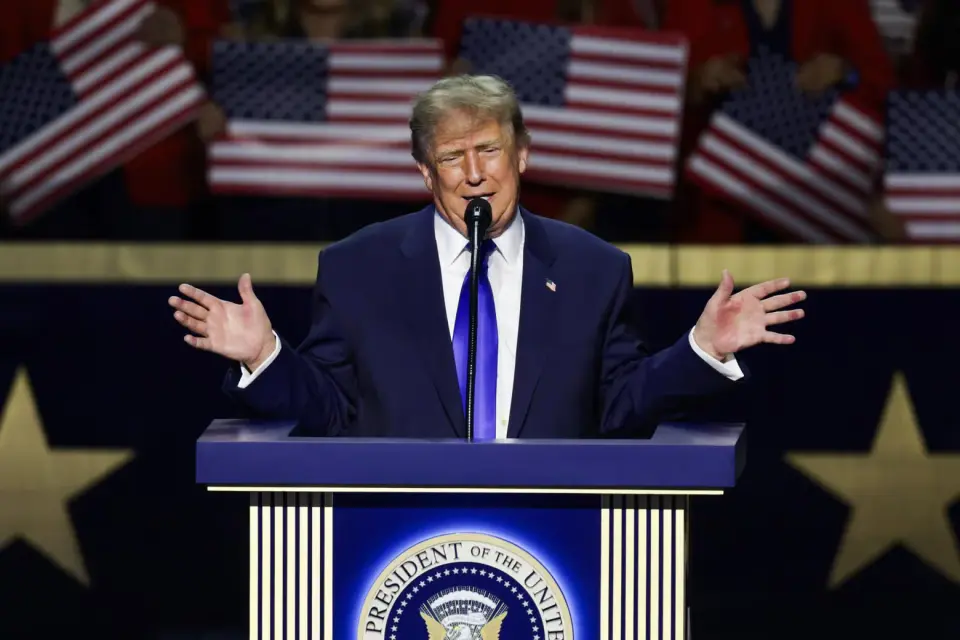
President Donald Trump’s recent remarks at the Republican Midterm Convention and subsequent interviews have intensified the U.S.-Iran conflict, with analysts warning that his rhetoric encourages nuclear proliferation and normalizes mass violence. As fighting escalates in the Strait of Hormuz, global oil prices have surged past $100 per barrel, and officials warn the conflict may extend beyond the November midterms.
Key points
- Trump stated at the Republican Midterm Convention that he would treat Iran respectfully if it possessed nuclear weapons, implying he would bomb them otherwise, which analysts argue signals a dangerous incentive for proliferation.
- Defense Secretary Pete Hegseth linked the ongoing U.S. war with Iran to the 25th anniversary of 9/11, claiming the U.S. has destroyed Iran’s air force and killed its leaders in the past six months.
- Global oil prices rose nearly 6% to over $107 per barrel for Brent crude after Trump indicated he is not seeking a deal with Iran, with Goldman Sachs warning prices could exceed $120 per barrel.
- Trump previously threatened to destroy Iran’s infrastructure and 'wipe out' its civilization, actions that human rights experts and international leaders have condemned as potential war crimes and genocide.
- White House advisors have warned that the conflict could last until January 2029, contradicting Trump’s public claims that the war will end shortly after the November elections.
Background
The current escalation follows a period of relative calm in August 2026, when U.S.-Iran talks made progress with regional mediators like Qatar and Oman, though the U.S. munitions stockpile was reported to be dangerously low. In early August, Saudi Arabia urged de-escalation while Israel pushed for pressure, creating conflicting signals for Washington. The conflict has also widened regionally, with Yemen’s Houthis resuming attacks on Saudi oil facilities and Red Sea shipping, further destabilizing energy markets and regional security.
How outlets are covering it
Slate’s Fred Kaplan argues that Trump’s comments at the convention inadvertently encourage Iran, North Korea, and other nations to pursue nuclear weapons, as they interpret his respect for nuclear-armed states as a sign that such arsenals guarantee safety and diplomatic deference. The Guardian’s Mohamad Bazzi contends that Trump’s repeated threats to 'wipe out' Iran and destroy its infrastructure are normalizing mass violence and war crimes, desensitizing Western societies to large-scale destruction. UPI reports on the immediate economic impact, noting that Trump’s refusal to seek a deal has driven oil prices to record highs, while Politico highlights the administration’s framing of the war as a continuation of the fight against terrorism, with Hegseth drawing parallels to 9/11. These perspectives highlight a divide between concerns over strategic instability and nuclear proliferation, moral and legal objections to the scale of violence, and the tangible economic consequences of the conflict.
Why it matters
The escalation threatens to trigger a global nuclear arms race, as Trump’s rhetoric may incentivize nations to acquire nuclear deterrents to avoid U.S. aggression. The ongoing war has already disrupted global energy markets, pushing oil prices to historic highs and raising gasoline and diesel costs to record levels. Furthermore, the normalization of extreme rhetoric and potential war crimes undermines international law and norms, potentially leading to a more volatile and less predictable global order where diplomatic solutions are deprioritized in favor of military confrontation.
What to watch
Analysts expect oil prices to remain volatile, with some forecasts suggesting they could exceed $120 per barrel if the war escalates further. The U.S. and Iran are likely to continue fighting in the Strait of Hormuz, with no immediate signs of a ceasefire. Trump is expected to maintain his hardline stance until the November midterms, after which he has predicted a decline in oil prices, though White House advisors suggest the conflict may persist until the end of his term in January 2029. Regional allies, including South Korea and Japan, may accelerate their own nuclear programs in response to the perceived unreliability of U.S. security guarantees.
- This Trump Speech Sent a Dangerous Message to Iran—and the Rest of the World Slate
- Trump, Hegseth push Iran war at Pentagon 9/11 memorial Politico
- Trump Marks 9/11 Anniversary at Pentagon With Iran War Defense Bloomberg.com
- Trump’s repeated threats to ‘wipe out’ Iran are normalizing mass violence | Mohamad Bazzi theguardian.com
- Oil prices surge after Trump says he's not looking for deal with Iran upi.com
Want the full story? Read the original reporting
Read on Slate