
UK PM Blames Iran’s IRGC for RAF Fairford Plot, Sanctions Two Nationals
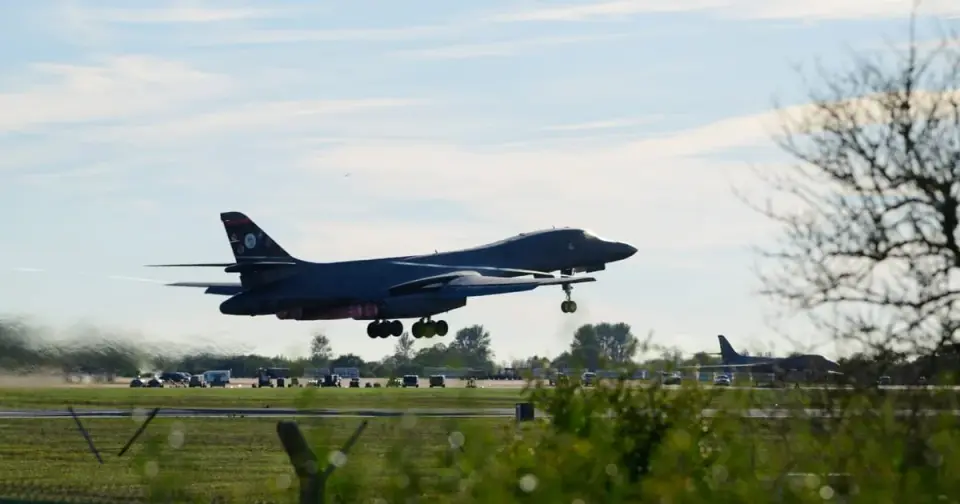
UK Prime Minister Andy Burnham stated on Monday that the September 27 incident at RAF Fairford was 'highly likely' coordinated in Iran and 'almost certainly' directed by the Islamic Revolutionary Guard Corps (IRGC). Following the event, the US withdrew its B-1 bombers from the base. The UK and 28 other nations issued a joint statement condemning Iran, while Tehran categorically denied involvement. No suspects have been charged, and the UK has sanctioned two individuals for espionage and hostile activities.
Key points
- Andy Burnham told MPs the RAF Fairford plot was 'almost certainly' directed by Iran's IRGC, marking the firmest attribution yet by the UK government.
- The incident occurred on September 27, when five men in three vans were arrested near the base; no explosives were found, and all suspects were released on bail.
- The US withdrew all 12 B-1 bombers from RAF Fairford in early October, citing fears of a sophisticated Iranian drone attack.
- The UK and 28 other countries issued a joint statement condemning Iran’s use of proxies and violent attacks, warning that those responsible would be held accountable.
- Iran’s ambassador to the UK, Seyed Ali Mousavi, 'categorically rejected' the allegations, stating Tehran has no involvement and is willing to cooperate with the investigation.
- The UK sanctioned two Iranian nationals for facilitating hostile activity on behalf of the Iranian regime, though their identities were not disclosed.
Background
RAF Fairford in Gloucestershire served as a key staging point for US bombers conducting strikes against Iran during the conflict that began in February 2026. The base had been used for defensive operations since the war started, making it a high-value target. Prior to the September incident, tensions were already high due to ongoing Middle East hostilities and recent attacks on shipping in the Strait of Hormuz. The US had previously relied on RAF Fairford as its preferred European base for B-1 and B-52 bombers, but security concerns led to their complete withdrawal in early October.
How outlets are covering it
While all major outlets agree on the UK government’s attribution of blame to Iran, they differ in emphasis. Politico and The Guardian focus on Burnham’s parliamentary statement and the diplomatic fallout, including the summoning of the Iranian ambassador. Axios highlights the strategic implications, noting that a successful Iranian drone attack on a US base in Europe would have been 'unprecedented and brazen,' potentially escalating the Middle East war. Al Jazeera emphasizes the lack of concrete evidence, noting that suspects were released on bail and no explosives were found, and highlights Iran’s firm denial. The Guardian also notes that some experts speculate the incident may have been a 'feint' to demonstrate Iranian capability, rather than a genuine attempt to destroy the base. All sources agree that the incident has raised diplomatic tensions, but they differ on whether the threat was credible or a show of force.
Why it matters
The UK’s explicit attribution of blame to Iran’s IRGC marks a significant escalation in the diplomatic and security relationship between the two countries. It signals a shift from cautious language to direct accusation, potentially leading to further sanctions and a harder stance in international forums. The incident also raises questions about the security of US military assets in Europe and the extent of Iran’s covert operations network. For the UK, it tests its ability to counter hybrid threats and protect its allies, while for the US, it underscores vulnerabilities in its European basing strategy. The lack of charges or concrete evidence, however, may limit the immediate legal or military response, keeping the situation in a state of diplomatic tension rather than open conflict.
What to watch
The UK government is expected to impose further sanctions on Iran and the IRGC, targeting funding streams and criminal networks. The Iranian ambassador has requested evidence to support the UK’s claims, and Tehran has offered to cooperate with the investigation, though this is unlikely to resolve the diplomatic rift. Counter Terrorism Policing may continue its inquiry, but without charges, the case may remain unresolved. The US may reassess its basing strategy in Europe, potentially seeking alternative locations or enhancing security at remaining bases. Diplomatic channels between the UK and Iran may remain tense, with the possibility of further retaliatory measures or covert actions. The joint statement from 29 countries may lead to coordinated sanctions or intelligence sharing among allies.
- Burnham: Iran’s IRGC ‘highly likely’ to be behind RAF Fairford terror plot POLITICO.eu
- U.K. prime minister attributes plot against U.S. bomber base to Iran Axios
- Suspected plot at U.S.-run air base almost certainly directed by Iran, UK prime minister says PBS
- Iran’s Revolutionary Guards ‘almost certainly’ behind RAF Fairford threats, says Burnham The Guardian
- UK blames Iran for airbase plot, sanctions two Iranian nationals Al Jazeera
Want the full story? Read the original reporting
Read on POLITICO.eu