
US Midterm Shifts Threaten Israel's Security and Political Stability
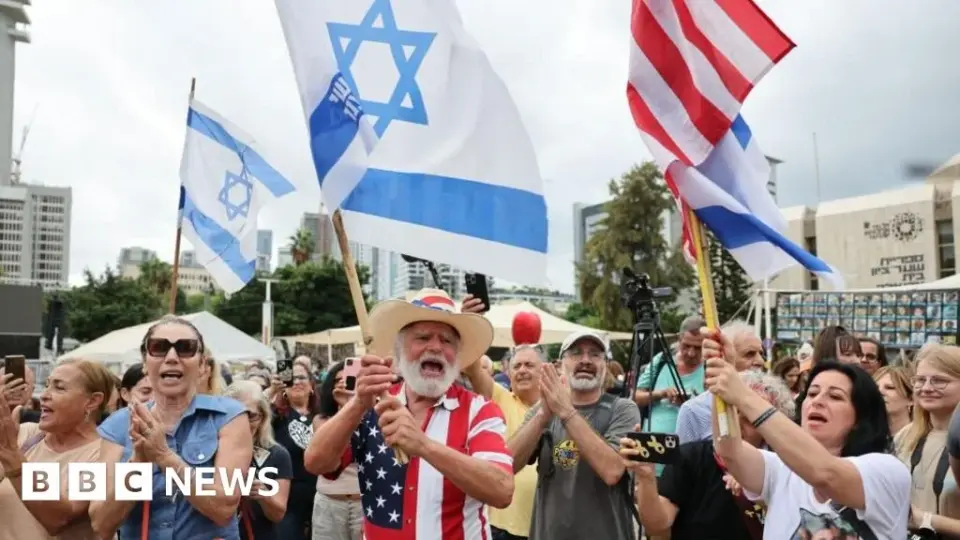
The 2026 US midterm elections have triggered a crisis in Israel-US relations, with Democrats gaining control of Congress and Republicans blaming Israel for their losses. Trump announced a halt to $3.8 billion in military aid, while Israel faces a domestic political deadlock. Analysts warn that the traditional bipartisan support for Israel is eroding, forcing a re-evaluation of security dependencies and diplomatic strategies.
Key points
- Trump announced he would stop $3.8 billion in military aid to Israel two years early, a move described as a 'bolt from the blue' by Israeli officials.
- JD Vance cited the US-Israel relationship and the Iran war as key reasons for the Republican defeat, signaling a shift within the GOP.
- Israeli opposition leaders blame Netanyahu for alienating both US parties, while Netanyahu has remained silent on the developments.
- Israel is currently in a post-election deadlock, with President Herzog deciding whether Netanyahu or Gadi Eisenkot will attempt to form a government.
- Analysts warn that a Democrat-controlled Congress could complicate arms sales and joint military projects, even without overriding Trump.
Background
This follows Israel's own inconclusive parliamentary elections in late October 2026, where Netanyahu's bloc won 53 of 120 seats but lacked a majority. The US-Israel alliance had been described as 'unprecedented' just months ago during joint military operations against Iran, but recent polling shows 80% of Democrats hold unfavorable views of Israel.
How outlets are covering it
BBC and NBC News emphasize the shock in Israel over the sudden shift in US sentiment and the potential for a 'generational sea change' in the alliance. The Guardian focuses on the internal Democratic conflict, arguing that pro-Israel leaders like Chuck Schumer must heed the mandate of new progressive members like Abdul El-Sayed. The Jerusalem Post highlights the domestic political implications, arguing that the US shift should force Israeli factions to form a unity government to navigate the new reality. While all agree the relationship is strained, they differ on whether the 'bedrock' of the alliance remains intact or is fundamentally broken.
Why it matters
The US-Israel relationship is a cornerstone of Middle Eastern security. A shift in US policy could alter the balance of power in the region, affecting Israel's defense capabilities and its ability to manage conflicts in Gaza, Lebanon, and Iran. Additionally, the domestic political instability in Israel, compounded by external pressure, could lead to prolonged governance paralysis or a new election, further weakening the country's strategic position.
What to watch
Israel's president will decide which party leader gets the first chance to form a coalition. The new US Congress will likely scrutinize military aid and arms sales. Israel may seek to deepen intelligence and technological cooperation with the US to make the relationship harder to sever, while also attempting to repair its image among the American public.
- US midterm results spark fears in Israel over future of two countries' ties BBC
- Israel’s Most Important Alliance Is Confronting Its Biggest Test in Decades WSJ
- There is a showdown looming in the Democratic party over support for Israel | Moustafa Bayoumi The Guardian
- Israel reels as midterms and Trump’s $4 billion aid cut point to dramatic shift in U.S. relations NBC News
- After America's midterms, Israel faces a new reason to form a unity government The Jerusalem Post
Want the full story? Read the original reporting
Read on BBC