
Xi’s Washington Visit Prioritizes AI Hotline and Trade Stability Over Deep Cooperation
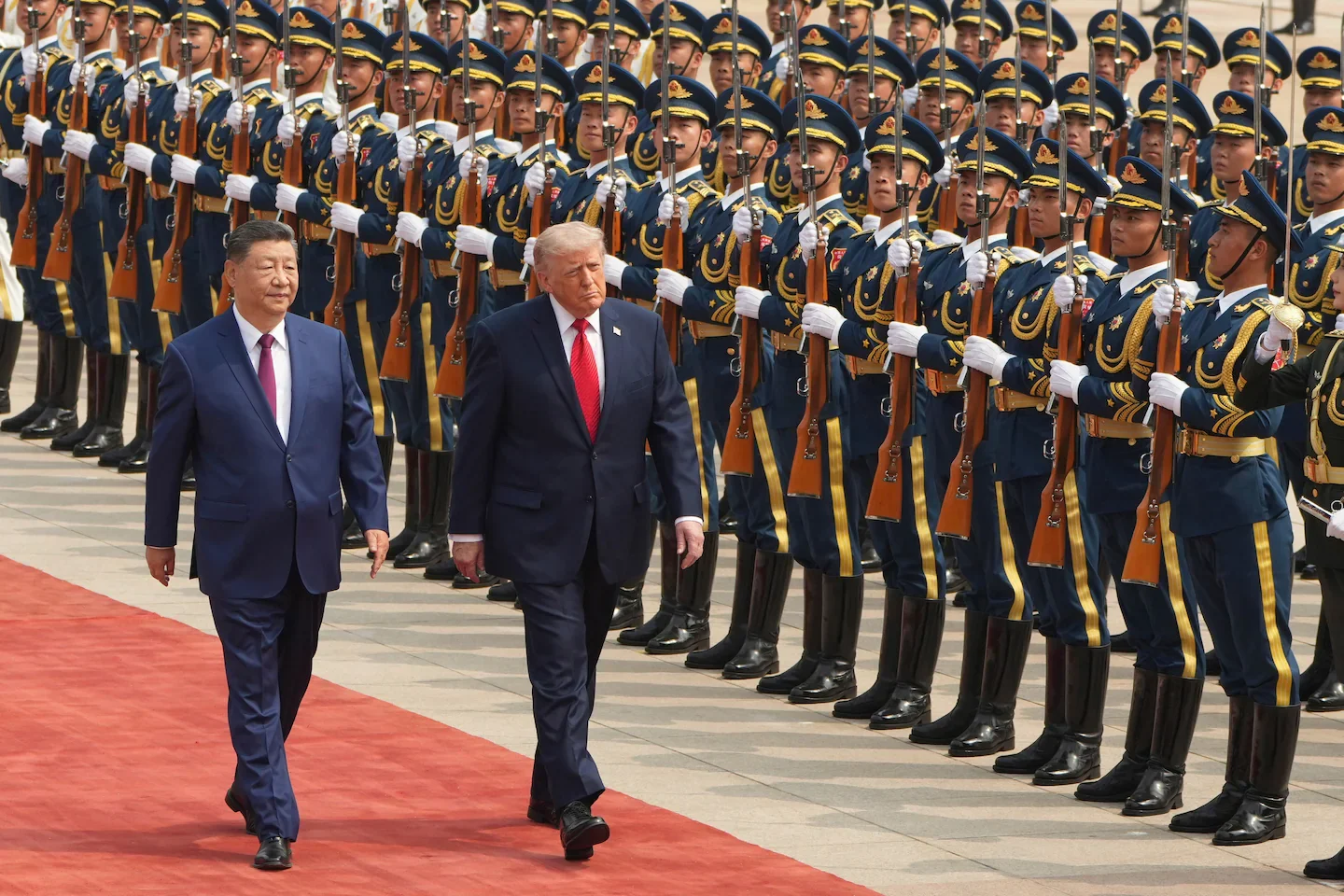
Chinese President Xi Jinping is arriving in Washington for a three-day state visit to meet President Donald Trump. The summit focuses on maintaining a fragile trade truce and establishing a new communication channel for AI incidents. While the White House emphasizes pageantry and legacy, analysts note the meeting reflects a shift toward reciprocal leverage, with Beijing now possessing greater technological and economic clout than in previous administrations.
Key points
- Xi Jinping arrives in Washington for a three-day state visit to meet President Trump, aiming to preserve a fragile trade truce.
- Treasury Secretary Scott Bessent and Chinese Vice Premier He Lifeng proposed a direct 'incident line' for AI-related national security threats, though it is not a formal regulatory body.
- The summit includes discussions on a 'Board of Trade' to manage tariffs and non-sensitive goods, following a May meeting in Beijing.
- China’s leverage has increased due to its $1.2 trillion trade surplus, rare earth supply chain control, and advancements in AI and robotics.
- The U.S. and China remain divided on advanced chip export controls and allegations of AI 'distillation,' with Beijing rejecting such claims.
Background
This visit follows a series of diplomatic engagements in 2026, including a May meeting in Beijing where the two leaders agreed to 'constructive strategic stability.' Recent weeks saw Xi conduct a global diplomacy sprint, positioning China as a stable counterweight to U.S. policies, particularly amid the U.S. war in Iran. The current summit is part of a broader effort to manage tensions ahead of U.S. midterm elections and the UN General Assembly.
How outlets are covering it
The Washington Post emphasizes the 'pomp and pageantry' of the visit, framing it as a legacy moment for Trump amidst a Middle East war and sober midterm outlook. CNN highlights the shift in power dynamics, noting China’s growing technological self-sufficiency and global soft power, which allows Beijing to demand more reciprocal treatment. CNBC and Politico focus on the technical aspects, specifically the new AI communication channel. While Bessent described it as a 'dialogue,' sources told Politico it is merely an informal phone line between the two officials, not a formal expert body. Critics argue this modest step is insufficient for the scale of AI risks, while others view it as a necessary baseline for communication.
Why it matters
The outcome of this summit could define the trajectory of U.S.-China relations for years. A successful extension of the trade truce could stabilize global markets, while a failure could reignite a full decoupling. The new AI communication channel, though limited, represents the first formalized mechanism for managing AI-related incidents between the world's two largest AI powers, potentially influencing global safety standards.
What to watch
The summit is expected to conclude with a joint statement on trade and AI. The U.S. and China have agreed to meet again in Shenzhen in roughly two months to continue AI dialogues. The 'Board of Trade' is set to begin operations, focusing on lowering tariffs for non-sensitive goods. The next major test will be at the UN General Assembly, where global leaders will press for broader AI cooperation.
- Trump plans pomp and pageantry for Xi amid China tensions The Washington Post
- A lot’s changed since Xi Jinping’s last US state visit. Mostly in China’s favor. cnn.com
- Trump-Xi summit puts AI safety talks on the table but neither side wants to slow down CNBC
- DC street closures and parking restrictions as Chinese President Xi Jinping visits White House WUSA9
- ‘The scientific, technical term is BS’: Inside the new Bessent-China AI hotline Politico
Want the full story? Read the original reporting
Read on The Washington Post