
Xi’s White House Summit Overshadows a Dysfunctional U.N. General Assembly
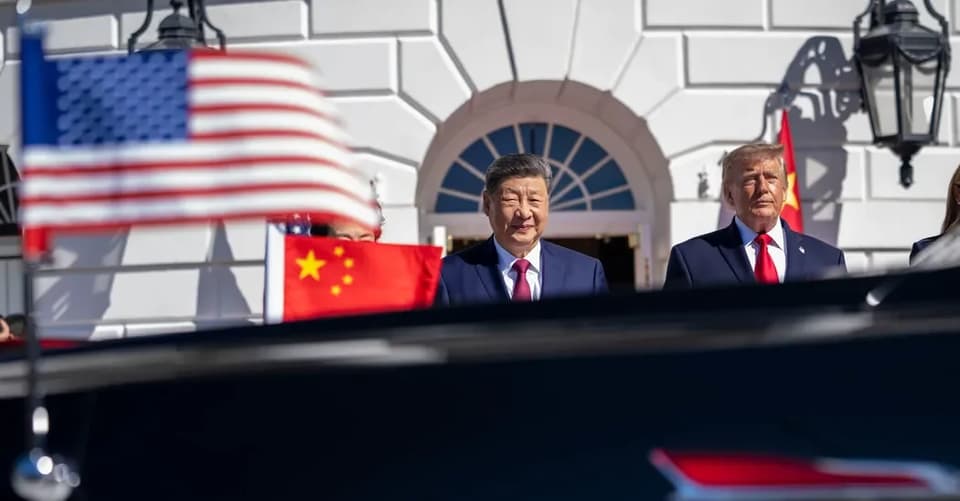
President Xi Jinping’s state visit to Washington for a summit with President Trump dominated global attention this week, effectively eclipsing the United Nations General Assembly in New York. Xi skipped the U.N. entirely, a move interpreted as a snub to the faltering global body. While the U.S.-China meeting yielded few concrete results beyond a promise to meet again, it highlighted the shifting center of gravity in international power. The U.N. remains paralyzed by Security Council vetoes on issues like the Iran conflict and Gaza, while major powers increasingly bypass it for bilateral deals. Experts note that meaningful progress on critical issues like AI regulation likely requires direct U.S.-China agreements, rendering the U.N. increasingly irrelevant in high-stakes geopolitical crises.
Key points
- Xi Jinping did not stop in New York for the U.N. General Assembly during his U.S. visit, unlike his 2015 trip, signaling a decline in the U.N.’s diplomatic relevance.
- The Trump-Xi summit produced no immediate agreements on AI or trade, but both leaders pledged to meet again soon, overshadowing the U.N. agenda.
- The U.N. Security Council remains gridlocked due to veto power disputes among the U.S., China, and Russia, blocking action on conflicts in Iran, Gaza, and Ukraine.
- China is viewed as having real leverage in global crises, supporting Russia’s war effort and serving as Iran’s top trading partner despite U.S. sanctions.
- Experts argue that effective global governance on AI may require bilateral U.S.-China deals similar to Cold War nuclear arms control, bypassing the U.N. framework.
Background
Recent coverage indicates that Xi’s visit was part of a broader diplomatic sprint to position China as a stable counterweight to U.S. unpredictability. Prior reports noted tensions over alleged Chinese espionage aiding Iran and ongoing trade deficits driven by AI components. The current summit follows a period of heightened U.S.-China rivalry, where personal diplomacy is being tested against persistent structural competition in technology and trade.
Why it matters
The event signals a potential shift away from multilateralism toward bilateral power politics. The U.N.’s inability to address major crises, combined with Xi’s deliberate absence, suggests that global governance is increasingly fragmented. This trend may embolden powerful states to act unilaterally, potentially destabilizing international norms in regions like Taiwan, Ukraine, and the Middle East.
What to watch
Analysts expect continued U.S.-China engagement without immediate breakthroughs, as both sides prioritize bilateral negotiations over multilateral forums. The U.N. may face further marginalization unless it achieves significant reform or finds new ways to mediate conflicts where Security Council vetoes are not a barrier. Future AI governance discussions will likely focus on direct U.S.-China channels rather than U.N.-led initiatives.
Want the full story? Read the original reporting
Read on The New York Times