
Zelensky Meets US Envoys as Trump Waives Russia Sanctions and Accuses Kyiv of Sabotaging Peace
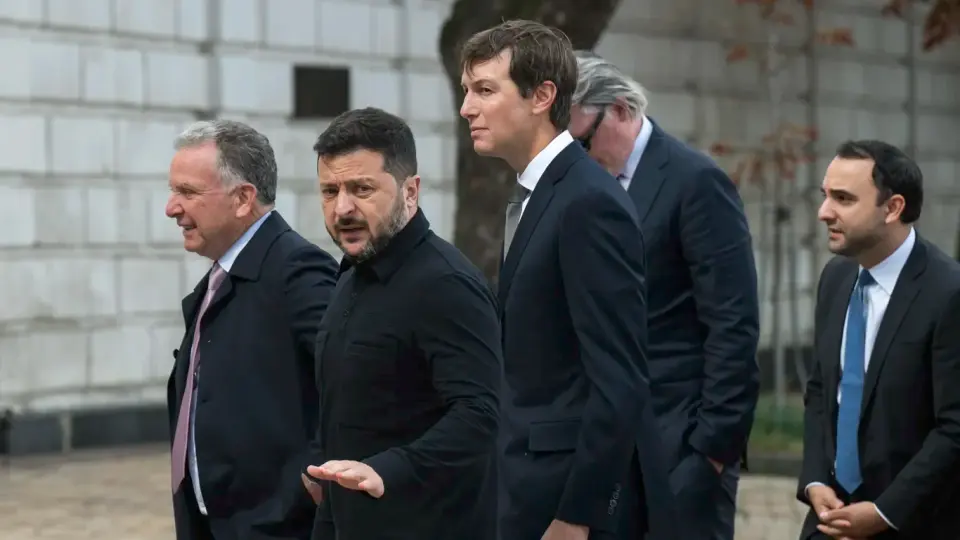
Ukrainian President Volodymyr Zelensky held talks with US envoys Steve Witkoff and Jared Kushner on October 19 to address a diplomatic crisis triggered by President Donald Trump’s decision to waive sanctions on Russian energy imports. While Zelensky emphasized the need to end the war and discussed Patriot air defense deliveries, Trump accused Kyiv of prolonging the conflict through strikes on Russian refineries. The US administration is currently reviewing a 60-day window for potential sanctions, while Ukraine faces continued Russian attacks and restricted access to Starshield satellite technology.
Key points
- Zelensky spoke with Witkoff and Kushner, stating that 'a lot depends' on the US position but affirming Ukraine's readiness for constructive diplomacy.
- Trump waived parts of the Lindsey Graham Sanctioning Russia and Iran Act of 2026, allowing 300,000 metric tonnes of Russian diesel to enter global markets to lower fuel prices.
- Trump accused Zelensky of not wanting to end the war, claiming Ukrainian strikes on Russian refineries hurt global diesel markets, including those in the US.
- Zelensky thanked the US for resuming intelligence sharing after a three-day pause that left Ukraine vulnerable to ballistic missile attacks.
- Ukraine reported restrictions on Starshield satellite connectivity, which hindered the interception of Russian jet-powered drones; Secretary of State Marco Rubio confirmed access is currently blocked.
- Ukraine launched a major drone attack on St. Petersburg, targeting an oil refinery and data centers, which Russian state media described as the largest attack on the city since 2022.
Background
This escalation follows earlier US-led peace efforts in September, where envoys Witkoff and Kushner visited both Moscow and Kyiv to propose a winter de-escalation framework. Those talks failed to yield a breakthrough, with Zelensky warning that the war would likely continue into winter without significant concessions from Moscow. The current crisis marks a sharp deterioration in US-Ukraine relations, contrasting with the previous month's cautious optimism regarding joint European terms for peace.
How outlets are covering it
Axios focuses on the diplomatic channel between Zelensky and US envoys, highlighting the attempt to manage the crisis through dialogue. Al Jazeera and France 24 emphasize the public clash between Trump and Zelensky, detailing Trump’s accusation that Kyiv is sabotaging peace and the bipartisan backlash against the sanctions waiver. While all sources agree on the core events, Al Jazeera and France 24 provide more detail on the military consequences, such as the St. Petersburg drone attack and the Starshield connectivity issues, whereas Axios remains more focused on the political negotiation aspect.
Why it matters
The US waiver of sanctions on Russian energy could provide Moscow with significant revenue to sustain its war effort, potentially emboldening President Vladimir Putin. Simultaneously, the restriction of Starshield technology and the pause in intelligence sharing have left Ukraine vulnerable to Russian ballistic missile attacks. This diplomatic rift threatens to undermine the US-led peace process and could shift European allies further toward supporting Kyiv independently, as they fear Washington is tilting toward Moscow.
What to watch
The US administration is conducting a 60-day review of the economic consequences of the waived sanctions. Zelensky expects continued communication with US counterparts to resolve the crisis, while Trump has signaled he is still negotiating peace. The outcome of this review will determine whether the sanctions waiver becomes permanent or if restrictions are reinstated, potentially impacting global fuel prices and the trajectory of the Russia-Ukraine war.
- Zelensky speaks to Witkoff and Kushner amid U.S.-Ukraine crisis Axios
- Zelenskyy Says Speaking to Witkoff, Kushner About Peace Meeting Bloomberg.com
- Zelenskiy hopes for meeting with US and Russia during G20 summit Reuters
- Russia’s war on Ukraine ‘must be brought to an end’, Zelenskyy says Al Jazeera
- Zelensky holds US talks as Trump accuses him of not wanting peace France 24
Want the full story? Read the original reporting
Read on Axios