
NOAA Confirms 'Very Strong' El Niño as Ocean Temperatures Shatter 2015 Records
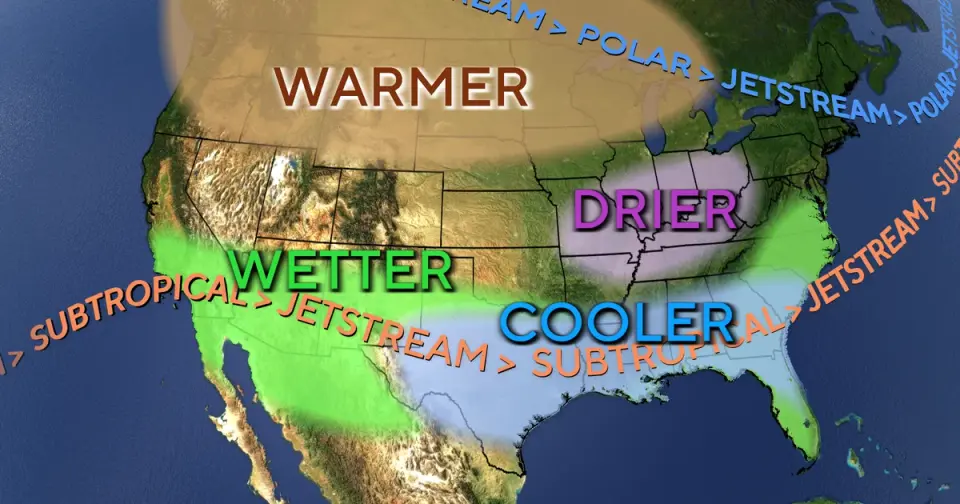
NOAA has officially classified the current El Niño event as 'very strong,' with sea surface temperature anomalies in the tropical Pacific reaching 4 degrees Celsius above average. This intensification has set records for 165 consecutive days, surpassing the previous benchmark from November 2015. The phenomenon is expected to persist through March 2027, driving a stormier winter in the southern U.S. and severe marine heat waves along the California coast.
Key points
- NOAA’s Climate Prediction Center confirmed the event as 'very strong' after sea surface temperatures exceeded 4 degrees Celsius above average on November 12.
- The current El Niño has maintained record-breaking ocean temperatures for 165 straight days, surpassing the 2015 record.
- California is experiencing a 'record-shattering' marine heat wave, with waters from Sonoma to Ensenada running 10 degrees warmer than average.
- NOAA forecasts a wetter winter for the southern U.S. and milder conditions for the north, while global impacts include drought in central Africa and Australia.
- The event is expected to last through March 2027, with potential for historic weather impacts and increased tropical storm activity in the Pacific.
Background
This development follows a series of record-breaking weather events in late 2026, including Tropical Storm Rachel’s landfall in San Diego in October, which was the first tropical storm to hit California since 1939. Earlier this month, experts warned that the peaking El Niño would drive record floods and unusual marine shifts, including tropical fish migrations in California. The current event is statistically comparable to the 1997-98 El Niño, which caused over $550 million in damage in California, but scientists note that climate change may intensify precipitation levels further.
How outlets are covering it
While CBS News and The Washington Post emphasize the global and continental scale of the 'very strong' classification, LAist focuses on the localized, 'mind-boggling' marine heat wave affecting the California coast. The New York Times highlights the historical parallels to the 1982-83 and 1997-98 events, noting that the current conditions are almost certain to deliver the strongest El Niño on record for the state. All sources agree on the severity of the event, but they differ in their primary focus: CBS and WaPo highlight the official NOAA metrics and global temperature anomalies, while LAist and The New York Times concentrate on the immediate risks of coastal flooding and historical damage comparisons in California.
Why it matters
The official classification of this El Niño as 'very strong' signals a period of heightened climate volatility that will likely persist into 2027. For the U.S., this means a significantly stormier winter in the south and a prolonged marine heat wave in California that threatens coastal infrastructure and ecosystems. Globally, the event is expected to exacerbate droughts in Africa and Australia while increasing flood risks in South America and Asia, potentially leading to significant agricultural and humanitarian consequences.
What to watch
NOAA predicts the El Niño will remain active through March 2027. Scientists are closely monitoring king tides during Thanksgiving week and around Christmas for potential coastal flooding in California. In the Pacific, meteorologists are tracking the potential for more 'super typhoons' as warmer waters fuel storm systems. The long-term persistence of the event suggests that the impacts on global weather patterns, including hurricane frequencies and precipitation levels, will continue to evolve over the coming months.
- What to know as "super El Niño" conditions take shape CBS News
- What 165 days of record ocean temperatures will mean for extreme winter weather The Washington Post
- California’s 'record-shattering' marine heat wave means threat of coastal flooding will stick around LAist
- A Concerned Californian’s Guide to El Niño The New York Times
- Fearmongering or fair warning? A fierce debate over how bad California's El Niño winter will get Los Angeles Times
Want the full story? Read the original reporting
Read on CBS News