
2026 Midterms: GOP Redistricting Backfires in NC, Ohio Amid Democratic Wave
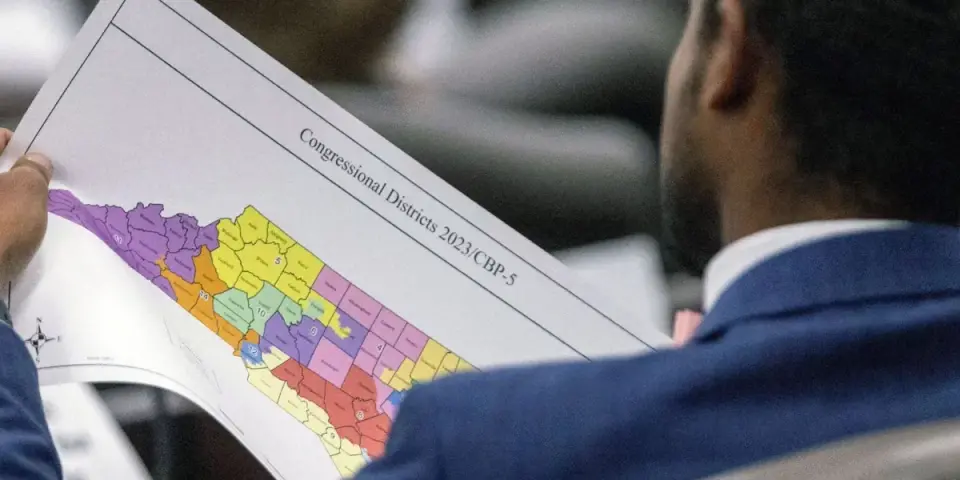
Republican mid-cycle redistricting efforts in 2025 largely failed to secure the House majority in the 2026 midterms, with Democrats winning dozens of seats in states like North Carolina and Ohio. While some maps backfired, others maintained structural advantages, and experts warn future elections could reverse these results.
Key points
- Democrats won a historic majority in the House, overcoming Republican redistricting efforts in states like North Carolina, Ohio, Texas, and Florida.
- In North Carolina, Republicans aimed for two-thirds of seats but may hold less than one-third, a significant reversal from their 2024 map.
- In Ohio, Republicans targeted 12 of 15 seats but may hold fewer than half, aligning more closely with the state's popular vote share.
- In Texas and Florida, Democrats retained most targeted seats, but Republicans still hold a disproportionate share of seats compared to their popular vote margins.
- In Tennessee, a gerrymandered seat was won by Republicans by only 2,500 votes, highlighting the narrow margins in some districts.
- In Alabama, Democrats retained a seat despite redistricting, aided by voter mobilization and the 'Alabama factor' of voting rights history.
Background
The 2026 midterms followed a period of aggressive mid-cycle redistricting by Republicans in 2025, aimed at securing a House majority. Previous coverage highlighted tight races in North Carolina and a historic Democratic sweep in the state House and Senate, with analysts warning that 2028 could see a reversal due to gerrymandered maps and shifting presidential dynamics. The 2026 results marked a significant shift in the political landscape, with Democrats gaining control of the House and flipping multiple congressional districts.
How outlets are covering it
Fortune and The Guardian emphasize the 'dummymander' effect in North Carolina and Ohio, where Republican overreach led to a more representative outcome. The New York Times argues that while redistricting backfired in some states, it still gave Republicans a structural advantage in the House, with simulations showing they gained 4 to 7 seats compared to 2024 maps. Time Magazine highlights the role of voter disapproval of Trump and his policies, as well as the impact of Hispanic voters shifting toward Democrats in Texas and Florida. The Guardian notes that while gerrymandering failed in the 2026 wave, it could reverse in future elections if the electoral environment shifts back to Republicans. All sources agree that the 2026 midterms demonstrated the limits of redistricting in the face of a strong Democratic wave, but they differ on the long-term implications of these maps.
Why it matters
The 2026 midterms highlight the complex and dynamic nature of gerrymandering, showing that while it can provide a structural advantage, it can also backfire in a strong wave election. The results have implications for future redistricting efforts, as both parties are likely to continue drawing maps to their advantage, but with caution. The Louisiana v. Callais decision also raises concerns about the protection of racial minorities in redistricting, as Republicans may attempt to dilute majority-Black districts in the South. The 2026 results also underscore the importance of voter turnout and candidate quality in overcoming redistricting efforts, as seen in the retention of Democratic seats in Texas and Florida.
What to watch
Over the next two years, Republicans may attempt to implement new maps in many states, particularly in the South, aiming to dilute majority-Black districts. Democrats are also poised to continue their pushback with their own gerrymanders. The 2026 results may make both parties cautious about future redistricting efforts, but the long-term impact of the 2025 maps could still favor Republicans in future elections if the electoral environment shifts. The Louisiana v. Callais decision will also play a role in shaping future redistricting efforts, as it made racial gerrymandering easier without court intervention.
- Republicans drew North Carolina to win two-thirds of its House seats — they may hold under a third Fortune
- Did the Redistricting Wars Backfire on Republicans? In a Word, No. The New York Times
- Why Did Republican Redistricting Fail to Stop the Blue Wave? Time Magazine
- How Republican efforts to redraw congressional maps ‘failed epically’ The Guardian
- Could the Blue Wave Drown Out Mid-Decade Redistricting? Cook Political Report
Want the full story? Read the original reporting
Read on Fortune