
Alito Recuses from Climate Case, Setting Stage for 4-4 Supreme Court Split
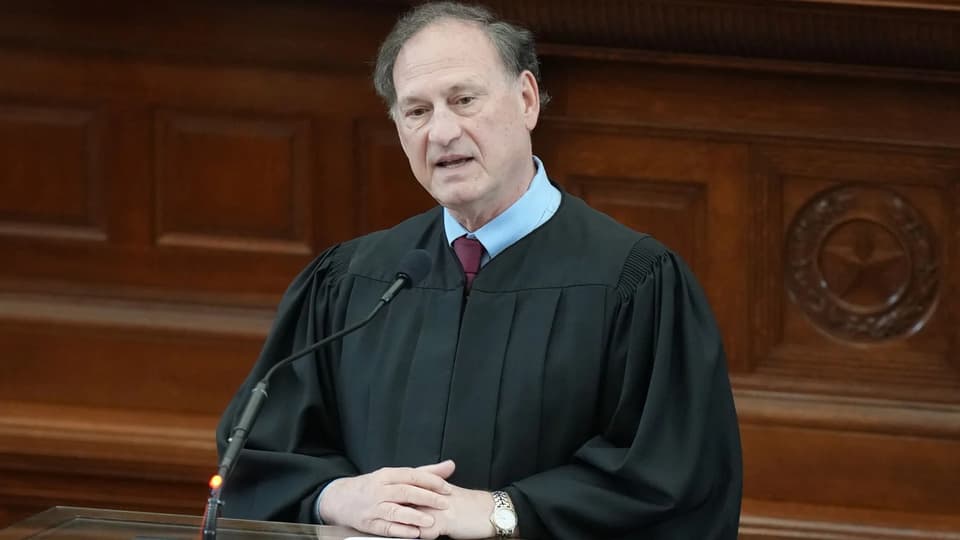
Justice Samuel Alito has recused himself from the Supreme Court case Suncor Energy v. County Commissioners of Boulder County, a decision that could result in a 4-4 split and leave lower-court rulings intact. The case, argued on Oct. 5, determines whether federal law precludes state-level climate damages claims against oil companies. Alito’s recusal follows pressure from environmental groups over his stock holdings in other energy firms, reversing his earlier stance that no conflict of interest existed.
Key points
- Alito recused himself from Suncor Energy v. Boulder County via a letter from Supreme Court clerk Scott Harris on Sept. 28, 2026, without providing a reason.
- The case, argued Oct. 5, involves whether federal law precludes state-law climate damages claims against ExxonMobil and Suncor Energy.
- A 4-4 split would leave the Colorado state Supreme Court’s ruling intact, allowing the lawsuit to proceed to trial.
- Environmental groups had called for Alito’s recusal due to his stock holdings in ConocoPhillips and Phillips 66, which could benefit from a ruling against climate lawsuits.
- Alito previously refused to recuse in May 2026, stating he had no financial interest in the parties, but had recused in a related 2023 case involving the same companies.
Background
The Supreme Court accepted the case in early 2026 after the Colorado state Supreme Court affirmed a trial court’s denial of a motion to dismiss. In 2023, Alito recused himself from a related jurisdictional appeal by the same companies, a move the court later described as inadvertent. The case has nationwide implications, as similar climate lawsuits have been filed in multiple states against major oil and gas companies.
How outlets are covering it
CNBC and NBC News emphasize the surprise nature of Alito’s recusal and the potential 4-4 split, noting his earlier refusal to step aside. SCOTUSblog highlights the lack of explanation in the recusal letter and contrasts it with a detailed recusal in a separate oil and gas case earlier in the year. Vox focuses on the legal arguments, noting that oil companies are urging the court to interpret the Constitution narrowly to block state-level climate claims. All sources agree that Alito’s stock holdings in other energy companies, not the parties to the case, were the primary concern for critics.
Why it matters
A 4-4 split would leave the lower-court ruling intact, allowing the Boulder lawsuit to proceed and potentially opening the door for similar climate damages claims against major oil companies across the country. The outcome could have significant financial and legal implications for the energy sector and state-level climate litigation.
What to watch
The Supreme Court will hear oral arguments on Oct. 5, 2026. If the court issues a 4-4 split, the Colorado state Supreme Court’s ruling will stand, and the case will proceed to trial. A majority ruling could set a precedent for state-level climate lawsuits nationwide.
- Supreme Court Justice Alito will not participate in big climate change case next week cnbc.com
- Alito recuses from major climate change case to be decided by the Supreme Court cbsnews.com
- Justice Alito will no longer participate in climate change dispute SCOTUSblog
- Big Oil has an audacious request for the Supreme Court vox.com
- In reversal, Justice Samuel Alito steps aside from major climate case NBC News
Want the full story? Read the original reporting
Read on cnbc.com