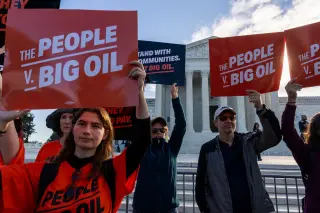
The U.S. Supreme Court heard oral arguments on October 5 regarding a lawsuit by Boulder, Colorado, against ExxonMobil and Suncor Energy for climate-related damages. The eight-justice panel, missing Samuel Alito due to a recusal, showed no clear consensus, leaving the future of similar state lawsuits uncertain.
The U.S. Supreme Court heard arguments on October 5, 2026, in Suncor Energy v. County Commissioners of Boulder County, a case determining whether local governments can sue fossil fuel companies for climate-related damages. The ruling could impact nearly 40 similar lawsuits and billions in potential liabilities for the energy sector. Justice Samuel Alito recused himself, leaving an eight-justice panel to decide if state claims are preempted by federal authority.
The Supreme Court will hear arguments on October 5 in Suncor Energy v. Boulder, a pivotal case determining whether federal law preempts state-level climate damages lawsuits against fossil fuel companies. Boulder seeks billions in damages from ExxonMobil and Suncor for alleged climate-related harms. Justice Samuel Alito has recused himself, creating a risk of a 4-4 split that would uphold the lower court's decision without setting a national precedent.
The Supreme Court begins its new term on October 5 by hearing arguments in Suncor Energy v. Boulder, a case determining whether federal law precludes state-level climate damages claims against fossil fuel giants. The city and county of Boulder seek billions in damages from ExxonMobil and Suncor Energy, alleging they misled the public about climate change impacts. Justice Samuel Alito has recused himself, creating a risk of a 4-4 split that would uphold the lower court's decision without setting a national precedent. The ruling could impact dozens of similar lawsuits filed by other U.S. municipalities and states.
Justice Samuel Alito recused himself from Suncor Energy v. County Commissioners of Boulder County, a pivotal climate case, days before oral arguments. The move follows pressure over his oil stock holdings and may result in a 4-4 split, leaving lower-court rulings intact.
Justice Samuel Alito has recused himself from the Supreme Court case Suncor Energy v. County Commissioners of Boulder County, a decision that could result in a 4-4 split and leave lower-court rulings intact. The case, argued on Oct. 5, determines whether federal law precludes state-level climate damages claims against oil companies. Alito’s recusal follows pressure from environmental groups over his stock holdings in other energy firms, reversing his earlier stance that no conflict of interest existed.
Justice Samuel Alito has stepped aside from Suncor Energy v. County Commissioners of Boulder County, a pivotal Supreme Court case regarding climate change damages. The recusal, announced via a letter from the court clerk, follows intense pressure from environmental groups citing Alito's stock holdings in other fossil fuel companies. The decision creates a potential 4-4 split on the court, which could leave the legal questions unresolved and allow similar state-level lawsuits to proceed.
Suncor Energy, a Canadian oil major, reported a significant decline in profits for the second quarter of 2022 compared to the previous year. The company's earnings dropped from C$4 billion to C$1.88 billion, attributed to falling oil prices. Despite lower profits, Suncor increased production and returned over $1 billion to shareholders through share buybacks and dividends. The oil industry as a whole has experienced a similar trend of declining profits due to lower oil prices, although production remains high. Suncor's CEO emphasized the company's focus on maximizing value for shareholders and driving improved performance. Alberta, Canada's oil heartland, expects to book another budget surplus this fiscal year, despite lower oil prices and a looming global recession.
Suncor Energy, Canada's second-largest oil producer, reported a 50% decrease in quarterly profit due to lower oil and gas prices. The company also took a C$275 million restructuring charge related to job cuts. However, Suncor's total upstream production increased by 3% in the quarter, aided by lower maintenance activities. The company's refinery utilization averaged 85% and its crude throughput climbed 1.3%. Suncor's adjusted operating earnings exceeded analysts' expectations. Peer companies, Imperial Oil and Cenovus Energy, also reported a decline in their quarterly profits.