
Maryland judge blocks redistricting amendment from November ballot pending appeal
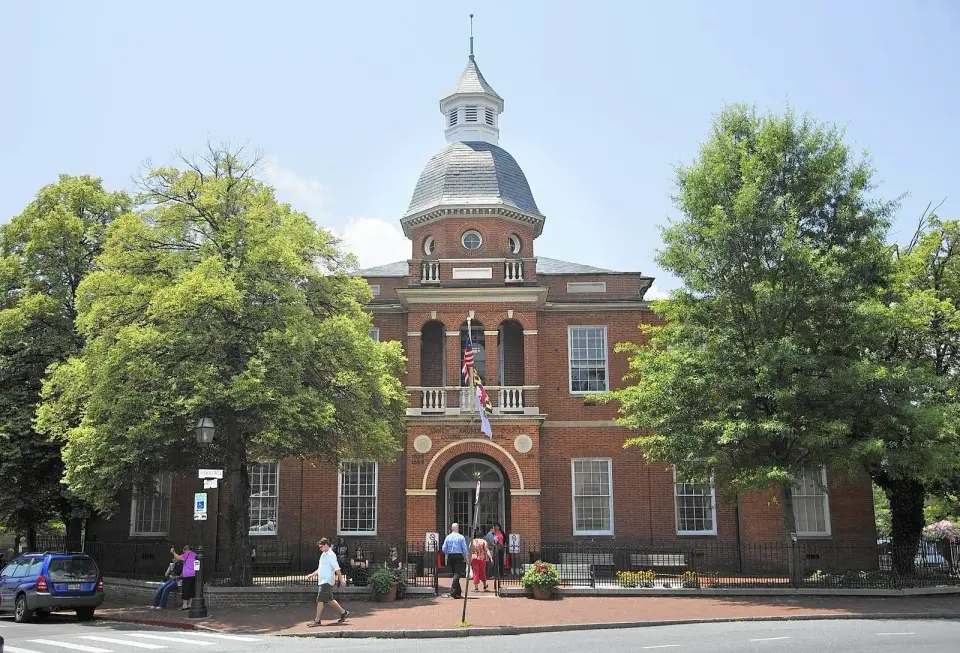
A Maryland circuit court judge has blocked a Democratic-backed constitutional amendment from appearing on the November 2026 ballot, ruling that the General Assembly violated procedural laws and used misleading language. The decision, which halts the measure’s certification, has been stayed pending an immediate appeal to the Maryland Supreme Court. The amendment, passed in a special session, would have exempted congressional districts from state constitutional requirements regarding compactness and natural boundaries, potentially allowing Democrats to redraw maps to eliminate the state’s sole Republican congressional seat before the 2028 election. While Republicans and conservative groups celebrated the ruling as a victory for due process, Democratic leaders and Governor Wes Moore maintain that the General Assembly acted within its constitutional authority and are confident the state Supreme Court will restore the ballot question.
Key points
- Judge Robert J. Thompson ruled that the General Assembly’s enactment of HB 2100 was legally deficient because it violated a state law requiring ballot questions to be submitted to the State Board of Elections by July 1.
- The judge found the ballot question’s wording to be 'intentionally misleading,' specifically criticizing the use of the word 'clarifies' to describe a change in legal standards, and noted it violated single-issue requirements by combining multiple constitutional changes.
- The ruling was stayed immediately to allow the state to appeal to the Maryland Supreme Court, with the governor’s office confirming the appeal has been filed.
- The amendment, passed in a two-day special session, would have limited state constitutional map-drawing rules to legislative districts only, potentially enabling a partisan gerrymander of congressional districts ahead of the 2028 election.
- The measure was opposed by Republicans and the conservative Oversight Project, who argued the process deprived the public of notice and violated the legislature’s own deadlines.
Background
This ruling follows a series of mid-decade redistricting battles across the United States, including similar legal challenges in Virginia and Texas. Earlier in 2026, Maryland Democrats moved to place the amendment on the ballot to counter a 2022 court ruling that struck down a previous redistricting plan. The move was part of a broader national effort by both parties to reshape congressional maps ahead of the 2028 election cycle, particularly after Supreme Court decisions weakened protections for majority-Black districts.
How outlets are covering it
The Baltimore Sun and WBAL-TV reported the judge’s decision as a procedural defeat for Democrats, emphasizing the court’s finding that the legislature ignored its own laws. WYPR highlighted the political stakes, noting that the amendment could have allowed Democrats to oust Republican Rep. Andy Harris. Politico framed the ruling as part of a broader Democratic struggle to counter Republican gains in redistricting in states like Texas and Missouri. Republicans, including Senate Minority Leader Steve Hershey and House Freedom Caucus members, praised the ruling as a defense of the rule of law and due process. Conversely, Democratic leaders, including Senate President Bill Ferguson and House Speaker Joseline Peña-Melnyk, argued the General Assembly acted within its constitutional authority and expressed confidence that the Maryland Supreme Court would uphold the ballot question. Governor Wes Moore stated his administration 'respectfully disagrees' with the circuit court’s decision and emphasized the need for voters to have a voice on the issue.
Why it matters
The outcome of this legal battle will determine whether Maryland voters can decide on a constitutional change that could reshape the state’s congressional representation. If the Supreme Court upholds the circuit court’s ruling, Maryland may remain in a 7-1 Democratic congressional delegation, potentially influencing national political dynamics and setting a precedent for mid-decade redistricting challenges in other states.
What to watch
The Maryland Supreme Court will hear the appeal, with the state’s elections administrator noting a tight timeline to certify and print ballots. The final decision will determine whether the redistricting amendment appears on the November 2026 ballot or if the status quo remains in place until the next decennial redistricting cycle.
- Judge blocks Maryland redistricting amendment. State immediately appeals. Baltimore Sun
- Maryland Judge Blocks Democratic Redistricting Measure The New York Times
- Maryland judge blocks redistricting amendment from November ballot, state Supreme Court will have final say WYPR
- Maryland judge blocks Democrats’ redistricting effort Politico
- Judge blocks redistricting question from ballot pending appeal WBAL-TV
Want the full story? Read the original reporting
Read on Baltimore Sun