
Midterm Polls Show Trump's Imperial Ambitions Colliding with Voter Backlash
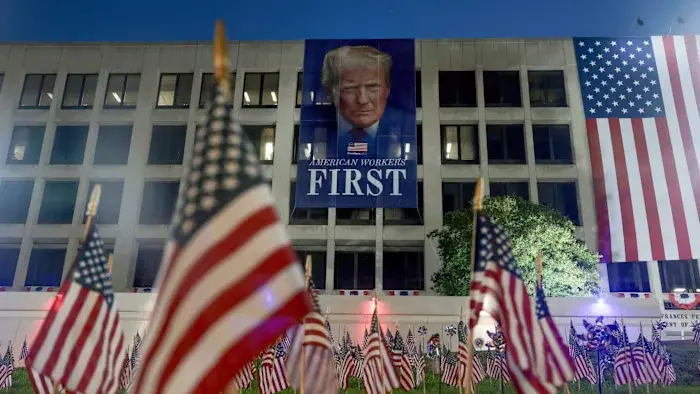
US midterm elections on November 3, 2026, are poised to deliver a significant defeat for President Donald Trump’s Republican Party, driven by voter dissatisfaction with his aggressive expansion of executive power. Polls indicate a 56% opposition rate to his White House ballroom project and a 68% rejection of his signature on currency, reflecting broader frustration with his 'imperial' style. While Republicans privately blame Trump for the Iran war and tariff-driven inflation, public loyalty remains high due to his grip on the party. Democrats face internal rifts, particularly over Israel policy, which may limit their ability to capitalize on the backlash. Analysts suggest this election could mark the end of the current Trump era, though his influence on the Republican base remains entrenched.
Key points
- Polls show 56% of Americans oppose the 90,000 sq ft White House ballroom, and 68% reject Trump's signature on currency, signaling deep public resistance to his self-aggrandizing initiatives.
- The Iran war, which Trump promised would be brief, has continued for eight months without a clear exit strategy, contributing to high inflation and voter anger over affordability.
- Republican candidates are privately blaming Trump for their electoral struggles but remain publicly loyal, as he controls the party's primary process and financial resources, including $277 million in super PAC spending.
- Democrats face internal divisions, notably in Michigan, where candidate Abdul El-Sayed faced attacks from fellow Democrats over his stance on Israel, potentially weakening their coalition despite the anti-Trump sentiment.
- Trump’s approval rating is at its lowest for a president entering a midterm election since Harry Truman, with only one-third of adults approving of his performance, yet he remains the dominant figure in US politics.
Background
This election follows a period of intense scrutiny over Trump’s use of executive power, including the controversial use of taxpayer funds for pro-presidency ads, which he later shifted to his super PAC, MAGA Inc. Earlier polls in September 2026 showed 59% of Americans believed Trump was illegally or unethically profiting from his office. The current midterms are seen as a referendum on his second term, which began with popular border policies but shifted to aggressive domestic enforcement and military action, alienating many of his 2024 supporters.
How outlets are covering it
The Financial Times emphasizes the 'imperial presidency' narrative, highlighting how Trump’s grandiose projects and military actions have failed to resonate with voters, leading to a 'reality check.' Politico focuses on the internal Republican dynamic, noting that while candidates privately blame Trump for the Iran war and tariffs, they avoid public criticism due to his control over the party. The Associated Press (via Pioneer Press) stresses the economic fallout, linking Trump’s tariffs and the Iran war directly to rising costs and inflation, which Democrats are using to frame the election. The Guardian offers a broader historical perspective, arguing that while the midterms may end the current Trump era, the US remains divided by the policies he enacted, and the Democratic Party’s internal disarray may prevent a decisive shift in power. All sources agree that Trump’s grip on the Republican base remains strong, but his approval ratings are at historic lows for a midterm cycle.
Why it matters
The outcome of these midterms will determine whether Congress can check Trump’s executive powers, particularly regarding the Iran war, tariffs, and immigration enforcement. A Democratic majority could lead to oversight of policies that have been enacted without congressional consultation, potentially reversing some of the 'imperial' expansions. However, the entrenched nature of Trump’s influence in the Republican Party and the Democratic Party’s internal divisions suggest that the political landscape may remain fragmented, with long-term implications for US foreign policy and domestic governance.
What to watch
Voters will cast ballots on November 3, 2026, with results expected to show a significant shift in power. Trump is scheduled to give a speech at the Lincoln Memorial on November 2, touting his administration’s accomplishments, despite ongoing issues with the Reflecting Pool renovation. In the coming weeks, the focus will shift to the potential for a Democratic majority in Congress and the internal dynamics of the Republican Party, particularly regarding the 2028 presidential primary. The Iran war and tariff policies will remain central issues, with potential for further legislative action if Democrats gain control.
- Donald Trump’s imperial presidency faces a popular uprising Financial Times
- ‘A lot of Republicans have held their tongues’: Anger at Trump is growing Politico
- Analysis: Republicans face a midterm reckoning of Trump’s making Pioneer Press
- These midterms could effectively end the Trump era – but neither side is yet ready for what comes next | Nesrine Malik The Guardian
- A midterm crossroads for both parties eyeing the beginning of the end of the Trump era WHYY
Want the full story? Read the original reporting
Read on Financial Times