
Supreme Court faces emergency plea to halt counting of 20,000 California ballots
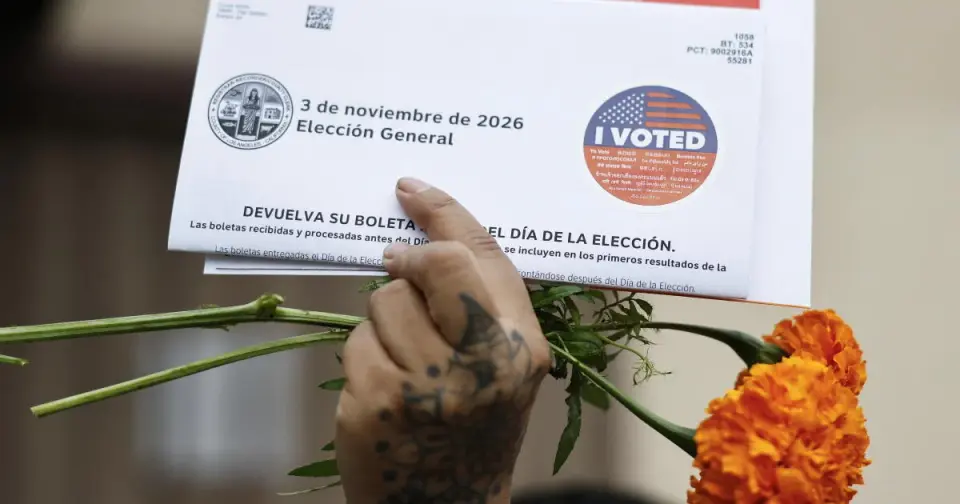
The Trump administration has filed an emergency appeal with the Supreme Court, seeking to set aside 20,000 mail-in ballots in California ahead of the November 3 midterms. Solicitor General D. John Sauer argues these ballots belong to likely non-citizens and must be segregated. However, lower courts have repeatedly rejected this demand, citing constitutional limits on federal power and the risk of disenfranchising legitimate voters. The administration claims the lists are accurate, while California officials and legal experts argue the data is flawed and that late-stage changes would disrupt the election.
Key points
- Solicitor General D. John Sauer filed an emergency appeal on Monday, asking the Supreme Court to issue an injunction requiring California to segregate ballots from 20,000 individuals identified as likely non-citizens.
- The 9th Circuit Court of Appeals previously rejected the administration's request, stating that the federal government lacks authority to dictate state election procedures and that the timing of the request violated the Purcell principle against late-breaking rule changes.
- U.S. District Judge James Boasberg ordered the administration to stop demanding that California remove suspected noncitizen voters, finding the federal lists flawed and noting that the executive branch cannot unilaterally impose verification procedures.
- California officials, including Governor Gavin Newsom and Secretary of State Shirley Weber, condemned the appeal as baseless and an attempt to disrupt the election, noting that over 6.4 million ballots have already been cast and are being counted per state law.
- The Justice Department defended its list's accuracy, suggesting that an immigrant rights group's analysis of the data violated court orders and potentially warranted contempt charges, while also appealing a separate ruling by Judge Trina L. Thompson.
Background
This dispute follows a broader pattern of federal-state conflicts over election integrity in California. In September 2026, the California Supreme Court ordered the return of 650,000 ballots seized by a county sheriff, affirming that law enforcement cannot interfere with official election procedures. The current case highlights tensions between federal claims of noncitizen voting and state control over voter registration and ballot processing, with the administration having previously lost multiple lower-court challenges in this election cycle.
How outlets are covering it
The Los Angeles Times and CNN emphasize the legal and constitutional hurdles facing the administration, noting that lower courts have consistently rejected the claims due to timing and jurisdictional issues. They highlight the 9th Circuit's reliance on the Elections Clause and the Purcell principle. In contrast, the Justice Department, as reported by AP News, defends the accuracy of its list and criticizes the analysis by the Coalition for Humane Immigrant Rights, arguing that the group's findings are irrelevant to legal standing. Yahoo News reports on the immediate judicial order by Judge Boasberg, focusing on the executive branch's lack of authority to impose procedures. California officials, cited across all sources, uniformly view the administration's actions as an attempt to disenfranchise voters and undermine the integrity of the election, while the administration maintains that it is protecting federal law against noncitizen voting.
Why it matters
The outcome of this emergency appeal could set a precedent for federal intervention in state election procedures. If the Supreme Court grants the injunction, it would mark a significant shift in the balance of power between federal and state governments regarding voter eligibility. Conversely, a rejection would reinforce the principle that states control the mechanics of congressional elections, as established in prior rulings. The case also highlights the risks of late-stage legal challenges in elections, potentially affecting public confidence in the integrity of the November 3 midterms.
What to watch
The appeal will first be reviewed by Justice Elena Kagan, who may request a response from California, a process that could take days. Given the eve-of-election timing, the Supreme Court may deny the request without explanation or issue a brief ruling. The administration has indicated it will continue pursuing legal avenues, while California officials are preparing to defend the current election process. The outcome will likely be determined quickly, with the court potentially issuing a decision before or shortly after the November 3 election.
- Trump lawyers ask Supreme Court to set aside 20,000 California ballots Los Angeles Times
- Trump Administration Asks Supreme Court to Intervene in California Ballot Case The New York Times
- US judge orders Trump admin to stop demands California remove suspected noncitizen voters Yahoo
- Justice Department urges sanctions for database analysis critical of its noncitizen voting claims AP News
- Trump’s California ballot appeal puts Supreme Court in center of fight over allegations of noncitizen voting CNN
Want the full story? Read the original reporting
Read on Los Angeles Times