
Supreme Court Opens 2026 Term with High-Stakes Climate, Gun, and Immigration Cases
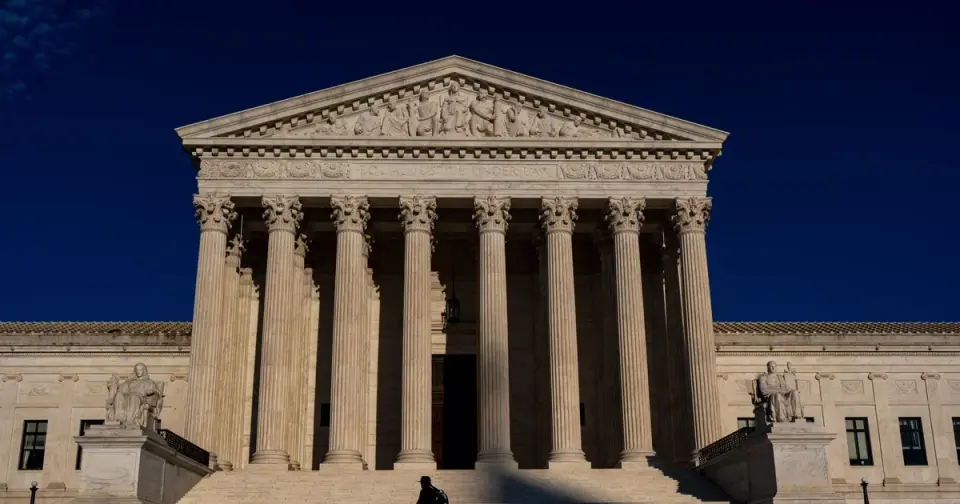
The Supreme Court begins its 2026-2027 term on October 5 with a docket dominated by disputes over climate liability, gun control, and immigration. Key cases include Suncor Energy v. Boulder County, which tests state authority to sue fossil fuel companies, and challenges to AR-15 bans and third-country deportations. The term unfolds amid record-low public approval and heightened security concerns for justices.
Key points
- The term opens with arguments in Suncor Energy v. Boulder County, determining if federal law preempts state climate lawsuits against ExxonMobil and Suncor. Justice Alito has recused himself, risking a 4-4 split that would leave lower-court rulings intact.
- In St. Mary Catholic Parish v. Roy, the Court will decide if Colorado can exclude Catholic preschools from a universal funding program due to their nondiscrimination policies regarding gender identity and sexual orientation.
- Arguments in Viramontes v. Cook County and Grant v. Higgins will address the constitutionality of state and local bans on AR-15 style semiautomatic weapons, following the Court's 2022 expansion of Second Amendment rights.
- The Court will rule on Department of Homeland Security v. D.V.D., challenging the Trump administration's policy of deporting migrants to third countries without providing adequate notice or opportunity to contest removal.
- Rhoney v. Barbosa da Cunha will test the legality of mandatory detention without bond for immigrants facing removal proceedings, a policy the administration implemented in 2025.
- Additional cases involve Arizona's proof-of-citizenship voting requirements and parental rights regarding gender dysphoria treatment for minors in Washington state.
Background
The 2026-2027 term follows a previous session where the Court rejected sweeping tariffs and birthright citizenship redefinitions but upheld various immigration and redistricting policies. The current docket reflects ongoing tensions between executive power and federalism, with the Court previously allowing the administration to resume third-country deportations temporarily while litigation continued. The term also comes after a summer of emergency rulings on mail-in voting and citizenship verification, which intensified partisan criticism of the Court's impartiality.
How outlets are covering it
CBS News emphasizes the technical legal questions in the climate case and the potential for a 4-4 split due to Alito's recusal, while noting the broader implications for dozens of similar lawsuits. USA Today frames the climate case as a proxy for state regulation of other national issues like artificial intelligence and highlights the conservative majority's likely expansion of religious and gun rights. Fox News focuses on the Court's declining public approval and the political pressure on Chief Justice Roberts, noting that the administration has won over 70% of emergency cases since 2025. All sources agree on the high stakes of the immigration and gun rights cases but differ in their assessment of the Court's institutional neutrality and the political motivations behind the rulings.
Why it matters
The outcomes of these cases will define the limits of state power in regulating climate and gun control, the scope of religious exemptions in public funding, and the procedural rights of immigrants and voters. A 4-4 split in the climate case could leave lower-court rulings intact, potentially allowing similar lawsuits to proceed in other states. The immigration and voting cases will directly impact the administration's enforcement strategies and the integrity of the upcoming midterm elections. The Court's decisions will also influence public trust in the judiciary, which is at a historic low, and may prompt further political debates over judicial reform and term limits.
What to watch
Oral arguments for the climate case are scheduled for October 5, with the religious liberty case on November 3 and gun rights cases on December 2. The Court is expected to decide the merits of the immigration and voting cases by the summer of 2027. Additional cases involving transgender military service, acting U.S. attorney appointments, and asylum suspensions may be added to the docket. The Court may also face emergency applications related to the November midterm elections, particularly regarding voting rules and mail-in ballots.
- Supreme Court gears up for new term with major cases on climate change, immigration and guns CBS News
- The Supreme Court faces another term jam-packed with controversy NPR
- Trump. Climate. AR-15s. The Supreme Court is about to go back to work USA Today
- The Supreme Court’s Summer Break Vanishes, Erased by Emergencies The New York Times
- Supreme Court kicks off new term with fresh questions over its legitimacy and its future Fox News
Want the full story? Read the original reporting
Read on CBS News