
Trump Announces End of $4 Billion Israel Aid Ahead of Midterms
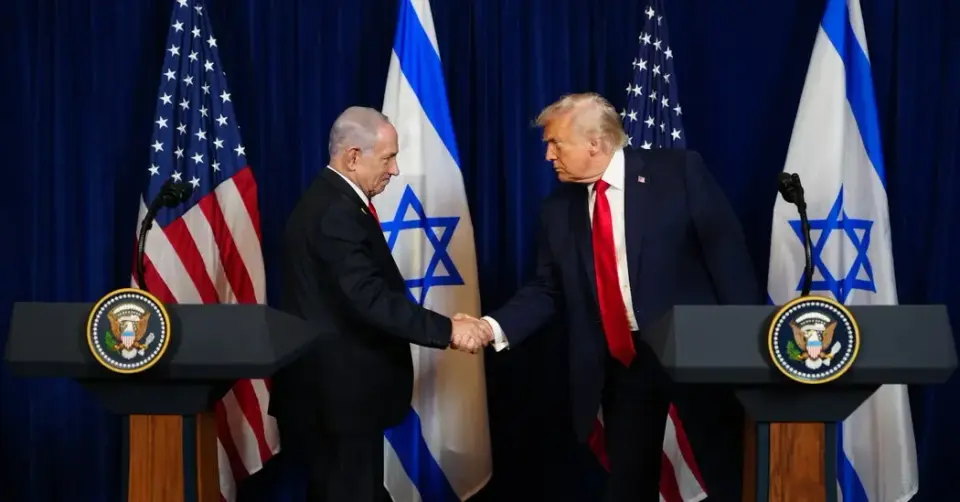
President Trump announced on Election Day that the United States will cease $4 billion in annual military aid to Israel by year-end, replacing it with a new defense partnership. The move, claimed to be agreed upon with Prime Minister Netanyahu, aims to neutralize Democratic criticism and reflects shifting bipartisan attitudes toward Israel.
Key points
- Trump stated the aid cut was part of a deal reached months ago with Netanyahu, though the current memorandum of understanding expires in 2028.
- The administration argues Israel is now wealthy enough to purchase US weapons directly, removing a political 'talking point' for Democrats like Michigan candidate Abdul El-Sayed.
- Congress had already considered phasing out aid in favor of integrated defense and technology partnerships, which could benefit US contractors.
- Israeli opposition leader Gadi Eisenkot criticized the lack of transparency, arguing the security establishment learned of the change only through media reports.
- A Quinnipiac poll shows 48% of Americans believe the US is too supportive of Israel, the highest level since 2017.
Background
This development follows a 2016 agreement under the Obama administration that set annual aid levels through 2028. Recent domestic backlash against Israel’s actions in Gaza has eroded traditional bipartisan support, with even some former Obama officials calling for a new relationship. The announcement coincides with US midterm elections where Israel policy has become a contentious domestic issue.
How outlets are covering it
The New York Times emphasizes the political timing, noting Trump’s focus on removing a 'bad talking point' for the left. CNN highlights the uncertainty, with analysts like Brett McGurk questioning whether the aid will stop immediately or simply be restructured, and noting that US-Israel military cooperation remains strong. ABC News focuses on the lack of specifics from Trump and the surprise of Israeli finance officials, who noted the current budget was already drafted based on the existing agreement. While all outlets agree on the announcement, they differ on its practical impact: some see it as a major strategic shift, while others view it as a political maneuver that may not alter the underlying defense industrial cooperation.
Why it matters
The potential end of direct aid signals a historic shift in US-Israel relations, moving from a model of unilateral support to one of commercial and strategic partnership. This change could reduce congressional leverage over Israeli policy but also exposes Israel to greater volatility in US domestic politics, where support for Israel is increasingly fractured across both parties.
What to watch
Observers will watch for formal confirmation from Netanyahu’s office and congressional reactions. The outcome of the US midterms will determine if a new Democratic majority attempts to block or restructure the aid. In Israel, the ongoing coalition negotiations between Netanyahu and Gadi Eisenkot may be influenced by the uncertainty surrounding the US security guarantee.
- Trump Says U.S. to End $4 Billion in Aid to Israel at End of Year The New York Times
- Trump’s Election Day bombshell on Israel points to historic shift in US politics CNN
- As Americans vote, Trump says US will stop $4 billion in aid to Israel Reuters
- Trump says $4 billion in Israel military aid will end this year, citing political reasons ABC News - Breaking News, Latest News and Videos
- El-Sayed Offers Barbed Support for Trump’s Israel Move WSJ
Want the full story? Read the original reporting
Read on The New York Times