
Trump Signs Order to Delist Gray Wolves, Igniting Legal and Political Clash
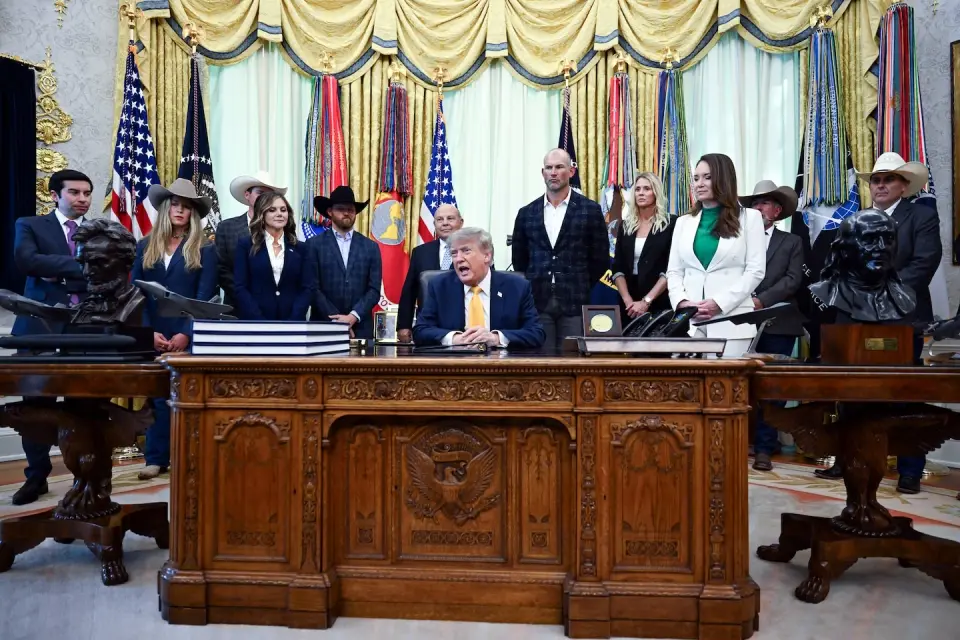
President Trump signed an executive order on September 4, 2026, directing the Department of the Interior to begin the process of removing federal endangered-species protections for gray and Mexican wolves. The move aims to allow ranchers and hunters to lethally manage wolves that prey on livestock, a long-standing point of contention between conservationists and agricultural interests. While the order was framed as part of broader measures to support beef production and rural communities, it faces immediate legal hurdles, as a 2022 federal court ruling currently maintains protections across most of the lower 48 states. Conservation groups have vowed to challenge the delisting in court, arguing that the species' recovery is not complete and that the order bypasses scientific frameworks. Conversely, ranchers and Republican lawmakers, including Representative Tom Tiffany, argue that wolves have recovered sufficiently and that management should be returned to state authorities. The order also directs agencies to ease compensation rules for ranchers and urges states to remove local protections, though the immediate legal status of wolves remains unchanged pending the Interior Department's review.
Key points
- Trump ordered the Interior Department to evaluate delisting gray and Mexican wolves from the Endangered Species Act within three months.
- The order was signed alongside measures to support beef production, including mandatory country-of-origin labeling and expanded state-inspected meat sales.
- A 2022 federal court ruling currently protects gray wolves across most of the lower 48 states, making immediate delisting legally complex.
- Conservation groups, including the Center for Biological Diversity, predict the delisting attempt will be challenged in court and fail.
- Ranchers and Republican lawmakers support the move, arguing wolves have recovered and state management should resume.
- The order directs agencies to ease compensation for ranchers and urges states to remove local wolf protections.
Background
Gray wolves were first listed as endangered in the 1960s and have since recovered significantly, though they remain protected under the Endangered Species Act in most states due to a 2022 federal court ruling. The species was previously delisted in parts of the northern Rocky Mountains in 2011 and 2017 through legislative actions. The current move is part of a broader series of executive actions by the Trump administration aimed at supporting agricultural and beef industries, which have faced criticism over trade policies and rising costs. The debate over wolf management has been a long-running conflict between conservationists and ranchers, with the latter arguing that wolves threaten their livelihoods and the former emphasizing the importance of scientific, non-political decision-making in species recovery.
How outlets are covering it
The Washington Post frames the order as a direct intervention in the long-running conflict between conservationists and ranchers, highlighting the political nature of the decision. The Milwaukee Journal Sentinel emphasizes the order's connection to broader beef industry support measures and notes the immediate legal barriers to delisting, while also highlighting the lack of wolf attacks on humans in Wisconsin. The Guardian focuses on the legal and scientific challenges, noting that the U.S. Fish and Wildlife Service has already attempted delisting and is currently tied up in litigation, and that the order bypasses the framework Congress built for species recovery. Representative Tom Tiffany's statement supports the delisting, arguing that wolves have recovered and that state management should resume, while conservation groups like the Center for Biological Diversity and WildEarth Guardians criticize the order as an attempt to override environmental laws and distract from other unpopular policies. The perspectives highlight a clear divide between those who view the order as a necessary step for rural communities and those who see it as a politically motivated bypass of scientific and legal processes.
Why it matters
The order has the potential to significantly alter the legal and regulatory landscape for wolf management in the United States, with implications for conservation efforts, ranching practices, and federal-state relations. If successful, the delisting could allow for lethal management of wolves in most states, potentially reducing conflicts with livestock but also threatening the species' recovery. The legal challenges and political debates surrounding the order reflect broader tensions between environmental protection and agricultural interests, as well as the role of federal versus state authority in wildlife management. The outcome of this order could set precedents for how other species are managed under the Endangered Species Act and could influence future policy decisions regarding wildlife and agriculture.
What to watch
The Department of the Interior has three months to determine whether gray and Mexican wolves meet the criteria for delisting or downlisting. Conservation groups are expected to challenge the delisting in court, as they have done in previous attempts. The order also directs agencies to update compensation standards for ranchers and ease authorization for lethal removal, which could lead to immediate changes in how ranchers manage wolf conflicts. The political debate is likely to continue, with Republican lawmakers supporting the delisting and conservation groups opposing it. The outcome of the order will depend on the Interior Department's review and any subsequent legal challenges, which could take months or years to resolve.
- Trump moves to allow ranchers and hunters to kill gray wolves washingtonpost.com
- Trump signs executive order on wolf delisting Milwaukee Journal Sentinel
- Trump order directs officials to consider stripping protections for gray wolves theguardian.com
- Tiffany Applauds White House’s Action to Delist Gray Wolves Representative Tom Tiffany (.gov)
- Trump again seeks to remove protections for wolves France 24
Want the full story? Read the original reporting
Read on washingtonpost.com