The U.S. Interior Department must decide by December 3 whether to remove gray wolves from the Endangered Species Act. President Trump’s executive order seeks to shift management to states, allowing farmers to shoot wolves threatening livestock. While farmers report significant financial losses and stress on herds, environmentalists argue delisting could erase decades of recovery and that wolves account for less than 1% of total livestock losses.
The US Fish and Wildlife Service has issued a memo reinterpreting the Endangered Species Act to exclude accidental deaths of protected animals, effectively nullating habitat protections. This move, based on a 1995 Supreme Court dissent, allows landowners to harm species if the action was not specifically intended to kill them, sparking legal challenges and conservationist outrage.
A new directive from the U.S. Fish and Wildlife Service reinterprets the Endangered Species Act to prohibit only intentional harm, effectively legalizing incidental killings of protected species during industrial activities like logging and mining. This follows a July repeal of the 'harm' definition, sparking lawsuits from 20 states and bipartisan congressional opposition.
Twenty-one Democratic-led states and Washington, D.C., have filed two lawsuits against the Trump administration, alleging that new federal rules illegally weaken the 1973 Endangered Species Act. The suits challenge changes that narrow the definition of 'harm' to exclude habitat degradation and remove automatic protections for newly threatened species. While the administration argues these moves correct 'regulatory overreach' and prioritize economic growth, the states contend the changes violate the law's intent and threaten species like orcas and salmon.
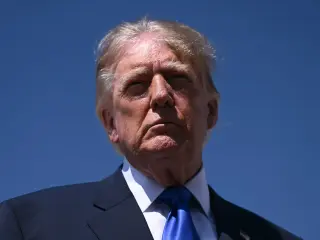
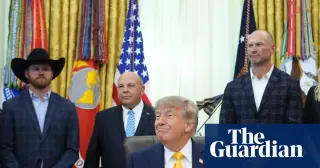
President Trump signed an executive order directing the Interior Department to evaluate removing federal protections for gray and Mexican wolves. The move, framed as support for the livestock industry, faces immediate legal and scientific pushback from conservation groups who argue the species remain vulnerable despite population growth.
President Trump signed an executive order directing the Interior Department to evaluate removing federal protections for gray and Mexican wolves. The move aims to ease restrictions on ranchers but faces immediate legal hurdles and criticism from conservationists who argue the species are not yet fully recovered.
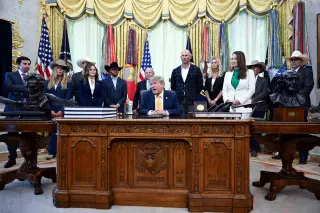
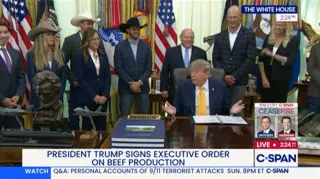
President Trump signed an executive order on September 4, 2026, directing the Department of the Interior to begin the process of removing federal endangered-species protections for gray and Mexican wolves. The move aims to allow ranchers and hunters to lethally manage wolves that prey on livestock, a long-standing point of contention between conservationists and agricultural interests. While the order was framed as part of broader measures to support beef production and rural communities, it faces immediate legal hurdles, as a 2022 federal court ruling currently maintains protections across most of the lower 48 states. Conservation groups have vowed to challenge the delisting in court, arguing that the species' recovery is not complete and that the order bypasses scientific frameworks. Conversely, ranchers and Republican lawmakers, including Representative Tom Tiffany, argue that wolves have recovered sufficiently and that management should be returned to state authorities. The order also directs agencies to ease compensation rules for ranchers and urges states to remove local protections, though the immediate legal status of wolves remains unchanged pending the Interior Department's review.
On September 4, 2026, President Donald Trump signed an executive order directing the Department of the Interior to begin the process of delisting or downlisting gray and Mexican gray wolves under the Endangered Species Act. The order encourages states to remove protections and allows ranchers to lethally remove wolves to protect livestock. While the White House frames this as a solution to livestock depredation, conservation groups argue the move is legally vulnerable and a political distraction from trade issues, while ranchers in states like Wisconsin and Colorado cite ongoing conflicts with predators.
The Trump administration issued a rule redefining 'harm' under the Endangered Species Act to exclude habitat destruction that indirectly jeopardizes endangered species, sharply narrowing decades of protection and undermining Habitat Conservation Plans. Set to take effect in September, the change limits protections to direct, intentional harm to individual animals, prompting lawsuits that could reach the Supreme Court. While critical habitat protections and the permitting framework remain, many environmental legal scholars warn the move could eviscerate the Act’s extinction-prevention power and tilt land-use decisions toward developers unless the courts or Congress restore broader protections.
Trump's administration finalizes changes to the Endangered Species Act that shrink protections for threatened species, expand development exemptions (including Gulf of Mexico drilling), and shift habitat decisions to states; critics warn these rollbacks could jeopardize wildlife recovery, while officials argue they balance conservation with economic interests.
The Trump administration rescinded the ESA harm rule, removing habitat-protection language that had limited habitat loss for listed species. A veteran law professor argues the rollback is likely unlawful and unlikely to survive lawsuits that challenge procedural and statutory grounds, including NEPA, the ESA, and the Administrative Procedure Act, and that Sweet Home v. Babbit remains a controlling precedent despite the post-Chevron shift in Loper Bright. Environmental groups have already filed suits and may seek preliminary injunctions to block the rule while litigation proceeds. With over two-thirds of listed species relying on nonfederal habitat, the outcome could hinge on whether courts uphold Sweet Home without Chevron deference, potentially sending the case to the Supreme Court.
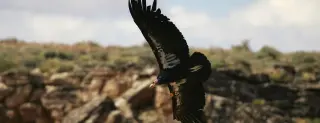
The administration redefined 'harm' under the Endangered Species Act, removing habitat destruction from illegal actions and clearing the way for drilling, mining and development in protected areas; California—home to hundreds of endangered species and key recoveries like the California condor—could bear the heaviest impact, risking habitat loss as environmental groups vow lawsuits against the rollback.
The Interior Department finalized the repeal of the Endangered Species Act 'harm rule' that treated habitat destruction as harm to endangered species, arguing it aligns with the Act's intent and reduces regulatory burdens; the change could enable more mining, ranching and other development in protected areas, while opponents like Earthjustice vow to sue.
The Trump administration finalized a rollback redefining 'harm' under the Endangered Species Act, deleting the prohibition on habitat destruction unless intentional. The rule would regulate only direct physical harm, letting developers modify or destroy habitat for endangered or threatened species without federal permits, a shift critics say weakens protections and invites lawsuits; the Fish and Wildlife Service says it reduces regulatory burden.
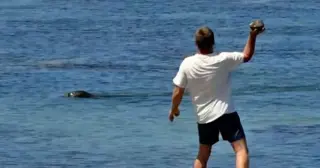
A 38-year-old Washington state tourist, Igor Lytvynchuk, is set to appear in federal court in Honolulu on charges of harassing a protected Hawaiian monk seal after prosecutors say he threw a coconut-sized rock at an adult male seal in Maui. Video of the incident sparked widespread condemnation, with the defense claiming the man intended to shoo away turtles and later faced assault, threats, and doxxing. If convicted, he could face up to one year in prison per charge and fines under the Endangered Species Act and the Marine Mammal Protection Act. The case highlights protections for monk seals, a critically endangered species with about 1,600 remaining in the wild.