
Trump-Xi Summit Yields $30B Tariff Cut and AI Dialogue Framework
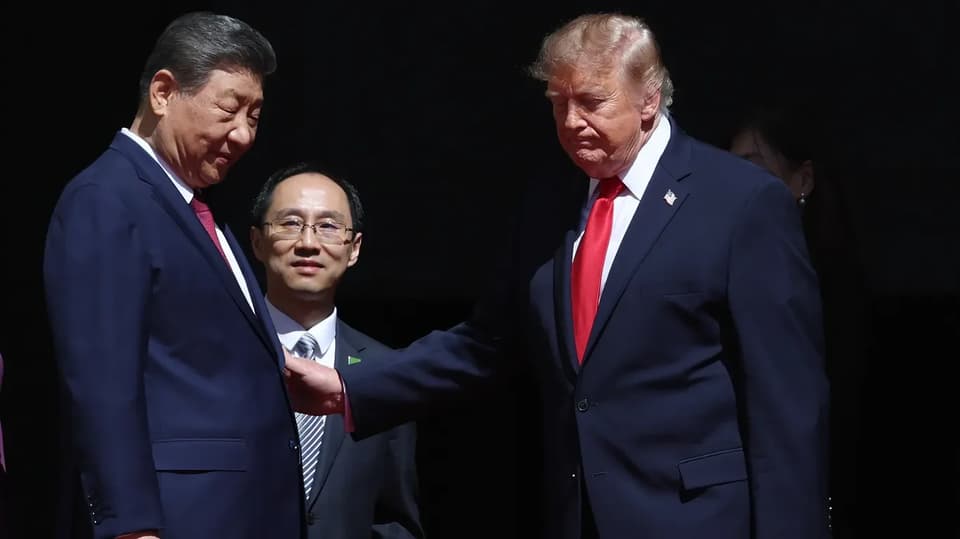
Following a three-day summit in Washington, D.C., the United States and China agreed to reduce tariffs on $30 billion in non-sensitive goods and establish a new Board of Trade. The deal, which covers items like agricultural products, medical devices, and toys, marks a significant de-escalation in the trade war that began in early 2025. Concurrently, the two nations agreed to initiate a dialogue on 'super intelligence,' aligning with President Trump’s recent push to rebrand artificial intelligence in official contexts.
Key points
- The U.S. and China agreed to lower tariffs on $30 billion in non-sensitive goods following a three-day summit between President Donald Trump and Chinese President Xi Jinping in Washington, D.C.
- U.S. exports receiving favorable treatment include agricultural products, fish, seafood, logs, wood products, cosmetics, and medical devices; Chinese imports favored include small appliances, toys, holiday decorations, and children's car seats.
- The agreement was reached through the newly established U.S.-China Board of Trade, which was formally created during Xi's visit this week after being proposed during Trump's May visit to China.
- U.S. Trade Representative Jamieson Greer stated that detailed tariff rates and product lists will be released on Monday, noting that weeks of negotiations preceded the final terms.
- The two nations agreed to a dialogue on 'super intelligence,' a term President Trump has been pushing to replace 'artificial intelligence' in official documents, despite industry concerns over the terminology.
Background
This agreement follows a series of escalating trade tensions that began in February 2025, when the U.S. imposed a 10% tariff on Chinese imports, citing fentanyl and immigration issues. Tariffs peaked at 145% for U.S. goods and 125% for Chinese goods in April 2025. Subsequent truces in Geneva (May 2025) and South Korea (October 2025) gradually reduced these rates. In late September 2026, President Trump rejected Treasury Secretary Scott Bessent for the AI czar role and pushed for the rebranding of AI to 'super intelligence' at the United Nations, setting the stage for the current diplomatic engagement.
How outlets are covering it
Fox News emphasizes the economic specifics of the $30 billion tariff reduction, highlighting the categories of goods involved and framing the deal as a major cooldown in the trade war. Axios focuses on the diplomatic aspect, specifically the agreement to engage in a 'super intelligence' dialogue, linking it to the broader tensions surrounding AI governance and the U.S. push to redefine the technology. While Fox News details the commercial mechanics, Axios highlights the strategic and terminological shifts in U.S. AI policy.
Why it matters
The deal reduces trade barriers for key consumer and industrial goods, potentially lowering costs for U.S. consumers and stabilizing supply chains. The establishment of the Board of Trade provides a formal mechanism for ongoing negotiations, while the 'super intelligence' dialogue signals a new phase in U.S.-China tech competition, moving from pure trade disputes to strategic coordination on advanced AI development.
What to watch
U.S. Trade Representative Jamieson Greer is scheduled to release detailed tariff rates and specific product lists on Monday. The U.S.-China Board of Trade will continue negotiations on additional tariff reductions and other trade disputes. The 'super intelligence' dialogue will likely shape future U.S. AI policy and international regulatory discussions.
- U.S. and China agree to "super intelligence" dialogue amid AI tensions Axios
- US, China strike deal to lower tariffs on $30B in goods after Trump-Xi Washington summit Fox News
- Here’s a Comparison of US, China Readouts on Trump-Xi Summit bloomberg.com
- US, China agree to cut tariffs on $30 billion worth of goods, set up channel for AI incidents The Hill
- China, US agree to $30 billion tariff cut, AI dialogue during Xi visit, Beijing says Reuters
Want the full story? Read the original reporting
Read on Axios