
SpaceX Delays Military Satellite Launch by Five Days After Stage Two Anomaly
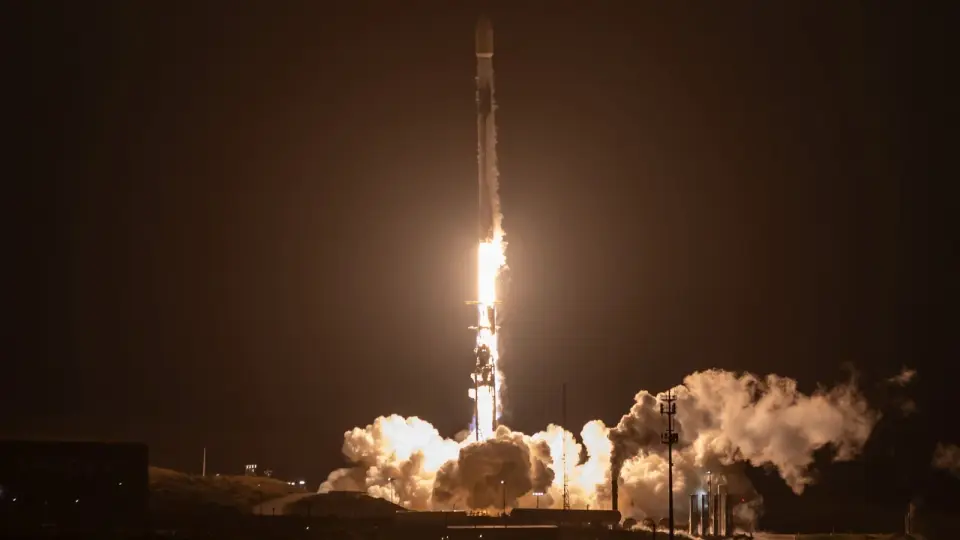
SpaceX successfully launched 21 military satellites to orbit on October 10, 2026, five days after a last-minute abort. The mission, designated Tranche 1 Transport Layer A, delivered Northrop Grumman-built spacecraft to the U.S. Space Force's Proliferated Warfighter Space Architecture network. The initial attempt on October 5 was scrubbed due to 'off-nominal data' on the second stage, leading to a five-day delay for troubleshooting and range deconfliction. This is the fourth of nine planned launches for the initial Tranche 1 constellation, which aims to provide global tactical communications and missile warning capabilities.
Key points
- SpaceX launched 21 data transport satellites for the U.S. Space Development Agency (SDA) on October 10, 2026, from Vandenberg Space Force Base.
- The launch was delayed by five days after an auto-abort on October 5 due to 'off-nominal data' on the Falcon 9's second stage.
- The mission, named Tranche 1 Transport Layer A (T1TL-A), is the fourth of nine planned launches for the initial Tranche 1 constellation.
- The 21 satellites were manufactured by Northrop Grumman and are part of the Proliferated Warfighter Space Architecture (PWSA) network.
- The Falcon 9 first stage booster, designated B1103, successfully landed at Landing Zone 4 approximately 7.5 minutes after liftoff.
- Tranche 1 is expected to consist of 154 operational satellites in low Earth orbit, including 126 data-transport and 28 missile-tracking vehicles.
Background
This launch is part of the broader Proliferated Warfighter Space Architecture (PWSA) program, which aims to provide the U.S. military with a resilient, low-latency communications and missile warning network in low Earth orbit. The SDA plans to deploy new 'tranches' of satellites every two years to continually increase capability. Previous Tranche 1 missions (T1TL-B, T1TL-C, and T1TL-E) were launched in September 2025, October 2025, and July 2026, respectively. The successful launch of T1TL-A brings the total number of data-transport satellites in orbit to 84, out of the 126 planned for Tranche 1. The constellation is designed to provide continuous overwatch and near-instantaneous data delivery to warfighters, with 95% of the globe in view of at least two satellites at any time.
How outlets are covering it
All four sources (Space.com, Spaceflight Now, SpaceNews, and KSBY News) confirm the successful launch on October 10, 2026, and the five-day delay from the initial October 5 attempt. Space.com and KSBY News emphasize the delay and the successful landing of the booster. Spaceflight Now provides the most detailed technical information, noting that the abort was triggered by 'off-nominal data on Stage Two' and that the delay allowed for 'double checks on vehicle systems and range deconfliction,' with a possible missile test from Vandenberg on Friday being a factor. SpaceNews highlights that this mission marks the first operational plane from Northrop Grumman for the SDA's Tranche 1 Transport Layer, adding a third spacecraft manufacturer to the network (alongside York Space Systems and Lockheed Martin). All sources agree on the mission's designation (T1TL-A), the number of satellites (21), and the booster's flight number (B1103, its sixth flight).
Why it matters
The successful launch of the T1TL-A mission is a critical step in building out the PWSA network, which is designed to provide the U.S. military with a resilient, low-latency communications and missile warning capability in low Earth orbit. The five-day delay, while ultimately resolved, highlights the challenges of maintaining a tight launch schedule for a complex military constellation. The successful integration of Northrop Grumman-built satellites into the network adds a third manufacturer, potentially increasing supply chain resilience. The PWSA is expected to begin providing operational capabilities to the Department of Defense in 2027, and this launch brings the constellation closer to its initial operational capability.
What to watch
SpaceX is expected to conduct five more launches to complete the initial Tranche 1 constellation, which will consist of 154 operational satellites in low Earth orbit. The SDA plans to deploy new 'tranches' of satellites every two years to continually increase capability. The next launch in the Tranche 1 series is expected to be in the coming months. The successful launch of T1TL-A brings the total number of data-transport satellites in orbit to 84, out of the 126 planned for Tranche 1. The constellation is expected to begin providing operational capabilities to the Department of Defense in 2027.
- SpaceX launches 21 satellites to orbit for the US military after 5-day delay (video) Space
- SpaceX launches 21 data satellites for the Space Development Agency Spaceflight Now
- SpaceX launches 21 Northrop Grumman satellites for U.S. military data network SpaceNews
- UPDATE: SpaceX launch for SDA's fourth Tranche 1 data transport mission scheduled for Saturday KSBY News
- Northrop Grumman Deploys First Wave of Satellites for SDA’s Proliferated Warfighter Space Architecture Northrop Grumman
Want the full story? Read the original reporting
Read on Space