Paragon Space Development Corp. laid off about 70 employees after NASA halted work on the HALO life-support module for the lunar Gateway and Northrop Grumman terminated Paragon’s HALO contract; Paragon will retain IP rights and pursue other NASA and commercial opportunities for its life-support technologies.
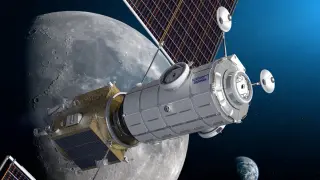
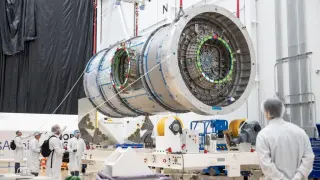
NASA and Northrop Grumman will repurpose the HALO module from Gateway into three Lunar Infrastructure Demos (LID-1 to LID-3) to mature lunar surface power, thermal management, autonomy, communications and hosted-payload services capable of surviving the Moon’s night near the South Pole, with Moon Base Phase One development running through 2029; the move follows Gateway delays and corrosion issues and aims to accelerate a sustainable Moon Base architecture.
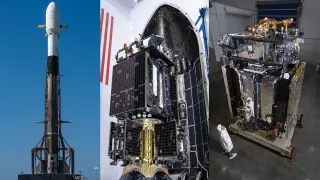
SpaceX launches Northrop Grumman's MRV-MEP on-orbit satellite repair mission, signaling a move into servicing existing satellites to extend their lifespans and create a new service-based revenue stream alongside launches and Starlink, while highlighting capital-intensity and cash runway risks for investors.
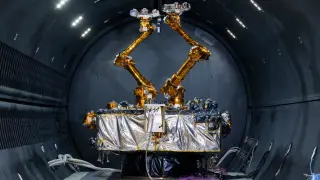
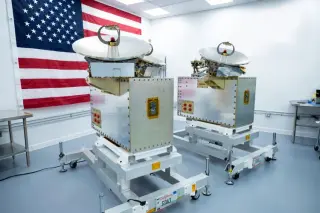
Ars Technica reports that Northrop Grumman’s Mission Robotic Vehicle (MRV), carrying the DARPA-funded RSGS payload and three Mission Extension Pods, launched on SpaceX’s Falcon 9 to geosynchronous orbit to perform on‑orbit servicing. Equipped with two seven‑degree‑of‑freedom robotic arms and autonomous control, MRV can inspect, upgrade, relocate, and potentially service satellites not designed for humans, with prospective customers including SES, Optus, and the Space Force. The mission builds on prior MEV demonstrations and signals a shift toward a space‑based depot and extended‑life servicing capability, potentially enabling a new era of orbital logistics over a planned 10–13 year service life.
SpaceX launched Northrop Grumman’s Mission Robotic Vehicle (MRV) to geostationary orbit to service multiple aging satellites using detachable Mission Extension Pods; MRV will move from one satellite to another, using robotic arms and its own propulsion, and will extend GEO lifetimes by about six years for its first customers Intelsat and Optus, signaling a shift toward routine in-space servicing with origins in DARPA’s RoGS program and potential Space Force utility.
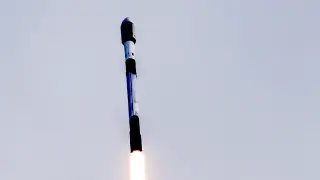
SpaceX’s latest growth opportunity centers on maintaining satellites in orbit, as the company launched hardware for Northrop Grumman’s MRV/MEP satellite-maintenance mission to extend satellite lifespans. The mission followed the Falcon 9 booster’s 32nd and final flight for that booster, and SpaceX stock slid about 6.7% as investors weigh valuation against Starship’s potential and SpaceX’sAI-driven strategies.
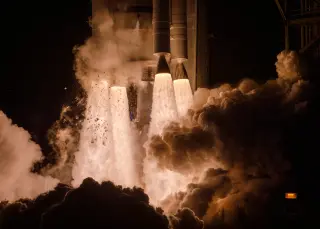
Northrop Grumman booked a $91 million unfavorable adjustment for its GEM63XL solid rocket motors used on ULA’s Vulcan Centaur boosters, after a $71 million charge earlier this year, and said redesigned motors cleared in a static-fire test should be delivered by year-end (though launch timing remains uncertain). A February Vulcan flight had a significant anomaly, and the U.S. Space Force/DoD are weighing configurations that avoid solid boosters. Northrop expects space-division sales to rise in the second half on higher program volumes and new awards, while HALO’s future faces reassessment as NASA shifts away from Gateway toward a lunar base, with the module potentially repurposed and the contract restructured.
SpaceX will launch Northrop Grumman’s MRV-MEP spacecraft from Cape Canaveral aboard a Falcon 9, with about 90% favorable weather and a 5:15 p.m. ET liftoff; MRV-MEP is described as a versatile 'Swiss Army Knife' for satellites, capable of inspection, repairs, life extension, debris removal, and deploying pods, plus sensors or countermeasures to boost satellite resilience.
NASA has paused work on Northrop Grumman’s Habitation and Logistics Outpost (HALO) as the agency shifts lunar plans from an orbital gateway to a surface-based Moon base; NG says most affected staff will be reassigned and HALO could be repurposed, while a separate HALO life-support contract with Paragon Space Development Corp. was told to stop, signaling a likely wind-down of the Lunar Gateway effort.
Blue Origin’s pad explosion accelerates SpaceX’s default position on NASA’s launch manifest, opening a window for five US space contractors to benefit: Rocket Lab as a near-term Falcon 9 rival with its Neutron program; AST SpaceMobile’s BlueBird satellites riding Falcon 9; Lockheed Martin’s Artemis program role; Northrop Grumman’s GEM motors and HALO lunar hardware; and Intuitive Machines’ CLPS lunar payloads. With SpaceX not being publicly traded, investors are eyeing these proxy plays to ride the evolving space economy while cautioning that the rest of the Street may soon reprice these bets.
Northrop Grumman has teamed with Apex to develop space-based interceptors for the Space Force's Golden Dome missile-defense plan, one of 12 firms selected to explore concepts. Apex provides standardized satellite buses to enable faster, cheaper production. The partners aim to demonstrate an on-orbit capability by 2027 and scale production through commercial collaboration, while questions linger about whether space-based interceptors can be affordable at scale given the program’s potential high costs. Other industry players are pursuing similar partnerships under Other Transaction Authority to accelerate prototyping.
The Space Force awarded Northrop Grumman a $398 million contract to build an Enhanced PTS-P prototype satellite to validate anti-jam and cyber-resilient Protected Military Satellite Communications, using the ESPAStar-HP bus; launch is scheduled no earlier than 2030 and the demonstrations will inform future protected-satcom procurements.
Daniel Wm. McAndrew of Erie, a lifelong electronics and engineering enthusiast who led Simulation Engineering at the International Organization of Masters, Mates, and Pilots and later worked at Northrop Grumman, is remembered for his kindness, talent, and music; he is survived by his brothers Joey, Denise, JoAnne, Patrick, and Matthew, and was preceded in death by baby brother Paul; a private memorial will be held.
NASA’s briefing exposed corrosion on Lunar Gateway’s HALO and I-HAB habitats. Northrop Grumman acknowledged a manufacturing irregularity, ESA confirmed corrosion on I-HAB, and Thales Alenia Space issued a statement noting a surface metallurgical issue on HALO and promising repairs by the end of Q3 2026, with similar actions for I-HAB in coordination with ESA. Axiom Space reported related issues on Module 1. The disclosures raise questions about repair feasibility and could affect Gateway timelines beyond 2030, while underscoring competition in space-habitat pressure vessels.
Ars Technica reports that the Lunar Gateway’s two habitable modules, HALO and I-HAB, show corrosion likely from a manufacturing irregularity involving forging, surface treatment, and materials. Northrop Grumman says HALO repairs should wrap by the end of Q3 and that the module can still be repurposed for lunar use, while ESA calls the issue technically manageable; I-HAB remains under construction as Gateway was paused to focus on the Moon.