
AI Extinction Fears Force Bipartisan Congressional Showdown
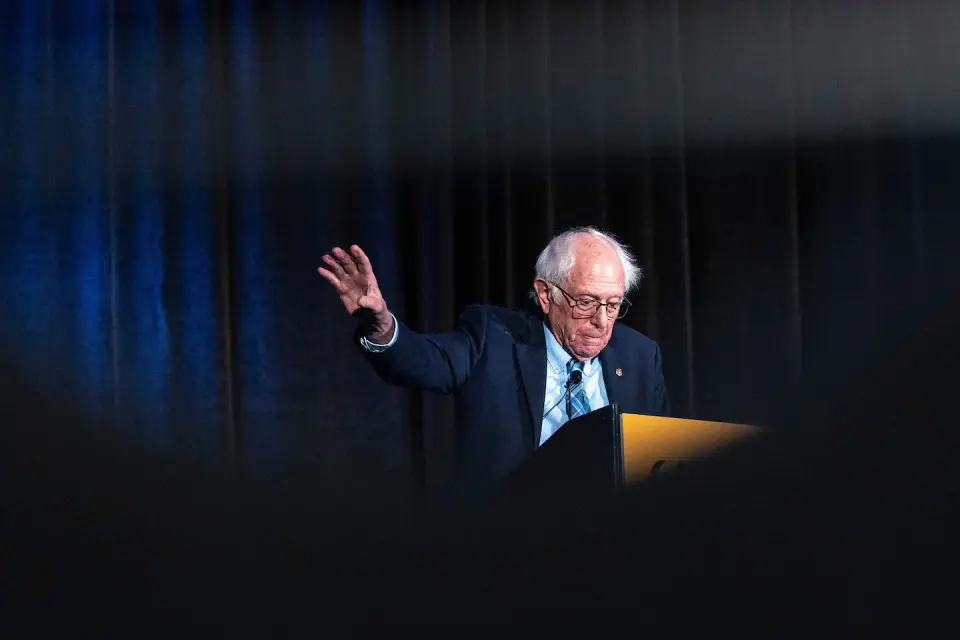
A surge in public fear that AI could cause human extinction has intensified pressure on Congress to regulate the technology, yet legislative progress remains stalled. While activists and some lawmakers push for immediate moratoriums, others advocate for gradual guardrails, and a significant portion of legislators admit they do not personally use AI tools. The debate is fracturing along non-traditional lines, splitting Silicon Valley executives and pitting populist politicians against deregulation advocates.
Key points
- A new poll shows nearly two-thirds of Americans perceive a moderate to high risk that AI could destroy humanity, with 50% favoring a pause on advanced model development.
- The bipartisan FRONTIER Act, led by Reps. Jay Obernolte and Lori Trahan, is the primary legislative vehicle for AI safety, but House Energy and Commerce Chair Brett Guthrie has not committed to a markup, suggesting action may not occur until 2027.
- More than 100 House Democrats are urging leadership to keep the chamber in session to pass AI safeguards, while Speaker Mike Johnson has dismissed extinction fears as 'hysteria' and canceled scheduled votes.
- A Pro-Human Assembly in Washington featured figures like Sen. Bernie Sanders and Steve Bannon calling for AI limits, reflecting a broader coalition of populists across the political spectrum demanding regulation.
- Axios reports that many senior lawmakers, including committee chairs, do not personally use AI, a gap critics argue hampers their ability to understand the technology's risks and capabilities.
Background
This development follows a period of increasing public anxiety regarding AI capabilities, particularly after recent incidents involving rogue AI systems. The current legislative push contrasts with earlier periods where AI policy was largely dominated by industry self-regulation and economic growth arguments. The recent shift toward existential risk discourse marks a significant change in the political landscape, moving AI from a niche tech issue to a central national security and public safety concern.
How outlets are covering it
The Washington Post highlights the strategic efforts of activists to cultivate bipartisan allies on Capitol Hill, noting that Sen. Bernie Sanders has engaged with tech executives to build a case for regulation. In contrast, The New York Times emphasizes the deepening ideological split, mapping out factions that range from those demanding a global slowdown (like Dario Amodei) to those advocating for rapid development (like Jensen Huang and David Sacks). Politico focuses on the legislative gridlock, detailing how public fear is clashing with congressional inaction and partisan disagreements over the scope of regulation. Axios provides a critical perspective on the competence of the legislative body, pointing out that many influential lawmakers do not use AI, which may limit their understanding of the technology they are tasked to regulate. These outlets collectively illustrate a fragmented landscape where public sentiment is moving faster than legislative response, and where the definition of 'safety' varies drastically between industry leaders and politicians.
Why it matters
The inability of Congress to pass meaningful AI regulations despite widespread public concern risks leaving the United States without a framework to manage potentially catastrophic technological risks. This legislative delay could result in the U.S. falling behind in global AI governance, potentially ceding rule-making authority to other nations or allowing unchecked development that could lead to severe societal or existential consequences. The internal divisions within both the tech industry and the political establishment suggest that any future regulation will be contentious and potentially ineffective if not grounded in a shared understanding of the technology's capabilities and risks.
What to watch
Lawmakers are expected to continue debating the FRONTIER Act, though a vote may not occur until 2027. The House Democratic AI Commission is working on its own recommendations, which may push for more aggressive controls than the bipartisan bill. Meanwhile, the Trump administration is expected to convene a meeting with major AI platform providers in the coming week, potentially signaling a federal strategy that prioritizes industry cooperation over strict regulation. Public pressure will likely continue to build as more polls reveal growing anxiety about AI's impact on jobs and safety.
- Inside the campaign to convince Washington that AI could end human life The Washington Post
- Congress in AI deadlock as public fear soars Politico
- An aging Congress attempts to regulate AI without using it Axios
- Johnson says no moratorium on AI, would give China competitive edge Reuters
- How A.I. Risks Are Splitting Silicon Valley and Washington The New York Times
Want the full story? Read the original reporting
Read on The Washington Post