
Iran gathers 14 tankers at Kharg Island as US warns of force to break blockade
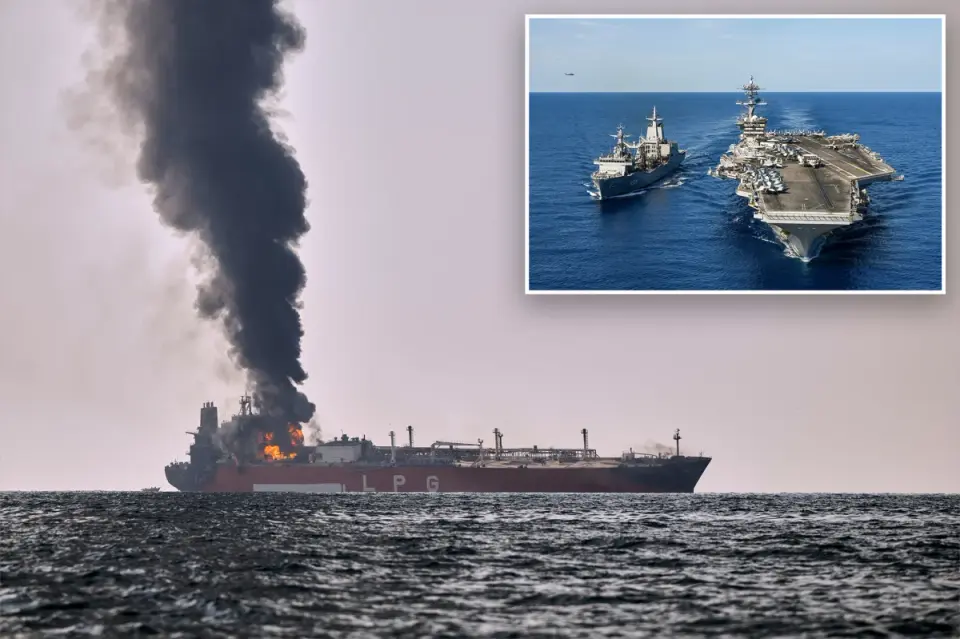
Iran has positioned over 14 oil tankers at Kharg Island, its primary export hub, in a potential attempt to breach the US naval blockade. While satellite data confirms crews and flags are ready, maritime experts dispute the likelihood of a successful convoy. US forces have expanded the blockade to include ship-to-ship transfers, warning that non-compliance may result in the use of force. Tehran faces severe financial pressure, with zero reported crude loadings in October and November, as hardliners threaten strikes on Gulf energy infrastructure if the US intervenes.
Key points
- Over 14 tankers are gathered at Kharg Island, which handles 85-90% of Iran's crude exports, with crews assigned and Iranian flags raised.
- US Central Command issued an advisory on Nov. 18, extending the blockade to vessels receiving cargo via ship-to-ship transfers, warning of interception or seizure.
- Iranian hardliners and media, including Fars News Agency, have proposed 'Operation Fereydoun,' threatening strikes on oil facilities in the UAE, Saudi Arabia, and Qatar if the US attacks the tankers.
- Maritime intelligence firm TankerTrackers dismissed claims of an imminent convoy as 'wishful thinking,' noting no significant loading activity at Kharg Island via satellite imagery.
- Iran's oil exports have stalled for two consecutive months, with production falling to 1.8 million barrels per day, roughly half its pre-war level, causing a projected $3-6 billion monthly revenue loss.
- President Trump told Fox News he hopes Iran attempts the breach, stating the vessels would be 'at the bottom of the sea,' while US officials maintain the blockade extends across the Indian Ocean.
Background
The US naval blockade of Iran began in April 2026 following failed nuclear talks. Since then, Iran has faced a total halt in crude loadings, with September and October marking the first full months without exports since 1979. Previous archive coverage noted that Iran's economy is under severe strain, with Treasury Secretary Scott Bessent claiming a 20-25% GDP drop. The current tanker gathering follows a period of diplomatic stalling, where Trump indicated no urgency to resolve the issue until next year, while Tehran's hardliners push for a military response to restore revenue.
How outlets are covering it
Outlets disagree on the likelihood of a successful blockade breach. Euronews and Iran International report that satellite data confirms the positioning of 14 tankers and that Tehran is preparing a convoy, with hardliners threatening regional energy strikes. Conversely, Fox News and The Maritime Executive cite maritime experts like Charlie Brown of United Against Nuclear Iran, who dismissed the plan as 'farcical' and 'propaganda,' arguing that US naval power across the Indian Ocean makes escape impossible. TankerTrackers also pushed back on the narrative, stating that satellite imagery shows no significant loading activity at Kharg Island, contradicting claims of an imminent departure. While Iranian state media and hardliners frame the move as a necessary military response to an 'act of war,' US officials and maritime analysts view it as a high-risk maneuver likely to fail or trigger a wider conflict.
Why it matters
The potential breach of the US naval blockade could escalate into a wider military conflict in the Persian Gulf. If Iran succeeds in moving oil, it would undermine the US economic strategy to force Tehran to the negotiating table. Conversely, if the US intercepts the tankers, it may trigger the threatened retaliatory strikes on energy infrastructure in neighboring Gulf states, destabilizing global oil markets. The situation also highlights the deepening financial crisis in Iran, where the loss of oil revenue threatens to collapse the state's fiscal stability, potentially leading to internal unrest or a more aggressive foreign policy stance.
What to watch
US forces are expected to monitor the tankers closely, with CENTCOM prepared to stop, board, or capture vessels involved in ship-to-ship transfers. Iranian officials may issue further warnings or diplomatic signals, while hardliners could push for a formal government decision to launch the convoy. The US may continue to enforce the blockade across the Indian Ocean, potentially leading to a direct confrontation if Iranian vessels refuse to comply with orders to stop. Diplomatic channels remain open, with Qatar mediating, but the risk of a military clash increases as economic pressure mounts.
- Iran amasses 14 oil tankers at key export hub as Tehran weighs challenge to US blockade: report New York Post
- US tightens Iran blockade with curbs on oil transfers at sea, advisory shows Reuters
- Iran readies tanker convoy at Kharg Island to test US oil blockade Euronews.com
- Trump dares Iran to breach US port blockade as Tehran reportedly readies 14 oil tankers Fox News
- Iran signals readiness for Hormuz showdown despite US buildup Iran International
Want the full story? Read the original reporting
Read on New York Post