
Data Center Backlash Crosses Party Lines as Midterm Elections Loom
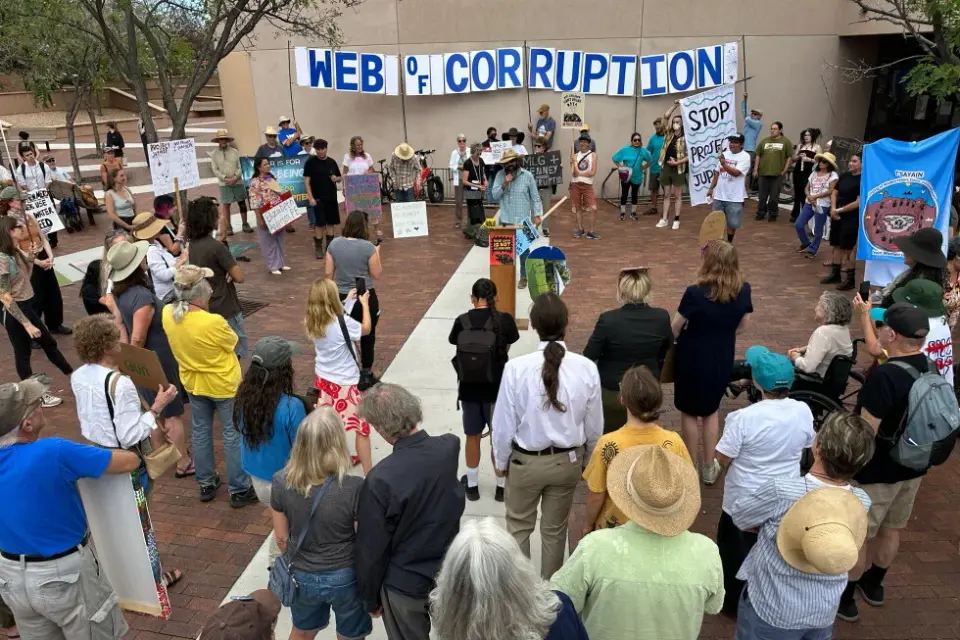
Public opposition to data centers has surged, shifting 12 points against construction between March and July 2026. This bipartisan backlash has prompted governors from both parties to impose moratoriums or audits, while the tech industry struggles to counter voter fears over energy costs and water usage. The issue is now a central factor in midterm races, with Republicans scrambling to align with voter sentiment despite President Trump's continued support for the industry.
Key points
- Public opinion shifted 12 points against data centers between March and July 2026, with 60% of Republicans and 53% of MAGA voters opposing local construction in a July Fox News poll.
- Governors across the political spectrum have acted: Democrat Kathy Hochul ordered a one-year ban in New York, Democrat Josh Shapiro in Pennsylvania revoked fast-track permits, and Republican Greg Abbott in Texas paused approvals pending grid audits.
- In Nebraska, Cass County approved a 12-month moratorium, potentially halting Tenaska's plan to option 1,300 acres for a data center and power plant, while CyrusOne holds 400 acres in Plattsmouth with no announced project.
- In New Mexico, Oracle's $165 billion Project Jupiter faces legal challenges; the state Supreme Court halted well drilling for water supply after the Center for Biological Diversity filed an emergency petition, citing drought and low reservoir levels.
- The tech industry is divided on how to respond, with some viewing the backlash as a fleeting political storm and others calling it a lasting crisis, while Meta CEO Mark Zuckerberg announced a $1 billion fund for communities hosting data centers.
Background
This backlash follows a period of aggressive state incentives for data centers, which were previously seen as economic growth engines. Recent archive coverage highlights grid strain in Texas, where regulators warned that pausing connections could trigger rolling blackouts, and rural pushback in Wisconsin where permit processes were restarted. The current political shift represents a reversal from the 'sweetheart deals' and tax breaks offered just a year ago, as voters now prioritize energy costs and water security over promised job creation.
How outlets are covering it
AP News emphasizes the cross-ideological nature of the backlash, noting that opposition cuts across party lines and that even some Republicans are wary despite Trump's support. The Washington Post, via an opinion piece by Kyrsten Sinema, argues that facts are being distorted by a foreign influence campaign aimed at undermining US AI dominance, suggesting the backlash is partly manufactured. Time Magazine highlights the political whiplash, detailing how Republican candidates like Mike Rogers and Byron Donalds have reversed their positions to align with voter sentiment, while noting Trump's continued cheerleading for data centers creates a conflict for GOP candidates. Politico focuses on the industry's internal panic, describing the backlash as an 'oh s--t moment' for tech leaders, with some viewing it as a fleeting storm and others as a lasting crisis that could impact the 2028 presidential cycle. The sources agree on the surge in opposition but differ on the cause, with Sinema attributing it to foreign interference, while others point to genuine voter concerns over energy and water resources.
Why it matters
The data center backlash is reshaping US energy policy and political dynamics, with implications for AI infrastructure development, grid reliability, and local communities. The bipartisan opposition could lead to stricter regulations, higher energy costs, and delayed AI projects, while the political fallout may influence midterm and 2028 presidential elections. The issue also highlights tensions between national tech dominance and local resource management, with potential long-term effects on water supplies, energy prices, and job markets.
What to watch
Expect continued political maneuvering as candidates adjust their stances on data centers to align with voter sentiment. The tech industry may face increased pressure to engage with local communities and address concerns over energy and water usage. Legal challenges, such as the New Mexico well drilling case, could set precedents for future data center projects. The outcome of midterm elections may influence the pace and direction of data center development, with potential implications for AI infrastructure and energy policy in the coming years.
- In a divided America, the left and right unite to oppose artificial intelligence data centers AP News
- Opinion | Kyrsten Sinema: Facts around data centers are being distorted The Washington Post
- AI Trade at Risk From US Voter Ire Over Buildout, Barclays Says Bloomberg
- The GOP'S Data Center Panic Time Magazine
- Data centers’ ‘oh s--t’ moment Politico
Want the full story? Read the original reporting
Read on AP News