
FAA and NTSB probe Marine One near-miss with commercial jet at Reagan National
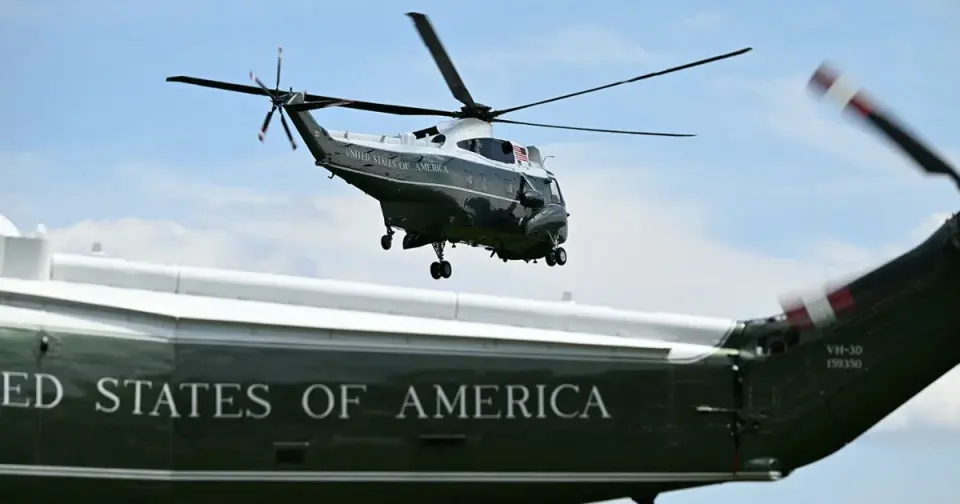
The FAA and NTSB are investigating a safety incident on August 4, 2026, where Marine One carrying President Trump flew too close to a commercial jet at Reagan National Airport. Controllers failed to halt commercial traffic as required, but both aircraft landed safely.
Key points
- Marine One took off from the White House Ellipse at 2:33 p.m. EDT on August 4, 2026, while commercial traffic at Reagan National Airport continued.
- Envoy Air flight 3742, an Embraer 170 bound for Pensacola, Florida, took off at 2:34 p.m., one minute after the helicopter.
- The FAA confirmed a 'momentary loss of separation' but stated the aircraft moved away from each other and the President was not in danger.
- The NTSB opened an investigation into the incident, joining the FAA’s Safety Review Team.
- Air traffic control audio shows Marine One pilots notified the tower three times before liftoff, but the controller did not halt traffic.
Background
This incident follows the fatal January 2025 mid-air collision at Reagan National Airport between an American Airlines regional jet and an Army helicopter, which killed 67 people. Following that crash, the FAA imposed strict restrictions, requiring commercial traffic to halt when Marine One is in flight. The NTSB previously cited systemic FAA failures in that crash, including allowing helicopters to operate near the airport without adequate safeguards. Recent aviation safety concerns have also included bird strikes and firework incidents, but this event highlights ongoing challenges in managing mixed helicopter and jet traffic in the Washington D.C. airspace.
How outlets are covering it
The FAA characterized the event as a 'momentary loss of separation' that was not a dangerous close call, emphasizing that the aircraft moved apart and the President was never in harm's way. CNN’s review of air traffic control audio suggests a failure in communication, noting that the controller did not acknowledge Marine One’s pre-liftoff notifications and continued traffic. The White House and Marine Corps spokespersons downplayed the incident, calling the flight routine and stating that the helicopter crew was not delayed or asked to hold. Reuters and NBC News highlighted the procedural failure, noting that controllers did not halt commercial flights as required by post-2025 crash policies. The NTSB’s involvement signals a deeper scrutiny of systemic safety failures, echoing concerns from the 2025 crash investigation.
Why it matters
This incident underscores ongoing risks in the heavily regulated airspace around Reagan National Airport, where mixed helicopter and jet traffic remains a critical safety concern. The failure to halt commercial traffic during a presidential departure highlights potential gaps in enforcement of post-2025 crash safety protocols. As the NTSB and FAA investigate, the outcome may lead to further restrictions or procedural changes to prevent future near-misses in one of the world’s most congested and politically sensitive airspace zones.
What to watch
The FAA and NTSB will release findings from their investigations, potentially leading to corrective actions or stricter enforcement of separation rules. The White House and airline operators may face scrutiny over communication protocols and adherence to safety policies. Further reviews of air traffic control procedures around Reagan National Airport are likely, given the history of safety failures in the area.
- FAA says it is investigating Trump helicopter safety incident in Washington NBC News
- Exclusive | FAA Investigates Marine One Safety Incident in Washington WSJ
- FAA is investigating why a plane was allowed to take off as President Trump's helicopter approached AP News
- FAA Says Marine One Was Briefly Too Close to Passenger Airplane usnews.com
- FAA investigating air safety incident involving Trump’s Marine One helicopter CNN
Want the full story? Read the original reporting
Read on NBC News