
Central Florida faces renewed flash flood threat as El Niño drives record rainfall
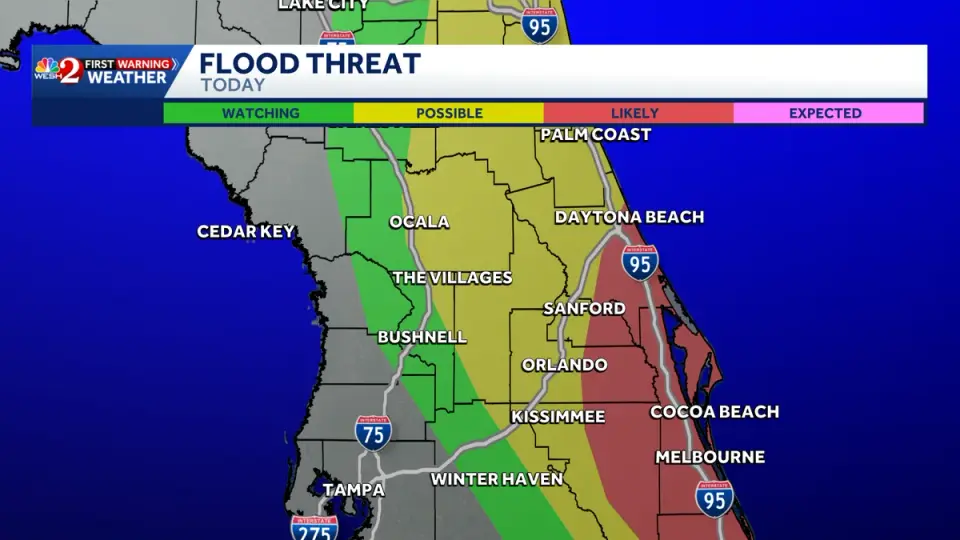
A slow-moving storm system is bringing heavy rain and flash flood warnings to Central Florida, with Brevard County under alert until Thursday morning. The event follows historic flooding two weeks prior, with saturated soils increasing risks. South Florida also experienced record rainfall, collapsing a synagogue roof and closing highways, while El Niño is cited as a key driver of the unusual wet season.
Key points
- A flash flood warning is in effect for Brevard County until 7:45 a.m. Thursday, with high rain chances expected to persist before decreasing over several days.
- A flood watch covers most of Central Florida, including Volusia, Seminole, Orange, Osceola, Flagler, Okeechobee, Brevard, Indian River, St. Lucie, and Martin counties.
- South Florida saw 15.3 inches of rain in 24 hours in parts of Broward County, leading to a state of emergency, school closures, and highway closures.
- The roof of Temple Sinai in Hollywood collapsed due to heavy rains, and a hospital roof was damaged, though no injuries were reported.
- El Niño is disrupting Florida’s typical dry season, helping bring low-pressure systems that cause heavy precipitation events.
Background
This event follows historic flooding in Brevard County two weeks ago, where some areas received over 20 inches of rain, resulting in two deaths and ongoing cleanup efforts in Palm Bay. The current system is part of a broader pattern of severe weather linked to El Niño, which has increased the risk of above-average rain and tornadoes this winter. Previous coverage noted concerns for saturated soils and river levels, with forecasts predicting additional rainfall of 3 to 12 inches, and isolated totals potentially reaching 15 inches.
How outlets are covering it
WESH emphasizes the lingering flood risks in Central Florida due to prior rainfall and the current flash flood warning in Brevard County. The New York Times highlights the unusual nature of the weather, noting hail in Hollywood and the disruption to daily life, including school cancellations and flight delays. AP News focuses on the severe impacts in South Florida, such as the collapse of a synagogue roof and the record-breaking rainfall in Fort Lauderdale, while also noting the broader national context of storm impacts, including California. All sources agree on the role of El Niño in driving the heavy precipitation, but they differ in their focus on specific regional impacts and the severity of the damage.
Why it matters
The renewed threat of flooding in Central Florida, combined with the record rainfall in South Florida, underscores the significant impact of El Niño on Florida’s typical dry season. The event highlights the vulnerability of infrastructure and communities to extreme weather events, with potential disruptions to transportation, schools, and daily life. The ongoing flood risks and the possibility of a developing storm system near the Bahamas could further complicate pre-Thanksgiving travel and emergency response efforts.
What to watch
Rain chances are expected to decrease gradually over the next several days, with drier conditions returning by Saturday. However, flooding concerns may linger due to the amount of rain that has already fallen. A low-pressure system is expected to form near the northern Bahamas, potentially becoming a subtropical or tropical storm over parts of the southeast and mid-Atlantic coasts into early next week. Residents are advised to continue monitoring weather alerts and avoid driving through flooded roadways.
- Heavy rain, flash flooding threaten Central Florida as storm system moves through WESH
- Why parts of Florida are flooding during the dry season The Weather Channel
- Florida’s El Niño Rains Bring Hail and High Water The New York Times
- Relentless storms bring heavy rain, intense flooding to Florida's Atlantic Coast FOX Weather
- Rainfall supercharged by El Niño floods roads and collapses a south Florida synagogue's roof AP News
Want the full story? Read the original reporting
Read on WESH