
Central Florida Roads Shut as El Niño Drives Record Rain and Rescue Efforts
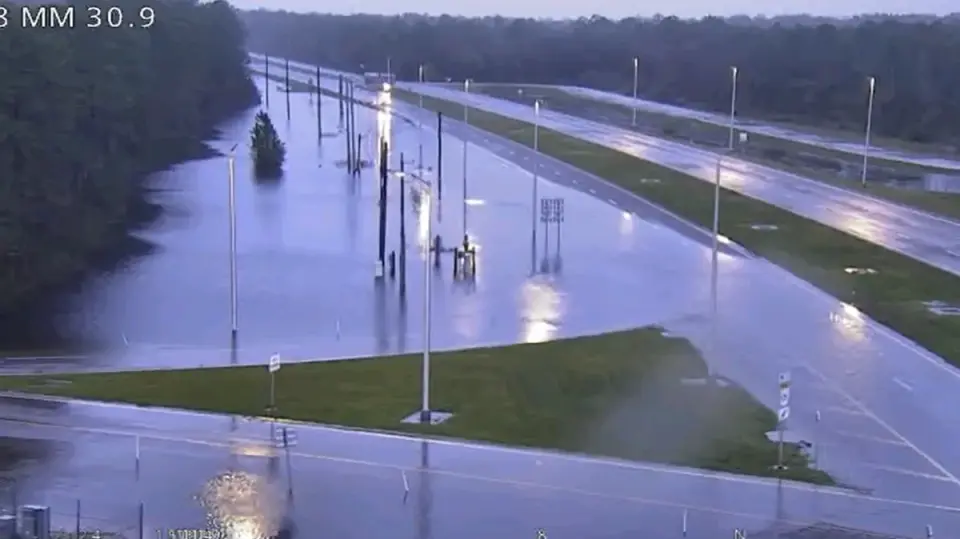
Widespread flooding has forced the closure of numerous roads across Central Florida, particularly in Brevard County, as persistent storms linked to El Niño deliver record rainfall. The National Weather Service reports that the Space Coast is receiving 3 to 12 inches of rain, with the St. Johns River rising above its 1953 record level. Governor Ron DeSantis has mobilized hundreds of National Guard and state troopers to assist with over 100 high-water rescues in Brevard County alone. While South Florida continues to manage severe flooding and school closures, Central Florida faces renewed threats as saturated ground and high tides compound the damage.
Key points
- FL 511 and the Florida Highway Patrol reported extensive road closures in Brevard, Volusia, Orange, and Flagler counties due to flooding.
- The St. Johns River near Cocoa exceeded its 1953 record flood level and is forecast to remain above flood stage through early next week.
- Brevard County first responders conducted nearly 100 high-water rescues, including the evacuation of dozens of animals from the Blue Lake Equestrian Center.
- Gov. Ron DeSantis deployed hundreds of National Guard personnel, 50 high-water vehicles, and 235 Fish and Wildlife Conservation Commission officers to assist.
- El Niño conditions are expected to persist through spring, potentially prolonging heavy downpours and extreme weather across the region.
Background
This event follows a series of severe flooding incidents in Florida earlier this month. In late October and early November, Brevard County experienced over 22 inches of rain, leading to flash floods and school closures. A subsequent flood watch in mid-November warned of up to 12 inches of additional rainfall. The current crisis is part of a broader pattern of extreme weather linked to El Niño, which has also impacted the Southwest and California.
How outlets are covering it
WESH focuses on the immediate logistical impact, detailing specific road closures across Central Florida counties. AP News emphasizes the historical significance of the rainfall, noting that Fort Lauderdale and Melbourne have recorded their wettest Novembers on record, and highlights the role of El Niño in sustaining the storms. CBS News provides a broader state-level view, detailing the massive mobilization of state resources, including National Guard and FWC officers, and the activation of disaster recovery funds in Broward County. The New York Times contextualizes the event within the broader climate crisis, noting that Florida is transitioning from drought to extreme flooding, and highlights the personal impact on residents in South Florida who are dealing with saturated ground and high tides.
Why it matters
The flooding disrupts daily life, closes schools and businesses, and threatens infrastructure in multiple counties. The record rainfall and high water levels pose significant risks to homes and businesses, particularly in low-lying areas. The prolonged nature of the storms, driven by El Niño, suggests that residents may face continued challenges and potential for further damage in the coming weeks.
What to watch
Forecasters expect the heavy rains to continue through Friday, with potential movement toward the Carolinas and mid-Atlantic. The St. Johns River is forecast to remain above flood stage through early next week. Residents are advised to avoid flooded roads and monitor weather alerts. El Niño conditions are expected to persist through spring, meaning extreme weather events may continue.
- Road closures reported across Central Florida amid widespread flooding WESH
- Florida Atlantic Coast faces Level 4 out of 4 flash flood risk as intense rain prompts emergency declarations FOX Weather
- Soaking storms shift north to Florida's Space Coast and prompts water rescues of humans and horses AP News
- South Florida flooding live updates: More rain threatens flooded communities, roads remain underwater CBS News
- Florida’s El Niño Rains Bring Hail and High Water The New York Times
Want the full story? Read the original reporting
Read on WESH