
Isaias hits Gulf Coast as Category 2, brings record-breaking late-season surge
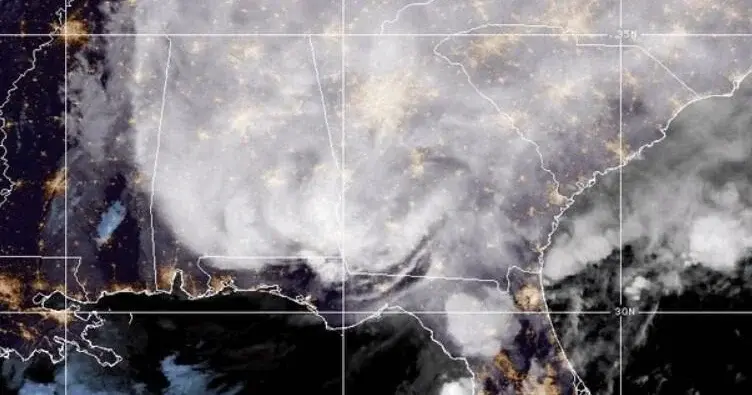
Hurricane Isaias made landfall near Destin, Florida, late Friday as a Category 2 storm, bringing life-threatening storm surge and heavy rains to the northern Gulf Coast. The storm, the first of the 2026 Atlantic season, briefly reached Category 3 strength before weakening. It is now moving north across Alabama and into the Tennessee Valley, with warnings for flash flooding and tornadoes. Over 697,000 customers lost power, and mandatory evacuations were issued in parts of Florida and Alabama.
Key points
- Isaias made landfall near Destin, Florida, around 8:00 p.m. ET on Friday as a Category 2 hurricane with 90 mph sustained winds, quickly weakening to Category 1.
- The storm brought up to 9 feet of storm surge to the Alabama-Florida border and 6 feet to other parts of the Florida Panhandle, with 4 to 15 inches of rain forecast for coastal areas.
- Isaias is the first hurricane of the 2026 Atlantic season, forming on October 7, the latest date for a first hurricane in 121 years, just missing the 1905 record.
- Mandatory evacuations were ordered in parts of Florida’s Okaloosa and Walton counties and Alabama’s Baldwin and Mobile counties, with tens of thousands of people leaving the region.
- The storm is moving north across Alabama and into the Tennessee Valley, with forecasts for gusty winds, heavy rainfall, and a risk of tornadoes through the weekend.
Background
Isaias formed from a tropical disturbance in the Gulf of Mexico, initially labeled Invest 92L, and rapidly intensified into a hurricane by October 7. The 2026 Atlantic hurricane season has been unusually quiet, largely due to a strong El Niño, which typically dampens tropical storm growth in the Atlantic. The season runs from June 1 through November 30, and a typical season produces 14 named storms, seven hurricanes, and three major hurricanes.
How outlets are covering it
CBS News and CNN both reported that Isaias made landfall as a Category 2 hurricane, with CBS noting it quickly weakened to Category 1. CNN emphasized the storm’s rapid intensification and its status as the latest first hurricane in 121 years. WESH and WLOX focused on the immediate impacts, with WESH reporting 105-110 mph winds coming ashore in Destin and WLOX noting that storm surge warnings were cancelled for parts of South Mississippi by Saturday morning. All sources agreed on the threat of storm surge, heavy rainfall, and tornadoes, but differed in emphasis: CBS and CNN highlighted the record-breaking nature of the storm, while WESH and WLOX focused on local impacts and recovery.
Why it matters
Isaias’s late-season formation and rapid intensification highlight the risks of a quiet Atlantic hurricane season, which can lead to underpreparedness. The storm’s impact on the Gulf Coast, including power outages, evacuations, and potential flooding, underscores the need for robust emergency response and infrastructure resilience. The record-breaking nature of Isaias also raises questions about climate change and its impact on hurricane timing and intensity.
What to watch
Isaias is expected to move across Alabama and into the Tennessee Valley on Saturday and Sunday, weakening to a post-tropical storm but continuing to produce gusty winds and heavy rainfall. The central U.S. Gulf Coast and much of the Southeast are likely to see heavy rainfall through the weekend, with flash flooding possible. The storm’s path and intensity will be closely monitored by the National Hurricane Center, and updates on its impact and trajectory will be provided as it moves inland.
- Isaias becomes first hurricane of 2026 Atlantic season, threatens northern Gulf Coast. See maps, forecast path. CBS News
- Isaias becomes the first Atlantic hurricane of 2026; new warnings for Gulf Coast The Weather Channel
- Hurricane Isaias live updates: Gulf Coast braces for dangerous storm CNN
- Gov. DeSantis declares state of emergency for 25 Florida counties due to Hurricane Isaias WESH
- Isaias becomes first hurricane of 2026 season, hurricane, tropical storm, storm surge warnings issued for South Mississippi WLOX
Want the full story? Read the original reporting
Read on CBS News