
IRGC Claims Destruction of US Radar in Bahrain Amidst Diplomatic Standoff
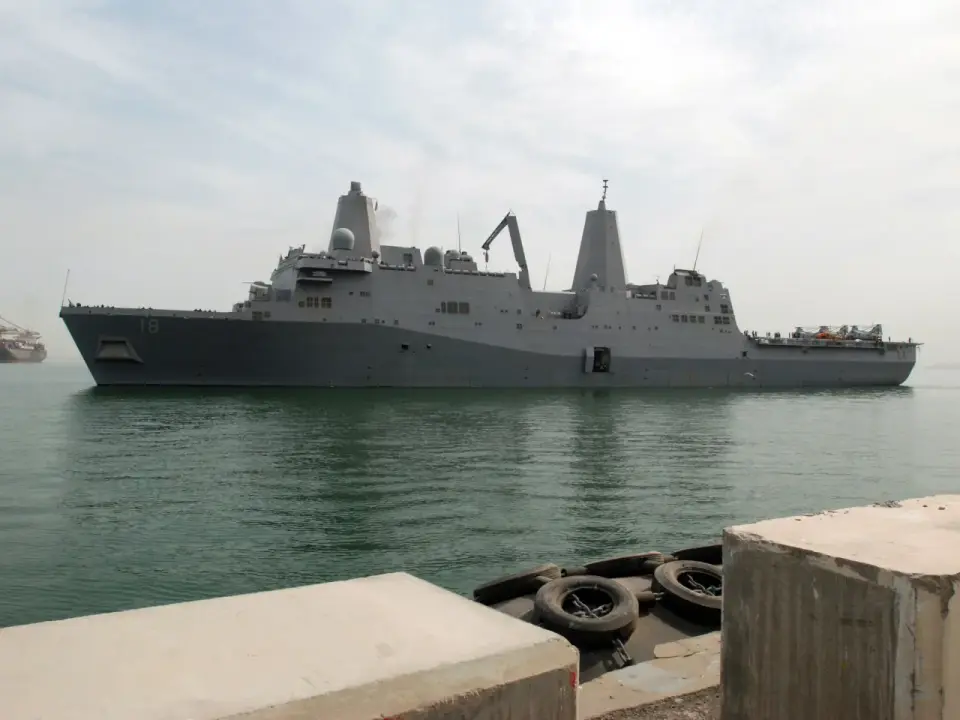
Iran’s Islamic Revolutionary Guard Corps (IRGC) claims it destroyed a US early-warning radar in Bahrain, marking the first direct attack on US assets in the Gulf since September. The strike is described as retaliation for a US airstrike on a telecommunications tower in Sirik, southern Iran. While Washington and Manama have not confirmed the damage, the incident occurs as President Trump abandons diplomatic efforts with Iran, citing Gulf allies' requests to hold back on larger strikes. Meanwhile, Iran’s Assembly of Experts has called for a review of its nuclear non-proliferation stance, and CENTCOM maintains a strict naval blockade on Iranian ports.
Key points
- IRGC states its aerospace force targeted and destroyed a US radar installation in Bahrain.
- The strike is framed as a response to a US attack on a telecom tower in Sirik, Hormozgan province.
- This is the first claimed Iranian attack on US military assets in the Gulf since early September.
- President Trump has dismissed Vice President JD Vance’s diplomatic role, stating the US no longer needs a deal.
- Iran’s Assembly of Experts has called for a review of the country’s nuclear non-proliferation treaty membership.
Background
This escalation follows a war that began on February 28, 2026, with US and Israeli strikes on Iran. Previous coverage noted that Iranian attacks in March 2026 caused approximately $400 million in damage to the Naval Support Activity Bahrain, forcing the evacuation of over 1,250 military families. Recent satellite data from November 2026 indicates Iran is rapidly reconstructing missile infrastructure underground, despite US claims that 90% of its industrial base was destroyed. Additionally, Iran recently unveiled an underground missile city and lifted its self-imposed range limit on ballistic missiles.
How outlets are covering it
Al Jazeera and Euronews focus on the IRGC’s claim of destroying the radar as a retaliatory measure for the strike on Sirik, noting the lack of immediate confirmation from Washington or Manama. The Guardian highlights the broader diplomatic shift, emphasizing Trump’s decision to sideline VP Vance and the UK public’s opposition to further war. Africanews connects the strike to recent Iranian military exhibitions, including the display of the Emad missile with a 1,700-kilometer range. While all sources agree on the IRGC’s claim, they differ in emphasis: Al Jazeera and Euronews focus on the military exchange, while The Guardian and Africanews contextualize the event within the collapsing diplomatic track and Iran’s evolving military capabilities.
Why it matters
The incident signals a potential end to the fragile lull in the US-Iran conflict. By targeting a key US naval hub in Bahrain, Iran demonstrates its ability to strike US assets despite the naval blockade. Simultaneously, the US withdrawal from direct negotiations and Iran’s internal debate on nuclear policy suggest a hardening of positions, increasing the risk of a wider regional war involving Gulf states and European allies.
What to watch
Analysts expect heightened tensions as the US maintains its naval blockade and Iran continues to showcase new missile capabilities. The outcome of the Assembly of Experts’ review of nuclear policy could lead to a shift in Iran’s strategic doctrine. Diplomatic efforts mediated by Qatar and Pakistan may collapse if military exchanges continue, potentially leading to a resumption of large-scale strikes.
- Iran says it targeted US radar site in Bahrain Al Jazeera
- Iran says it destroyed US military radar in Bahrain in retaliatory strike The Guardian
- IRGC says it targeted US radar in Bahrain after attack on Iran Euronews.com
- Iran showcases missiles as military targets US army radar in Bahrain Africanews
- Iran's Guards say they targeted a US early-warning radar in Bahrain Reuters
Want the full story? Read the original reporting
Read on Al Jazeera