
US strikes Iranian missile site on Qeshm Island after IRGC drone attack on Bahrain
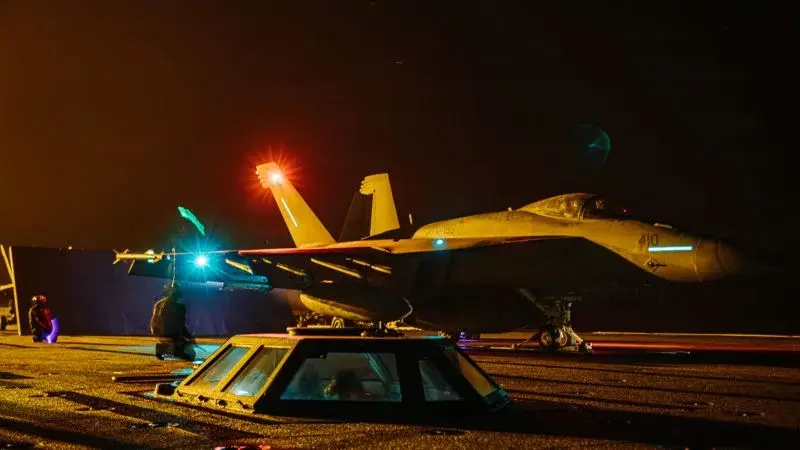
US fighter jets struck an Iranian missile launch site on Qeshm Island on November 17, 2026, in response to an IRGC drone attack on a US radar system in Bahrain. The strikes, described as 'self-defense,' caused no reported damage to civilian infrastructure. Diplomatic efforts remain stalled, with Trump weighing a return to full-scale combat operations.
Key points
- US fighter jets used 'precision munitions' to strike an IRGC missile launch site on Qeshm Island, Iran, on November 17, 2026.
- The strike was a response to an IRGC drone attack on a US-operated radar system at Sheikh Isa Air Base in Bahrain.
- Iranian officials confirmed the strike but reported no damage to vital infrastructure, commercial, or residential areas.
- CENTCOM stated that multiple Iranian drones were intercepted without damage to US equipment or injury to personnel.
- Diplomatic talks mediated by Qatar and Oman continue, but no comprehensive peace deal has been reached.
- Trump has warned he could resume full combat operations if Tehran refuses to accept US demands, though he may wait until after the US midterm elections.
Background
The conflict began in February 2026 with US and Israeli airstrikes on Iran. Since then, the US has maintained a naval blockade of Iranian ports and conducted escort operations in the Strait of Hormuz. Previous limited strikes on Qeshm Island occurred in November 2026, described by Trump as minor. Diplomatic efforts have been ongoing, with Qatar and Oman acting as mediators, but Iran has refused to engage in nuclear talks until the US lifts sanctions and ends the blockade.
How outlets are covering it
CNN and Fox News emphasize the 'self-defense' nature of the US strikes, citing military officials. Al Jazeera highlights the broader context of the war, including the use of expired munitions by the US Navy and the strain on maritime forces. RFE/RL frames the strikes as part of a 'tit-for-tat' pattern, with analysts describing it as a 'deliberate testing of boundaries' rather than a return to full-scale warfare. Iranian state media and the IRGC claim the strikes were in response to US drone violations of Iranian airspace and 'hostile movements.' Qatar and the GCC condemned the Iranian attacks on Bahrain as violations of sovereignty and international law.
Why it matters
The strikes signal a continued low-level conflict despite diplomatic efforts. The US naval blockade and ongoing strikes threaten to reignite the war, while Trump's decision on whether to resume full-scale combat operations could have significant regional and global implications. The conflict also affects global trade, particularly through the Strait of Hormuz, and has strained US military resources.
What to watch
Trump is scheduled to meet with Chinese President Xi Jinping and Russian President Vladimir Putin on November 19 in Shenzhen, where the Middle East conflict may be discussed. Diplomatic talks mediated by Qatar and Oman will continue, but no comprehensive peace deal is expected. Trump may decide on a path forward after the US midterm elections in January 2027, as Democrats are poised to take control of Congress.
- US carries out ‘self-defense’ strikes on Iranian missile launch site CNN
- Iran war updates: US hits Qeshm Island, Houthis claim hit on Saudi pipeline | US-Israel war on Iran News Al Jazeera
- Tit-for-Tat US-Iran Attacks Persist As Peace Deal Remains Elusive Radio Free Europe/Radio Liberty
- US carries out self-defense strike on IRGC missile launch site on Qeshm Island Fox News
- Live Updates: U.S. launches strikes on Iran's Qeshm Island in Strait of Hormuz CBS News
Want the full story? Read the original reporting
Read on CNN