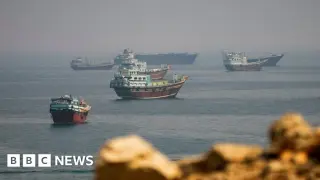
U.S. defense strikes on Iranian missile sites drew Iran’s condemnation and injected fresh doubt into stalled negotiations over a ceasefire and reopening the Strait of Hormuz, with progress on a potential Iran deal remaining murky even as Trump’s health update and other domestic political headlines run concurrently.
The U.S. military says it conducted new self-defense strikes on southern Iran targeting missile sites and boats placing mines to protect troops, while CENTCOM emphasizes restraint during the ongoing ceasefire; Iran says progress in talks exists but an imminent deal is not likely, keeping diplomacy uncertain.
U.S. Africa Command, in coordination with the Government of Nigeria, conducted additional kinetic strikes against ISIS militants in Northeastern Nigeria on May 17, 2026. Intelligence confirmed targets, no U.S. or Nigerian forces were harmed, and assessments are ongoing to evaluate the impact on ISIS capabilities.
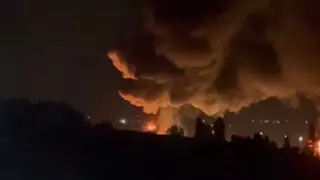
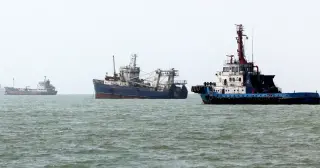
The United States says it conducted self‑defense strikes on Iranian missile and drone launch sites, command and control locations, and ISR nodes after US Navy destroyers came under unprovoked attack by missiles, drones and small boats while transiting the Strait of Hormuz. Iran says the US started the incident and vows retaliation, while Washington says the action is limited and not an escalation; CENTCOM reports no US losses. The flare‑up also features reactions from Trump and ongoing reports of explosions and tensions around Iran and the Strait amid a broader Gulf blockade and fragile ceasefire.
The U.S. military says it struck a boat suspected of drug trafficking in the Caribbean, killing three people, as part of a broader campaign against alleged narcotraffickers. The operation comes amid ongoing rhetoric of narcoterrorism, but critics question the legality and note the military has not provided public evidence the vessels carried drugs.
The Intercept reports that under the Trump administration the U.S. has carried out 50 strikes on civilian boats in the Caribbean and Pacific, resulting in at least 171 civilian deaths, as part of Operation Southern Spear. Experts say these killings amount to illegal extrajudicial actions and mark a troubling shift from traditional drug-war tactics, with some strikes moving onto land near the Colombia–Ecuador border and heightened pressure on human-rights bodies. Rescue efforts have often failed to save survivors, and critics urge congressional accountability.
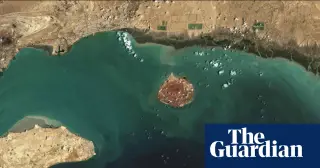
ISW-CTP’s March 26 update details a widening US-Israeli campaign against Iran: strikes reach Mashhad in the northeast, Iran’s defense-industrial base and leadership face sustained targets, and Iran, Hezbollah, and allied groups retaliate with missiles and drones across the region. CENTCOM says more than two‑thirds of Iran’s missile, drone, and naval production facilities have been destroyed, while Iran reinforces Kharg Island and seeks Hezbollah inclusion in any ceasefire. Russia is reportedly aiding Iran with drone components, and U.S.-backed operations also strike Iranian-backed Iraqi militias. Diplomatic talks show the US proposing a framework tied to dismantling Iran’s nuclear program, which Iran rejects for now, insisting on ceasefire and sovereignty protections; negotiations appear limited under current terms.
Israel announced it would seize parts of southern Lebanon to create a defensive buffer and to control bridges over the Litani, signaling a possible prolonged presence that Hezbollah labeled an existential threat; Lebanon expelled Iran’s ambassador amid rising tensions. Netanyahu pledged to keep striking Iran as regional clashes continue, with Iran threatening retaliation and Israel reporting hits on Iranian production sites, while Trump touted prospects for a negotiated end to the conflict.
Live updates show the Iran-led conflict expanding beyond the Middle East: Tehran reportedly fired two intermediate-range missiles toward Diego Garcia (one intercepted), while U.S. forces continue a wide campaign to degrade Iran’s missile, drone, and naval capabilities. Gulf states report intensified defenses as attacks and retaliatory actions ripple across the region; UAE announces disruption of a Hezbollah-Iran–linked terror cell, and political debate in the United States over war funding intensifies amid ongoing strikes and regional tension.
Israel says it has expanded its strikes against Iran, targeting central command centers of the Islamic Revolutionary Guard Corps and the Basij in western and central Iran to degrade Tehran’s ability to plan and execute attacks; the campaign, backed by the United States, has reportedly hit more than 15,000 targets and is expected to continue for weeks as Iran vows to keep fighting and denies having a nuclear weapons program, while spillover tensions ripple into Iraq and drive up energy prices.
The U.S. military says six men were killed in a strike on an alleged drug-smuggling vessel in the eastern Pacific as part of the Trump administration’s campaign against traffickers, bringing the toll in these operations to at least 157 since September. The Pentagon provided no evidence that the vessel carried drugs, though it released a video of the boat exploding. Trump has framed the actions as an armed conflict with cartels, while critics question legal justifications and effectiveness, noting concerns from a prior attack in which survivors were killed in a follow-up strike.
President Trump escalates tensions with Iran, vowing to strike the country ‘very hard’ and demanding unconditional surrender, as Iran’s president says surrender is not on the table. The White House, alongside Israel, has launched strikes that the piece says killed senior Iranian figures; six American troops have died, and the State Department is coordinating evacuations for Americans amid rising oil prices and market disruption.
Iran says it will halt attacks on neighboring countries unless attacked first after an apology from its leadership; Trump mocks Iran as the 'loser of the Middle East' and threatens harsher action, while Russia's Putin urges de-escalation and diplomacy as regional tensions persist.
The U.S. and Israel intensified their week-long campaign against Iran, with U.S. Central Command saying over 3,000 targets have been struck and Israel reporting a new wave of attacks on IRGC sites. Gulf neighbors intercepted missiles and drones as UAE and Saudi defenses activated; Emirates suspended flights to Dubai. The conflict helped push oil prices higher, with U.S. crude up roughly 35% for the week and Brent about 28%.
On day 5 of the US-Israel campaign against Iran, strikes widen from Tehran to regional targets after reports of a distant Iranian frigate sinking near Sri Lanka; Israel vows a broader wave of attacks and Iran braces for leadership changes as Ayatollah Khamenei’s funeral is postponed. The Houthis weigh direct involvement, the Al-Udeid base in Qatar is reportedly hit, and civilian casualties rise in Iran and the region. International responses include Spain’ s anti-war stance and new rules on AI-generated war content from X.