
Witkoff Secures Putin's Nod for November Peace Talks Amid Controversial 'Humanitarian' Praise
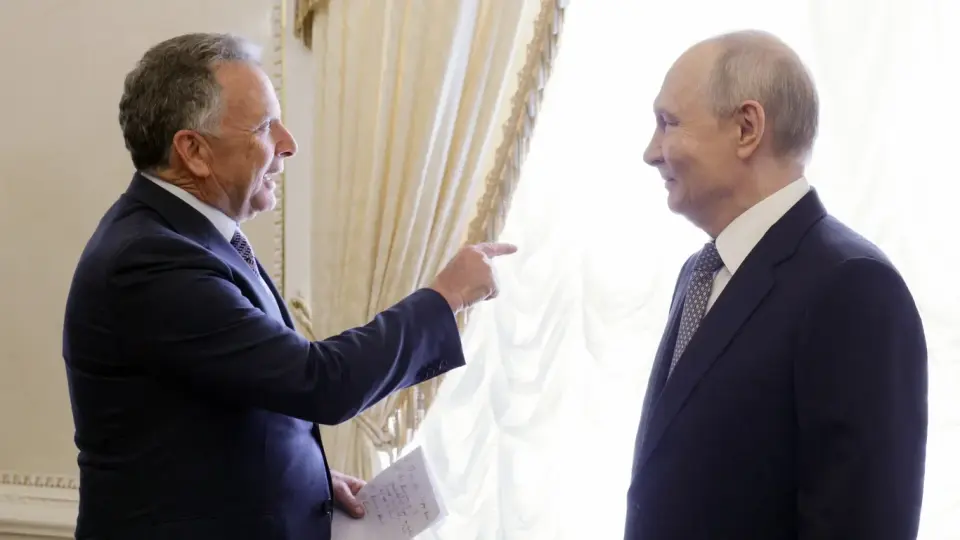
U.S. envoy Steve Witkoff secured a preliminary agreement from Russian President Vladimir Putin to resume trilateral peace talks in November, coinciding with the release of a detained American citizen. The diplomatic breakthrough follows recent tensions between Washington and Kyiv, with Moscow signaling willingness to negotiate while Ukraine insists on direct inclusion in the process.
Key points
- Putin agreed in principle to resume trilateral negotiations with the U.S. and Ukraine, potentially in Abu Dhabi around November 10, according to Kremlin adviser Yuri Ushakov.
- Russia released 74-year-old U.S. citizen Stephen Hubbard, who had been detained since 2022 on mercenary charges, without a prisoner swap, as described by President Trump.
- Witkoff praised Putin as a 'humanitarian' for the release, drawing sharp criticism from Senators John Cornyn and Thom Tillis, who called the remark outrageous.
- Zelensky insisted in Oslo that any peace framework must include Ukraine at the table, rejecting a U.S.-China-Russia format, while Moscow dismissed the Oslo talks as unhelpful.
- Putin expressed interest in mediating between the U.S. and Iran and proposed a potential meeting with Trump in China in mid-November.
Background
This development follows a series of earlier reports confirming Witkoff's arrival in St. Petersburg after constructive but conditional talks in Oslo with Zelensky and European allies. Previous coverage noted the release of Hubbard as a gesture of goodwill and the ongoing strain in U.S.-Ukraine relations over energy sanctions and intelligence sharing. The current briefing synthesizes these earlier updates with new details on the specific timeline for trilateral talks and the diplomatic fallout from Witkoff's comments.
How outlets are covering it
Axios and The New York Times emphasize the diplomatic breakthrough and the controversy surrounding Witkoff's praise of Putin, with the latter highlighting the State Department's view that Hubbard was 'wrongfully detained.' CNBC focuses on Zelensky's insistence that Ukraine must be included in negotiations, framing the talks as a test of Kyiv's leverage. The Washington Post provides a broader context of worsening U.S.-Ukraine relations, noting restored intelligence sharing but ongoing disputes over security guarantees. Outlets differ on the significance of the Oslo talks, with Moscow dismissing them as unhelpful while the U.S. and Ukraine view them as productive groundwork.
Why it matters
The agreement to resume trilateral talks marks a potential shift in the peace process, moving from bilateral to a more inclusive format. However, the controversy over Witkoff's comments and the lack of a prisoner swap highlight the fragility of U.S.-Russia relations. The outcome will determine whether the U.S. can maintain its role as a mediator while balancing its alliance with Ukraine and its diplomatic overtures to Moscow.
What to watch
The next step is the potential trilateral meeting in Abu Dhabi around November 10, where technical groups could discuss settlement details. Putin's proposal for a meeting with Trump in China in mid-November and his offer to mediate between the U.S. and Iran could further complicate the diplomatic landscape. Ukraine's response to the trilateral format and the U.S. ability to maintain its alliance with Kyiv while engaging with Moscow will be critical in the coming weeks.
- Putin tells Witkoff he is ready to resume direct peace talks, Russia releases U.S. detainee Axios
- Putin agrees to resume 3-way peace talks with Ukraine and US Reuters
- Russia Releases American Stephen Hubbard From Prison, State Media Reports The New York Times
- Witkoff calls Putin a 'humanitarian' at Russia peace talks without Ukraine CNBC
- What you need to know to start your day The Washington Post
Want the full story? Read the original reporting
Read on Axios