
"Exoplanet Discovery Challenges Astronomers' Understanding of Solar System Formation"
TL;DR Summary
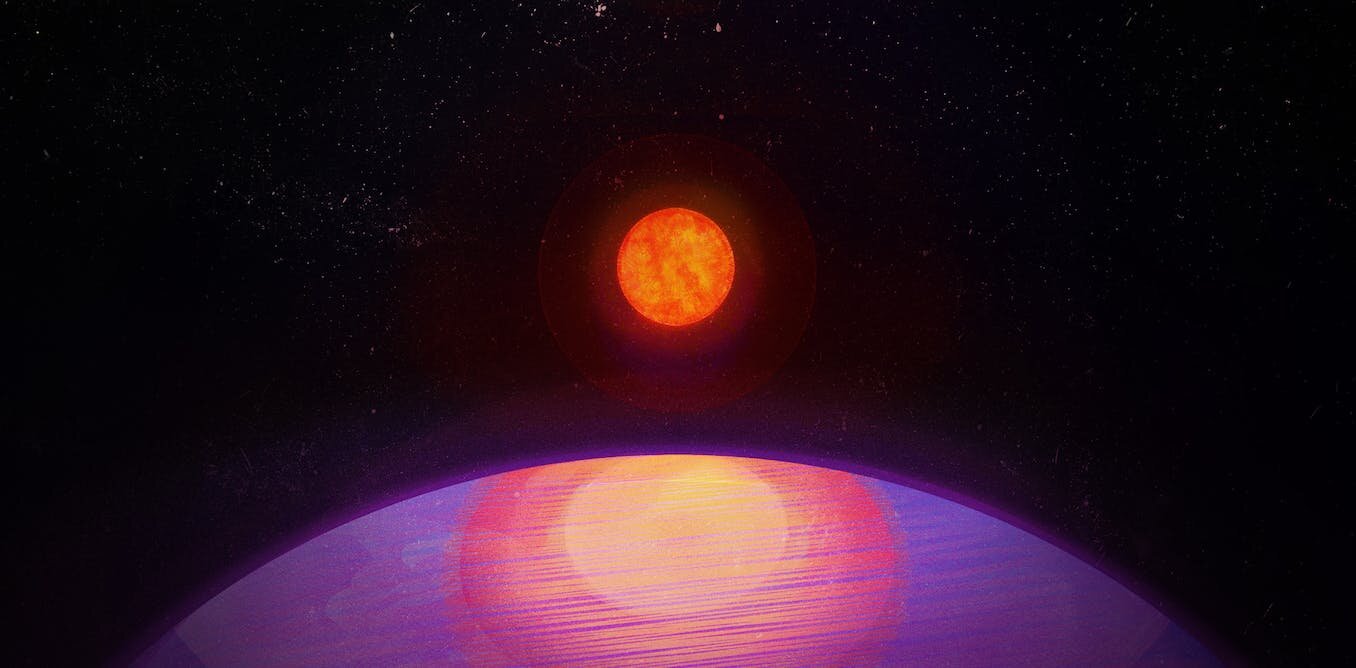
Astronomers have discovered a massive planet, LHS 3154b, more than 13 times heavier than Earth, orbiting a cool, dim M star. This finding challenges current theories of exoplanet formation, as the star should not have enough material in its planet-forming disk to birth such a massive planet. The discovery was made using the Habitable Zone Planet Finder instrument, which measures the subtle change in a star's velocity caused by a planet's gravitational tug. Understanding how planets form around M stars will help scientists better understand planet formation in general and the potential for life on these types of stars.
Topics:science#astronomy#doppler-radial-velocity-technique#exoplanets#habitable-zone#m-stars#planet-formation
- Massive planet too big for its own sun pushes astronomers to rethink exoplanet formation Phys.org
- Massive habitable planet discovered that is too big for its star, baffling astronomers Earth.com
- Astronomers find planet that seems too humongous to be orbiting its parent star! Business Insider India
- Enormous planet discovered around tiny star could break our understanding of solar system formation Livescience.com
- Neptune-sized exoplanet is too big for its host star Ars Technica
Reading Insights
Total Reads
0
Unique Readers
23
Time Saved
4 min
vs 5 min read
Condensed
89%
873 → 99 words
Want the full story? Read the original article
Read on Phys.org